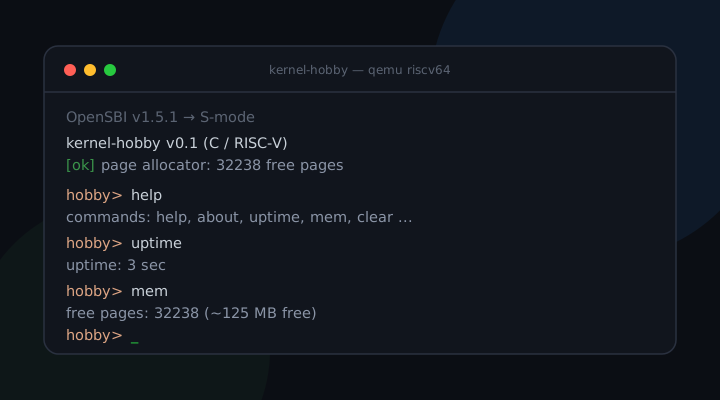
exec와 유저공간 셸
목차
0. 들어가며
3편에서 fork, ELF 로더, 파일시스템까지 왔습니다.
이제 마지막 조각 두 개로 “작은 유닉스”를 완성합니다.
- 런타임 exec(): 실행 중인 프로세스를 디스크의 다른 프로그램으로 교체
- 유저공간 셸: 커널 밖에서 도는 셸이 명령을 받아 프로그램을 실행
이 둘이 합쳐지면 유닉스가 모든 명령을 실행하는 방식, 즉 셸이 fork하고, 자식이 exec로 프로그램이 되고, 부모가 wait로 기다리는 그 핵심 루프가 됩니다.
이 글은 그 루프를 세 가지 어려운 문제로 쪼개서, 우리 커널이 실제 코드에서 각각을 어떻게 푸는지 봅니다.
- exec: “달리는 차의 엔진 갈기” 문제. 자기가 올라타 있는 주소공간을 자기 손으로 갈아엎기
- 블로킹 read: “바쁜 대기 없이 입력 기다리기” 문제. sleep/wakeup과 잃어버린 wakeup
- wait/exit: “자기 시신을 자기가 못 치우는” 문제. 좀비와 부모의 자원 회수
1. exec가 풀어야 하는 진짜 문제
실행 중인 프로세스를, 그 프로세스를 죽이지 않고, 디스크의 다른 프로그램으로 통째로 바꿔치기하라.
지금까지 유저 프로그램은 부팅 때 딱 한 번, make_user_proc이 커널에 임베드된 ELF를 코드 페이지에 적재하면서 만들어졌습니다.
그런데 셸이 hello를 치면 어떻게 될까요?
셸은 자기 자신이지, hello가 아닙니다.
누군가는 이미 돌고 있는 프로세스를 디스크의 다른 프로그램으로 바꿔치기해야 하고, 그게 exec()입니다.
유닉스의 관용구는 fork + exec입니다.
셸이 fork로 자기 복제본(자식)을 하나 만들고, 그 자식이 exec("hello")로 내용물만 hello로 갈아끼웁니다.
부모(셸)는 그대로 살아서 자식이 끝나길 기다립니다.
“왜 fork부터 하지?” 싶지만, 이래야 셸 자신은 사라지지 않으면서 새 프로그램을 띄울 수 있습니다.
진짜 까다로움은 다른 데 있습니다.
exec는 “달리는 차의 엔진을 바꾸는 것”입니다.
프로세스가 자기 주소공간을 헐고 새 프로그램을 올리는데, 그 작업을 하는 코드 자체가 바로 그 주소공간 위에서 돌고 있습니다.
특히 위험한 건 유저 스택입니다.
proc_exec 함수의 지역변수(newcode, entry, oldcode …)는 스택에 사는데, 주소공간을 통째로 갈아엎다가 스택까지 날려버리면 자기 발밑이 꺼지는 셈입니다.
사전 지식: exec가 건드려야 하는 것 세 가지
exec 한 번에 바뀌어야 하는 상태를 분리해서 보면 설계 선택지가 또렷해집니다.
코드 페이지
새 프로그램의 명령어는 어디에 올리고, 옛 코드 페이지는 누가 회수하는가?
새 ELF를 디스크에서 읽어 새 물리 페이지(newcode)에 적재합니다.
옛 코드 페이지(oldcode)는 더 이상 쓰이지 않으니 kfree로 돌려줘야 누수가 안 납니다. 단, 회수 시점이 함정인데 뒤에서 다룹니다.
스택
유저 스택을 통째로 갈아엎을 것인가, 재사용할 것인가?
갈아엎으면 “깨끗한 새 프로그램”이라는 의미엔 충실하지만, exec를 수행 중인 proc_exec의 지역변수가 죽습니다.
우리 커널은 스택 페이지를 재사용하되 sp만 top으로 리셋합니다. 옛 스택 내용을 지우지는 않고, sp를 맨 위로 되돌려 새 스택처럼 씁니다(그 아래에 남은 옛 데이터는 새 프로그램이 건드리지 않습니다).
주소공간(satp)
페이지 테이블을 통째로 새로 만들 것인가, 기존 것을 유지하고 일부만 remap할 것인가?
satp를 바꾸는 순간 유저 스택 자체가 다른 물리 페이지로 바뀝니다.
우리 커널은 satp를 유지하고 코드 페이지만 remap하는 더 가벼운 길을 택했습니다.
경우 2가지: satp 교체 vs 코드 페이지만 remap
같은 exec를 두 가지로 구현할 수 있고, 저는 후자를 택했습니다.
| 구분 | fork 후 주소공간 통째 교체(정통) | 코드 페이지만 remap (우리) |
|---|---|---|
| 페이지 테이블 | 새로 만들고 satp 교체 | 기존 것 유지 |
| 유저 스택 | 새 스택 페이지 | 기존 스택 재사용(sp만 리셋) |
| 유저 진입 방식 | userret_to(entry, sp, satp), 레지스터만 | 인라인 mv sp; sret |
| 전환 후 스택 접근 | 절대 금지(다른 물리 페이지) | 자유(같은 주소공간) |
| 비용 | 페이지 테이블 빌드 + sfence.vma | remap 1회 + sfence.vma (페이지 테이블 빌드 없음) |
| 격리 수준 | 옛 매핑이 한 톨도 안 남음 | 코드만 갈리고 나머지 매핑 유지 |
정통 경로가 더 깨끗하지만(옛 프로그램의 매핑이 완전히 사라짐), 우리 목적엔 코드 페이지 remap만으로 충분하고 훨씬 가볍습니다.
한 가지 주의: remap도 PTE를 바꾸는 것이라, satp가 그대로여도 옛 번역이 TLB에 남을 수 있어
sfence.vma로 비워야 합니다(실제remap_user_code가 그렇게 합니다). 가벼운 이유는 TLB flush가 없어서가 아닙니다. 페이지 테이블을 새로 짓지 않기 때문입니다.
우리 코드: proc_exec()
실제 proc_exec은 한 줄 요약보다 일을 꼼꼼히 합니다.
새 코드를 올리기 전에, 옛 프로그램이 쓰던 힙과 mmap 영역부터 회수합니다(안 그러면 페이지가 샙니다).
// proc.c — proc_exec() (실제 코드에서 발췌)int sz = fs_read(path, elfbuf, sizeof(elfbuf)); // 디스크에서 ELF 읽기if (sz < 0) return -1; // 그런 파일 없음 → 실패
char *newcode = kalloc();zero(newcode, PGSIZE); // .bss 대비 미리 0uint64 entry;if (load_elf((const char *)elfbuf, newcode, &entry) != 0) { kfree(newcode); return -1; // ELF 깨짐 → 실패(셸은 살아 있음)}
struct proc *p = current_proc();char *oldcode = p->ucode;vm_free_range(p->pagetable, HEAPBASE, p->heap_top); // 옛 프로그램 힙 회수p->heap_top = HEAPBASE; // 새 프로그램은 빈 힙if (p->mmap_base) { // 옛 mmap 영역도 같은 식으로 회수 uint64 mend = p->mmap_base + ((p->mmap_size + PGSIZE - 1) & ~(uint64)(PGSIZE - 1)); vm_free_range(p->pagetable, p->mmap_base, mend); p->mmap_base = 0;}
remap_user_code(p->pagetable, (uint64)newcode); // USERVA → 새 코드로 갈아끼움p->ucode = newcode;if (oldcode) kfree(oldcode); // 옛 코드 페이지 회수(누수 없음)
// U-mode로 진입. satp(주소공간)는 그대로라 스택이 안 바뀐다 → 스택 재사용.uint64 s = r_sstatus();s &= ~SSTATUS_SPP; // sret 시 U-mode로s |= SSTATUS_SPIE; // U-mode에서 인터럽트 enable(선점 가능)s |= SSTATUS_SUM; // 트랩 시 커널이 유저 스택에 프레임 저장 가능w_sstatus(s);w_sepc(entry); // 새 프로그램의 진입점asm volatile("mv sp, %0\n sret\n" :: "r"((uint64)USERSTACKTOP)); // 스택 top + sretreturn -1; // 여기 도달하면 버그(sret이 돌아오지 않으므로)마지막 두 줄이 핵심입니다.
mv sp, USERSTACKTOP으로 스택 포인터를 top으로 리셋하고, 곧장 sret으로 U-mode로 떨어집니다.
sepc에 새 프로그램의 entry를 미리 넣어뒀으니, sret 직후 CPU는 hello의 첫 명령부터 실행합니다.
exec가 성공하면 이 함수는 영영 돌아오지 않습니다. 호출자였던 자식 프로세스가 이미 hello가 돼버렸기 때문입니다.
satp까지 바꾸는 정통 경로: userret_to
위 표의 왼쪽(정통 경로)도 kernelvec.S에 준비해 뒀습니다.
satp까지 바꿔야 한다면 mv sp; sret 인라인으론 부족합니다.
satp를 바꾸는 순간 유저 스택 자체가 다른 물리 페이지로 바뀌어서, 그 뒤로는 스택을 단 한 번도 건드리면 안 됩니다.
그래서 어셈블리 헬퍼 userret_to(entry, sp, satp)는 satp 전환 → sfence.vma(TLB 비우기) → sepc/sp 세팅 → sret까지 전부 레지스터만으로 합니다.
전환 후엔 메모리(스택)를 안 만지고 곧장 유저로 떨어집니다.
# kernelvec.S — userret_to(entry, sp, satp) [a0, a1, a2]# satp를 바꾸면 유저 스택이 통째로 바뀌므로, 전환 후엔 스택을 절대 건드리지# 않고 레지스터만으로 sret한다. (sstatus는 호출 전에 C에서 미리 세팅)userret_to: csrw satp, a2 # 주소공간 전환 sfence.vma zero, zero # 옛 번역(TLB) 비우기 csrw sepc, a0 # 새 진입점 mv sp, a1 # 새 스택 top sret # U-mode로 (돌아오지 않음)함정: exec 실패는 죽으면 안 된다
exec에서 제일 흔한 함정은 “실패했을 때”입니다.
없는 파일을 치거나(fs_read가 -1) ELF가 깨졌으면, exec는 현재 프로세스를 망가뜨리지 않고 그냥 -1을 반환해야 합니다.
그래서 실제 코드는 옛 코드 페이지를 kfree하기 전에 load_elf까지 다 성공시켜 놓습니다.
중간에 실패하면 새로 잡은 newcode만 버리고 옛 상태 그대로 돌아갑니다.
이게 셸에서 오타를 쳐도 셸이 안 죽고 command not found만 뜨는 비결입니다(셸의 fork된 자식이 exec에 실패하면, 자식이 그 메시지를 찍고 exit).
흔한 오해 정정: *“먼저 옛것을 다 지우고 새것을 올리면 깔끔하다”*고 생각하기 쉽지만 그렇지 않습니다. 옛 코드를 먼저
kfree해 버리면load_elf가 실패했을 때 돌아갈 곳이 없습니다. 새 상태를 끝까지 성공시킨 뒤에야 옛 자원을 회수하는 순서가 실패 안전성의 핵심입니다. 우리 코드가kfree(oldcode)를remap_user_code뒤에 두는 게 바로 이 이유입니다.
실패해도 프로세스가 멀쩡히 살아남는 exec. 이게 셸이 영원히 도는 비결입니다.
2. 블로킹 read가 풀어야 하는 진짜 문제
입력이 아직 없을 때, CPU를 태우지 않고 기다리다가, 글자가 들어오는 바로 그 순간 깨어나라.
지금까지 셸은 커널 안(S-mode)에 있었습니다(1편의 hobby> 셸).
진짜 유닉스에선 셸도 그냥 유저 프로그램 하나입니다.
셸을 커널 밖으로 내리려면, 셸이 read()로 키보드 입력을 기다릴 수 있어야 합니다.
그런데 사용자가 아직 아무것도 안 쳤으면?
경우 2가지: 바쁜 대기 vs sleep/wakeup
| 구분 | 바쁜 대기(busy-wait) | sleep/wakeup (우리) |
|---|---|---|
| 입력 없을 때 | while (입력 없음) ; 빙빙 | CPU 양보 후 SLEEPING |
| CPU 점유 | 100%, 무의미하게 태움 | 0%, 다른 프로세스가 씀 |
| CPU 사용 | 100% 태우며 헛돌아 전력·효율 낭비 | wfi로 쉬다 인터럽트로 깨어남 |
| 깨어나는 방식 | (애초에 못 깨어남) | 채널 매칭으로 정확히 깨움 |
| 위험 | 데드락성 기아 | 잃어버린 wakeup(아래에서 해결) |
바쁜 대기는 비효율적입니다. 셸이 CPU를 100% 잡고 빙빙 돌며 아무 유용한 일도 못 한 채 전력만 태웁니다. (우리 커널은 선점형이라 타이머 인터럽트가 끼어들어 핸들러·다른 프로세스가 굶지는 않습니다. 문제는 입력이 올 때까지 CPU를 통째로 낭비한다는 점입니다.)
올바른 답은 블록(block): 입력이 없으면 CPU를 양보하고 잠들었다가, 글자가 들어오면 깨어나는 것입니다.
사전 지식: 채널
잠든 쪽과 깨우는 쪽이 어떻게 “같은 이벤트”를 약속하는가?
이 “잠들기 / 깨우기”가 sleep / wakeup입니다.
핵심 아이디어는 채널(channel)입니다. 그냥 아무 포인터값입니다.
잠드는 쪽과 깨우는 쪽이 같은 주소를 약속어로 쓰면, 그 주소로 자는 애들만 골라 깨울 수 있습니다.
여기선 입력 버퍼 주소 &inbuf를 채널로 씁니다.
// proc.c — 실제 코드void sleep(void *chan) { struct proc *p = cpu_proc[r_tp()]; p->chan = chan; // 이 채널에서 잔다고 표시 p->state = SLEEPING; swtch(&p->context, &cpu_sched[id]); // pt_lock 든 채로 스케줄러에 넘김 p->chan = 0; // 깨어나면(pt_lock 다시 든 채) 여기서 재개}void wakeup(void *chan) { for (int i = 0; i < NPROC; i++) { struct proc *p = &proctable[i]; if (p->state == SLEEPING && p->chan == chan) p->state = RUNNABLE; // 같은 채널에서 자는 애를 깨운다 }}read()(console_read)는 입력 버퍼가 비었으면(in_r == in_w) sleep(&inbuf)로 잠듭니다.
한편 UART 인터럽트(console_intr)는 글자를 버퍼에 쌓고 화면에 에코하다가, 한 줄이 완성되면(\n) wakeup(&inbuf)로 잠든 read를 깨웁니다.
// console.c — 실제 코드(요지)int console_read(char *dst, int n) { int i = 0; acquire(&pt_lock); // (A) 락을 먼저 잡는다 while (i < n) { while (in_r == in_w) sleep(&inbuf); // (B) 입력 없으면 잠든다(락 든 채) char c = inbuf[in_r % INBUF]; in_r++; dst[i++] = c; if (c == '\n') break; // 줄 끝 } release(&pt_lock); return i;}// console.c — 인터럽트 쪽void console_intr(char c) { if (c == '\r') c = '\n'; acquire(&pt_lock); // read와 같은 락 // (DEL/Backspace, 버퍼 가득 처리는 생략) inbuf[in_w % INBUF] = c; in_w++; uart_putc(c); // 입력 에코 if (c == '\n') wakeup(&inbuf); // 줄 완성 → read를 깨움 release(&pt_lock);}함정: 잃어버린 wakeup(lost wakeup)
여기에 운영체제 교과서가 꼭 짚는 고전적인 함정이 있습니다.
read가 “버퍼가 비었나?”를 검사하고(in_r == in_w) 잠들기로(sleep) 마음먹은 그 찰나에, 마침 인터럽트가 끼어들어 글자를 넣고 wakeup을 쏘면 어떻게 될까요?
read는 “비었네” → (인터럽트가 글자 넣고 wakeup) → sleep(잠듦) 순서가 되고, 이미 지나간 wakeup을 놓쳐서 영영 못 깨어납니다.
이게 잃어버린 wakeup입니다.
핵심은 “검사 → sleep”을 원자적으로 묶어서, 그 사이에 wakeup이 끼어들 틈을 없애는 것입니다.
우리 코드의 방식은 스핀락 pt_lock 입니다.
console_read는 (A)에서 락을 먼저 잡고, 그 락을 든 채로 검사하고 sleep까지 들어갑니다.
그런데 깨우는 쪽 console_intr도 같은 pt_lock을 잡아야 버퍼에 글자를 넣고 wakeup을 쏠 수 있습니다.
그러니 read가 락을 들고 있는 동안엔 인터럽트 핸들러가 버퍼를 만지지도, wakeup을 쏘지도 못합니다. 락 앞에서 기다려야 합니다.
마법은 sleep 안에 있습니다.
sleep은 락을 든 채로 swtch로 스케줄러에 넘어갑니다(위 sleep 코드를 보면 락을 풀지 않습니다).
프로세스가 SLEEPING으로 표시되고 CPU에서 내려간 다음에야 스케줄러 쪽에서 락이 풀립니다.
즉 “잠들었다고 표시 + CPU 양보”가 끝나기 전엔 누구도 락을 못 잡으니, wakeup이 그 사이를 비집고 들어올 수 없습니다.
검사부터 실제로 잠드는 순간까지가 한 덩어리로 보호되는 것입니다.
흔한 오해 정정: *“트랩 중엔 인터럽트가 꺼져 있으니(SIE=0) 잃어버린 wakeup은 SIE만 끄면 막힌다”*는 단일 코어에선 그럴듯하지만 틀린 일반화입니다. 우리 커널은 멀티코어를 염두에 둡니다. 다른 코어의 인터럽트가 동시에
console_intr을 돌릴 수 있습니다. 그러니 자기 코어의 인터럽트를 끄는 것만으론 부족하고, 공유 데이터(inbuf,in_w, 프로세스 상태)를 스핀락으로 감싸 검사~sleep을 한 덩어리로 묶는 게 진짜 방어선입니다. 이래서console_intr도 굳이pt_lock을 잡는 것입니다.
셸이 잠들고 다른 돌릴 프로세스도 없으면, 스케줄러는 할 일이 없습니다.
이때 스케줄러가 훑어 RUNNABLE이 하나도 없을 때만 코어가 wfi(wait-for-interrupt)로 전력을 아끼며 쉬다가, 콘솔/타이머 인터럽트가 들어오면 깨어나 다시 스캔합니다.
방금 그 콘솔 인터럽트가 wakeup으로 셸을 RUNNABLE로 만들어 놨으니, 스케줄러는 셸을 다시 골라 돌립니다.
검사와 sleep을 같은 락 아래 묶는다. 동기화의 절반은 “원자적으로 묶어야 할 두 동작이 무엇인가”를 찾는 일입니다.
3. wait/exit가 풀어야 하는 진짜 문제
끝난 자식의 자원을 누가, 언제 회수하는가? 자식은 자기가 올라타 있는 커널 스택을 자기 손으로 반납할 수 없다.
셸은 명령을 실행하면 그게 끝날 때까지 기다려야 합니다.
안 그러면 hello의 출력과 다음 $ 프롬프트가 뒤섞여서 엉망이 됩니다.
또 끝난 자식의 자원(유저 페이지, 페이지 테이블, 커널 스택…)을 누군가는 회수해야 하는데, 그걸 부모가 wait에서 해줍니다.
사전 지식: 좀비
죽은 자식이 곧장 사라지지 못하는 이유는?
자식이 exit할 때 자기 자원을 스스로 다 정리하기는 어렵습니다. 예컨대 자기가 지금 쓰고 있는 커널 스택을 자기 손으로 반납할 순 없습니다(반납하는 순간 발밑이 꺼집니다).
그래서 자식은 exit 시 곧장 사라지지 않고 ZOMBIE 상태로 잠깐 남습니다.
“죽었다고 표시는 했지만 아직 시신은 안 치운” 상태입니다.
그리고 부모를 wakeup으로 깨워 “나 끝났어, 와서 치워줘”라고 알립니다.
부모의 wait는 좀비가 된 자식을 발견하면 자원을 회수(reap)하고 그 자리를 UNUSED로 비운 뒤, 그 pid를 반환합니다. (실제 유닉스의 wait는 자식의 종료 코드도 함께 회수하지만, 우리 구현은 pid만 돌려줍니다.)
// proc.c — 실제 코드void proc_exit(void) { struct proc *p = cpu_proc[r_tp()]; acquire(&pt_lock); if (p->parent) wakeup(p->parent); // wait 중인 부모를 깨운다(부모를 채널로) p->state = ZOMBIE; // 시신만 남기고 swtch(&p->context, &cpu_sched[id]); // pt_lock 든 채로 스케줄러에. 안 돌아온다. for (;;) ; // (도달 불가)}
int proc_wait(void) { struct proc *p = cpu_proc[r_tp()]; acquire(&pt_lock); for (;;) { int kids = 0; for (int i = 0; i < NPROC; i++) { struct proc *q = &proctable[i]; if (q->parent != p) continue; kids = 1; if (q->state == ZOMBIE) { // 좀비 자식 발견 int pid = q->pid; proc_freeimage(q); // 유저 페이지+페이지테이블+스택 회수 q->parent = 0; q->state = UNUSED; // 슬롯을 비운다 release(&pt_lock); return pid; } } if (!kids) { release(&pt_lock); return -1; } // 자식이 없음 sleep(p); // 자식이 깨울 때까지 잔다(자기를 채널로) }}채널 = 부모 proc
여기서 채널이 p(부모 자신) 라는 점에 주목하세요.
부모는 sleep(p)로 “나 자신”을 약속어 삼아 잠들고, 자식은 proc_exit에서 wakeup(p->parent), 즉 부모를 채널로 깨웁니다.
같은 주소(부모 proc)를 약속어로 쓰니 정확히 그 부모만 깨어납니다.
2절에서 &inbuf를 채널로 썼던 것과 똑같은 메커니즘입니다. 채널은 그냥 “약속한 주소”일 뿐이고, 입력 버퍼든 부모 구조체든 상관없습니다.
이것도 sleep/wakeup이 같은 pt_lock 아래서 돌기 때문에, “좀비 검사 → sleep” 사이에 자식의 exit가 끼어들어도 wakeup을 잃지 않습니다(2절의 잃어버린 wakeup 방어가 그대로 재사용됩니다).
흔한 오해 정정: “exit하면 자식이 스스로 다 정리하면 되지 않나?” 안 됩니다. 자식은 지금 자기 커널 스택 위에서
proc_exit을 실행 중이라, 그 스택을 자기 손으로kfree하면 즉시 발밑이 꺼집니다. 그래서 자식은 ZOMBIE로 시신만 남기고, 부모의proc_freeimage가 커널 스택을 포함한 나머지를 회수합니다. 회수 주체가 부모인 건 그래서입니다. 자기가 올라타 있는 스택은 자기 손으로 못 치우기 때문입니다.
자원 회수(proc_freeimage)는 실제로 유저 코드/스택 페이지, 지연 할당된 힙·mmap 페이지, 커널 스택, 그리고 페이지 테이블 트리까지 전부 kfree로 free list에 돌려줍니다.
이게 1편에서 만든 물리 페이지 할당기가 “받은 페이지를 다시 돌려받는” 마지막 고리입니다.
4. 다 합치면: 유저공간 셸
셸은 이제 평범한 C 프로그램입니다(user/init.c).
프롬프트를 찍고, 한 줄 읽고, 내장 명령(ls/cat/help/rm/write/mem)은 직접 처리하고, 그 외엔 디스크 프로그램으로 보고 fork → 자식이 exec → 부모가 wait 합니다.
// user/init.c — 유저공간 셸(요지)for (;;) { puts("$ "); long n = sys_read(line, sizeof(line) - 1); // 블로킹 read(없으면 sleep) ← §2 if (n <= 0) continue; if (line[n - 1] == '\n') line[n - 1] = 0; // 개행 제거
if (streq(line, "ls")) { sys_ls(); continue; } // 내장 명령 if (startswith(line, "cat ")) { sys_cat(line + 4); continue; } // ... help / rm / write / mem 등도 내장
long pid = sys_fork(); // 외부 명령 if (pid == 0) { // 자식 sys_exec(line); // 디스크 프로그램으로 변신 ← §1 puts(line); puts(": command not found\n"); // exec 실패 시에만 여기 도달 sys_exit(); } sys_wait(); // 부모: 자식이 끝날 때까지 대기 ← §3}세 절이 한 루프에 모입니다.
sys_read는 §2의 블로킹 read, sys_exec는 §1의 주소공간 교체, sys_wait는 §3의 좀비 회수입니다.
자식 분기를 잘 보세요.
sys_exec(line)이 성공하면 그 자식은 이미 다른 프로그램이 돼버려서 다음 줄로 돌아오지 않습니다.
command not found가 찍히는 건 오직 exec가 실패해서 돌아왔을 때뿐입니다.
이게 §1에서 본 “exec 실패는 프로세스를 죽이지 말고 -1을 반환한다”가 셸에서 어떻게 쓰이는지 보여줍니다.
부팅하면 커널이 이 셸을 첫 유저 프로세스로 띄웁니다.
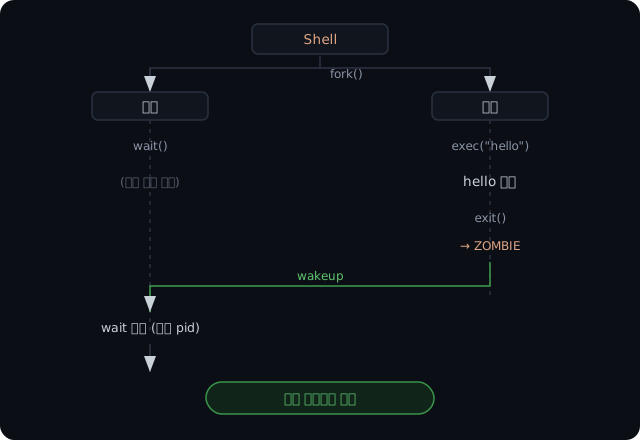
kernel-hobby userspace shell. try: ls, cat motd.txt, hello$ ls motd.txt (162 bytes) readme.txt (240 bytes) hello (7352 bytes)$ hello [hello] I am a separate program, exec'd from disk!$ cat motd.txtWelcome to kernel-hobby (C / RISC-V). ...$ nopenope: command not foundhello를 치면, 셸이 fork하고, 자식이 디스크의 hello를 exec해서 그 프로그램이 되고, hello가 출력하고 exit하면, 셸의 wait가 돌아와 프롬프트를 다시 띄웁니다.
유닉스가 명령을 실행하는 바로 그 메커니즘이 동작합니다.
이 한 장이면 fork → exec → wait의 흐름이 한눈에 들어와요.
5. 정리
작은 유닉스의 마지막 루프는 결국 세 가지 “자기 발밑” 문제의 모음이었습니다.
- exec: 자기가 올라타 있는 주소공간을 갈아엎는 문제. 우리는 satp를 유지하고 코드 페이지만 remap한 뒤 인라인
mv sp; sret으로 진입했고, 정통 satp 교체 경로는userret_to가 레지스터만으로 처리합니다. 실패 안전성의 핵심은 **새 상태를 끝까지 성공시킨 뒤에야 옛 코드를kfree**하는 순서입니다. - 블로킹 read: 바쁜 대기 대신 sleep/wakeup. 잃어버린 wakeup은 SIE를 끄는 게 아니라 스핀락
pt_lock으로 검사~sleep을 묶어 막습니다(sleep은 락을 든 채swtch). - wait/exit: 자식은 자기 커널 스택을 자기 손으로 못 치우므로 ZOMBIE로 남고, 채널=부모 proc으로 부모를 깨워 부모의
proc_freeimage가 회수합니다.
세 문제 모두 sleep/wakeup·채널·스핀락이라는 같은 도구로 풀린다는 점, 그리고 “회수 주체와 회수 시점”을 잘못 잡으면 발밑이 꺼진다는 점이 핵심입니다.
부팅부터 여기까지, 운영체제의 골격이 다 섰습니다.
부팅 → 트랩/타이머 → 키보드 → 페이지 할당기 → 페이징(Sv39)→ 유저모드+syscall → 프로세스+선점 스케줄러 → 유저 프로세스(격리)→ fork → ELF 로더 → 파일시스템 → 런타임 exec → 유저공간 셸- CPU: 트랩, 인터럽트, 선점형 스케줄링, sleep/wakeup
- 메모리: Sv39 페이징, 프로세스별 주소공간 격리
- 프로세스: fork, exec, wait, 생명주기
- 저장장치: virtio-blk 디스크, 파일시스템
- 인터페이스: 유저공간 셸이 디스크 프로그램을 fork+exec
“OS가 어떻게 도는가”를 책으로 읽는 것과, volatile 한 줄 때문에 한 시간을 헤매고 SUM 비트 하나에 막혀보는 건 전혀 다른 이해였습니다.
바닥부터 C로 짜며 그걸 손으로 만진 게 이 프로젝트의 전부입니다.
남은 건 전부 정제입니다. 쓰기 가능한 파일시스템, inode, exit 시 완전한 자원 회수, 셸 파이프/리다이렉트.
새 핵심 기능이 아니라 다듬기입니다.
4편에 걸친 연재는 여기서 매듭짓습니다.
참고 (1차 자료 우선)
- xv6 book — Chapter 1 (exec), Chapter 7 (Scheduling: sleep/wakeup, exit/wait)
- xv6 source —
exec.c,proc.c(sleep/wakeup, wait/exit),kernelvec.S - The RISC-V Instruction Set Manual, Volume II: Privileged Architecture (satp, sstatus SPP/SPIE/SUM, sret, sfence.vma)
- xv6: a simple, Unix-like teaching operating system (MIT 6.S081)

0. Introduction
In Part 3 we got all the way to fork, an ELF loader, and a filesystem.
Now two final pieces complete our “small Unix.”
- Runtime exec() — replacing a running process with a different program from disk
- Userspace shell — a shell running outside the kernel that takes commands and runs programs
Put together, these become the way Unix runs every command — the shell forks, the child becomes a program via exec, and the parent waits with wait.
This post splits that loop into three hard problems and shows how our kernel solves each in real code.
- exec — the “swap an engine on a moving car” problem: tearing down the very address space you’re standing on
- blocking read — the “wait for input without busy-waiting” problem: sleep/wakeup and the lost wakeup
- wait/exit — the “you can’t clear your own corpse” problem: zombies and the parent’s reclamation
1. The Real Problem exec Has to Solve
Replace a running process with a different program from disk, without killing it.
Until now, user programs were created just once, at boot, when make_user_proc loaded a kernel-embedded ELF into a code page.
But what happens when the shell types hello?
The shell is itself, not hello.
Somebody has to swap an already-running process for a different program from disk, and that’s exec().
The Unix idiom is fork + exec.
The shell forks a copy of itself (a child), and that child exec("hello")s to swap only its contents for hello.
The parent (the shell) stays alive and waits for the child to finish.
“Why fork first?” — because this is how the shell launches a new program without disappearing itself.
The real difficulty lies elsewhere.
exec is like “swapping the engine of a moving car.”
A process tears down its own address space and loads a new program, while the very code doing that runs on top of that same address space.
The truly dangerous one is the user stack.
proc_exec’s locals (newcode, entry, oldcode, …) live on the stack, and if you blow away the whole address space and take the stack with it, the floor drops out from under you.
Background — the three things exec must touch
Separating the state that one exec must change makes the design choices clear.
The code page
Where do the new program’s instructions go, and who reclaims the old code page?
We read the new ELF from disk and load it into a fresh physical page (newcode).
The old code page (oldcode) is no longer used, so it must go back via kfree to avoid a leak — but the timing of that reclaim is a trap, covered below.
The stack
Replace the user stack wholesale, or reuse it?
Replacing it honors the “clean new program” semantics, but it kills the locals of proc_exec, which is mid-exec.
Our kernel reuses the stack page and merely resets sp to the top — it doesn’t erase the old stack contents; it just rewinds sp to the top and uses it like a fresh stack (the leftover data below is never touched by the new program).
The address space (satp)
Build a whole new page table, or keep the existing one and remap a part?
The instant you change satp, the user stack itself becomes a different physical page.
Our kernel keeps satp and remaps only the code page — the lighter path.
Two cases — swap satp vs remap only the code page
The same exec can be implemented two ways, and we chose the latter.
| Aspect | Swap address space after fork (textbook) | Remap only the code page (ours) |
|---|---|---|
| Page table | Build new, switch satp | Keep existing |
| User stack | New stack page | Reuse existing (sp reset only) |
| User entry | userret_to(entry, sp, satp) — registers only | Inline mv sp; sret |
| Stack access after switch | Forbidden (different physical page) | Free (same address space) |
| Cost | Page-table build + sfence.vma | One remap + sfence.vma (no page-table build) |
| Isolation | Not a single old mapping remains | Only code swaps; rest of mappings kept |
The textbook path is cleaner (the old program’s mappings vanish entirely), but for our purposes remapping the code page is enough and far lighter.
One caveat: a remap also changes a PTE, so even with satp unchanged the old translation may linger in the TLB and must be flushed with
sfence.vma(which is exactly whatremap_user_codedoes). It’s lighter not because “there’s no TLB flush” but because we don’t build a new page table.
Our code — proc_exec()
The real proc_exec does more than the one-line summary.
Before loading the new code, it reclaims the heap and mmap regions the old program used (otherwise those pages leak).
// proc.c — proc_exec() (excerpt from the real code)int sz = fs_read(path, elfbuf, sizeof(elfbuf)); // read the ELF from diskif (sz < 0) return -1; // no such file -> fail
char *newcode = kalloc();zero(newcode, PGSIZE); // pre-zero for .bssuint64 entry;if (load_elf((const char *)elfbuf, newcode, &entry) != 0) { kfree(newcode); return -1; // broken ELF -> fail (shell survives)}
struct proc *p = current_proc();char *oldcode = p->ucode;vm_free_range(p->pagetable, HEAPBASE, p->heap_top); // reclaim old program's heapp->heap_top = HEAPBASE; // new program gets an empty heapif (p->mmap_base) { // reclaim old mmap region the same way uint64 mend = p->mmap_base + ((p->mmap_size + PGSIZE - 1) & ~(uint64)(PGSIZE - 1)); vm_free_range(p->pagetable, p->mmap_base, mend); p->mmap_base = 0;}
remap_user_code(p->pagetable, (uint64)newcode); // re-point USERVA -> new codep->ucode = newcode;if (oldcode) kfree(oldcode); // reclaim old code page (no leak)
// Enter U-mode. satp (address space) is unchanged, so the stack survives -> reuse it.uint64 s = r_sstatus();s &= ~SSTATUS_SPP; // sret will land in U-modes |= SSTATUS_SPIE; // enable interrupts in U-mode (preemptible)s |= SSTATUS_SUM; // kernel may save a trap frame on the user stackw_sstatus(s);w_sepc(entry); // the new program's entry pointasm volatile("mv sp, %0\n sret\n" :: "r"((uint64)USERSTACKTOP)); // top + sretreturn -1; // reaching here is a bug (sret never returns)The last two lines are the heart of it.
mv sp, USERSTACKTOP resets the stack pointer to the top, then sret drops straight into U-mode.
We pre-loaded sepc with the new program’s entry, so right after sret the CPU starts at hello’s first instruction.
When exec succeeds, this function never returns — the child process that called it has already become hello.
The textbook path that swaps satp too — userret_to
The left column of the table (the textbook path) is ready in kernelvec.S as well.
If you also have to swap satp, the inline mv sp; sret isn’t enough.
The instant you change satp, the user stack itself becomes a different physical page, and from then on you must never touch the stack again.
So the assembly helper userret_to(entry, sp, satp) does satp switch -> sfence.vma (flush the TLB) -> set sepc/sp -> sret, all in registers.
After the switch it touches no memory (no stack) and drops straight into user mode.
# kernelvec.S — userret_to(entry, sp, satp) [a0, a1, a2]# Changing satp swaps the whole user stack, so after the switch we never touch# the stack and sret using registers only. (sstatus is set up in C beforehand.)userret_to: csrw satp, a2 # switch address space sfence.vma zero, zero # flush old translations (TLB) csrw sepc, a0 # new entry point mv sp, a1 # new stack top sret # into U-mode (never returns)The pitfall — a failed exec must not kill the process
The most common pitfall in exec is “what happens on failure.”
If you type a nonexistent file (fs_read returns -1) or the ELF is broken, exec must not damage the current process — it just returns -1.
That’s why the real code makes load_elf fully succeed before it kfrees the old code page.
If anything fails midway, it discards only the freshly-allocated newcode and leaves the old state intact.
This is the secret to the shell surviving a typo and merely printing command not found (when the shell’s forked child fails to exec, the child prints that message and exits).
Common misconception fix: “Wipe the old stuff first, then load the new — cleaner that way” — no. If you
kfreethe old code first, there’s nowhere to go back to whenload_elffails. The key to failure-safety is to reclaim old resources only after the new state has fully succeeded. That’s exactly why our code putskfree(oldcode)afterremap_user_code.
An exec that survives failure with the process intact — that’s what keeps the shell running forever.
2. The Real Problem Blocking read Has to Solve
When there’s no input yet, wait without burning the CPU, and wake up the instant a character arrives.
Until now the shell lived inside the kernel (S-mode) — the hobby> shell from Part 1.
In real Unix, the shell is just another user program.
To move the shell out of the kernel, it has to be able to wait for keyboard input via read().
But what if the user hasn’t typed anything yet?
Two cases — busy-wait vs sleep/wakeup
| Aspect | Busy-wait | sleep/wakeup (ours) |
|---|---|---|
| When no input | while (no input) ; spinning | Yield the CPU, go SLEEPING |
| CPU usage | 100%, burned for nothing | 0%, used by other processes |
| CPU use | Burns 100% spinning, wasting power and cycles | Rests on wfi, woken by interrupt |
| How it wakes | (can’t wake at all) | Woken precisely by channel match |
| Risk | Deadlock-like starvation | Lost wakeup (solved below) |
Busy-wait is inefficient — the shell pins the CPU at 100%, spinning while doing no useful work and just burning power. (Our kernel is preemptive, so the timer interrupt still cuts in and handlers/other processes don’t starve — the problem is that the CPU is wasted wholesale until input arrives.)
The right answer is to block: when there’s no input, yield the CPU and sleep, then wake up when a character arrives.
Background — the channel
How do the sleeper and the waker agree on “the same event”?
This “sleep / wake up” is sleep / wakeup.
The core idea is a channel — just an arbitrary pointer value.
If the sleeper and the waker agree on the same address as a rendezvous token, you can wake exactly the sleepers waiting on it.
Here we use the input buffer’s address &inbuf as the channel.
// proc.c — the real codevoid sleep(void *chan) { struct proc *p = cpu_proc[r_tp()]; p->chan = chan; // mark: sleeping on this channel p->state = SLEEPING; swtch(&p->context, &cpu_sched[id]); // hand off to scheduler holding pt_lock p->chan = 0; // on wakeup (pt_lock held again) resume here}void wakeup(void *chan) { for (int i = 0; i < NPROC; i++) { struct proc *p = &proctable[i]; if (p->state == SLEEPING && p->chan == chan) p->state = RUNNABLE; // wake those sleeping on this channel }}read() (console_read) sleeps with sleep(&inbuf) when the input buffer is empty (in_r == in_w).
Meanwhile the UART interrupt (console_intr) accumulates characters into the buffer and echoes them, and once a line is complete (\n) it wakes the sleeping read with wakeup(&inbuf).
// console.c — the real code (gist)int console_read(char *dst, int n) { int i = 0; acquire(&pt_lock); // (A) take the lock first while (i < n) { while (in_r == in_w) sleep(&inbuf); // (B) no input -> sleep (lock held) char c = inbuf[in_r % INBUF]; in_r++; dst[i++] = c; if (c == '\n') break; // end of line } release(&pt_lock); return i;}// console.c — the interrupt sidevoid console_intr(char c) { if (c == '\r') c = '\n'; acquire(&pt_lock); // same lock as read // (DEL/Backspace and buffer-full handling omitted) inbuf[in_w % INBUF] = c; in_w++; uart_putc(c); // echo the input if (c == '\n') wakeup(&inbuf); // line complete -> wake read release(&pt_lock);}The pitfall — the lost wakeup
Here’s the classic pitfall every OS textbook flags.
What if, in the instant read checks “is the buffer empty?” (in_r == in_w) and decides to sleep, an interrupt slips in, inserts a character, and fires wakeup?
The order becomes: read sees “empty” -> (interrupt inserts a char and wakes) -> sleep (now asleep), and it misses a wakeup that has already gone by, so it never wakes up.
That’s a lost wakeup.
The key is to bind “check -> sleep” atomically so no wakeup can slip in between.
Our approach is the spinlock pt_lock.
console_read takes the lock at (A), and holding that lock it does the check and enters sleep.
But the waker, console_intr, must also acquire the same pt_lock to put a character in the buffer and fire wakeup.
So while read holds the lock, the interrupt handler can neither touch the buffer nor fire wakeup — it waits at the lock.
The magic is inside sleep.
sleep crosses into the scheduler via swtch still holding the lock (look at the sleep code above — it doesn’t release it).
Only after the process is marked SLEEPING and has come off the CPU does the lock get released on the scheduler side.
So until “mark as sleeping + yield the CPU” completes, no one else can grab the lock, and a wakeup can’t wedge into that gap.
Everything from the check to actually falling asleep is protected as one unit.
Common misconception fix: “Interrupts are off during a trap (SIE=0), so a lost wakeup is prevented just by clearing SIE” — plausible on a single core, but a wrong generalization. Our kernel is written with multicore in mind — another core’s interrupt could run
console_intrconcurrently. So clearing your own core’s interrupts isn’t enough; the real defense is to wrap the shared data (inbuf,in_w, process state) in a spinlock so check~sleep is one unit. That’s whyconsole_intrbothers to acquirept_locktoo.
When the shell sleeps and there’s no other process to run, the scheduler has nothing to do.
At that point, only when the scheduler scans and finds nothing RUNNABLE, the core rests with wfi (wait-for-interrupt) to save power, and wakes when a console/timer interrupt comes in.
That console interrupt has just made the shell RUNNABLE via wakeup, so the scheduler picks the shell and runs it again.
Bind the check and the sleep under the same lock — half of synchronization is finding which two actions must be made atomic.
3. The Real Problem wait/exit Has to Solve
Who reclaims a finished child’s resources, and when? A child cannot free the very kernel stack it’s standing on.
When the shell runs a command, it has to wait until that command finishes.
Otherwise hello’s output and the next $ prompt would get interleaved into a mess.
Also, someone has to reclaim a finished child’s resources (user pages, page table, kernel stack…), and the parent does that in wait.
Background — the zombie
Why can’t a dead child vanish at once?
A child can’t fully clean up its own resources at exit — for instance, it can’t free the very kernel stack it’s currently running on (free it and the floor drops out).
So at exit the child doesn’t vanish; it lingers briefly in the ZOMBIE state.
“Marked as dead, but the body isn’t cleared yet.”
And it wakes its parent via wakeup to say “I’m done, come clean me up.”
The parent’s wait, on finding a zombie child, reaps its resources, frees the slot to UNUSED, and returns its pid. (Real Unix’s wait also collects the child’s exit code, but our implementation only returns the pid.)
// proc.c — the real codevoid proc_exit(void) { struct proc *p = cpu_proc[r_tp()]; acquire(&pt_lock); if (p->parent) wakeup(p->parent); // wake a waiting parent (parent as channel) p->state = ZOMBIE; // leave only the body swtch(&p->context, &cpu_sched[id]); // into the scheduler, pt_lock held. No return. for (;;) ; // (unreachable)}
int proc_wait(void) { struct proc *p = cpu_proc[r_tp()]; acquire(&pt_lock); for (;;) { int kids = 0; for (int i = 0; i < NPROC; i++) { struct proc *q = &proctable[i]; if (q->parent != p) continue; kids = 1; if (q->state == ZOMBIE) { // found a zombie child int pid = q->pid; proc_freeimage(q); // reclaim user pages + page table + stack q->parent = 0; q->state = UNUSED; // free the slot release(&pt_lock); return pid; } } if (!kids) { release(&pt_lock); return -1; } // no children sleep(p); // sleep until a child wakes us (self as chan) }}Channel = the parent proc
Notice the channel is p (the parent itself).
The parent sleeps on “itself” as the token with sleep(p), and the child wakes it in proc_exit with wakeup(p->parent) — the parent as channel.
Since they use the same address (the parent proc) as the token, exactly that parent wakes.
It’s the exact same mechanism as using &inbuf as the channel in §2 — a channel is just “an agreed-upon address,” whether it’s an input buffer or a parent struct.
And because sleep/wakeup again run under the same pt_lock, even if the child’s exit slips in between the “zombie check” and the sleep, no wakeup is lost (the lost-wakeup defense from §2 is reused as-is).
Common misconception fix: “On exit, can’t the child just clean everything up itself?” — no. The child is currently running
proc_exiton its own kernel stack, so if itkfrees that stack with its own hands, the floor drops out immediately. That’s why the child leaves only the body as a ZOMBIE, and the parent’sproc_freeimagereclaims the rest, kernel stack included. That’s why the reclaimer is the parent, not the child — you can’t free the very stack you’re standing on.
Resource reclamation (proc_freeimage) actually returns the user code/stack pages, the demand-allocated heap and mmap pages, the kernel stack, and even the page-table tree, all back to the free list via kfree.
This is the final link where the physical page allocator from Part 1 “gets back the pages it handed out.”
4. Putting it all together — the userspace shell
The shell is now an ordinary C program (user/init.c).
It prints a prompt, reads a line, handles built-in commands (ls/cat/help/rm/write/mem) directly, and treats everything else as a disk program with fork -> child execs -> parent waits.
// user/init.c — the userspace shell (gist)for (;;) { puts("$ "); long n = sys_read(line, sizeof(line) - 1); // blocking read (sleeps if empty) <- §2 if (n <= 0) continue; if (line[n - 1] == '\n') line[n - 1] = 0; // strip newline
if (streq(line, "ls")) { sys_ls(); continue; } // built-in if (startswith(line, "cat ")) { sys_cat(line + 4); continue; } // ... help / rm / write / mem are also built-in
long pid = sys_fork(); // external command if (pid == 0) { // child sys_exec(line); // morph into the disk program <- §1 puts(line); puts(": command not found\n"); // reached only if exec failed sys_exit(); } sys_wait(); // parent: wait until child finishes <- §3}The three sections converge in one loop.
sys_read is §2’s blocking read, sys_exec is §1’s address-space swap, and sys_wait is §3’s zombie reclamation.
Look closely at the child branch.
If sys_exec(line) succeeds, that child has already become a different program, so it never returns to the next line.
command not found prints only when exec failed and returned.
This shows how “a failed exec returns -1 instead of killing the process” from §1 is actually used by the shell.
At boot, the kernel launches this shell as the first user process.
kernel-hobby userspace shell. try: ls, cat motd.txt, hello$ ls motd.txt (162 bytes) readme.txt (240 bytes) hello (7352 bytes)$ hello [hello] I am a separate program, exec'd from disk!$ cat motd.txtWelcome to kernel-hobby (C / RISC-V). ...$ nopenope: command not foundType hello and — the shell forks, the child execs hello from disk to become that program, hello prints and exits, the shell’s wait returns and the prompt comes back.
The very mechanism by which Unix runs commands is working.
This one picture captures the whole fork → exec → wait flow at a glance.
5. Wrap-up
The last loop of a small Unix turned out to be a collection of three “floor under your feet” problems.
- exec — tearing down the address space you’re standing on. We keep satp, remap only the code page, and enter via inline
mv sp; sret; the textbook satp-swapping path is handled register-only byuserret_to. The key to failure-safety is the ordering:kfreethe old code only after the new state has fully succeeded. - blocking read — sleep/wakeup instead of busy-wait. The lost wakeup is prevented not by clearing SIE but by binding check~sleep with the spinlock
pt_lock(sleepdoesswtchwhile holding the lock). - wait/exit — a child can’t free its own kernel stack, so it lingers as a ZOMBIE and wakes the parent (channel = parent proc); the parent’s
proc_freeimagereclaims it.
What stands out is that all three are solved with the same tools — sleep/wakeup, channels, and the spinlock — and that getting “who reclaims, and when” wrong drops the floor out from under you.
From boot to here, the skeleton of an operating system is fully in place.
부팅 → 트랩/타이머 → 키보드 → 페이지 할당기 → 페이징(Sv39)→ 유저모드+syscall → 프로세스+선점 스케줄러 → 유저 프로세스(격리)→ fork → ELF 로더 → 파일시스템 → 런타임 exec → 유저공간 셸- CPU — traps, interrupts, preemptive scheduling, sleep/wakeup
- Memory — Sv39 paging, per-process address space isolation
- Processes — fork, exec, wait, lifecycle
- Storage — virtio-blk disk, filesystem
- Interface — a userspace shell launches disk programs via fork+exec
Reading “how an OS runs” in a book, versus spending an hour stuck because of one missing volatile line and getting blocked by a single SUM bit — those were entirely different kinds of understanding.
Building it from the ground up in C and touching it with my own hands is what this whole project was about.
What’s left is all refinement — a writable filesystem, inodes, full resource reclamation on exit, shell pipes and redirection.
Not new core features, just polish.
This four-part series wraps up here.
References (Primary Sources First)
- xv6 book — Chapter 1 (exec), Chapter 7 (Scheduling: sleep/wakeup, exit/wait)
- xv6 source —
exec.c,proc.c(sleep/wakeup, wait/exit),kernelvec.S - The RISC-V Instruction Set Manual, Volume II: Privileged Architecture (satp, sstatus SPP/SPIE/SUM, sret, sfence.vma)
- xv6: a simple, Unix-like teaching operating system (MIT 6.S081)
댓글
댓글 수정/삭제는 GitHub Discussions에서 가능합니다.