모든 글
약 45분 분량 학습 프로젝트/토이 커널

유저모드에서 프로세스까지

목차

0. 들어가며

1편에서 커널의 골격을 세웠습니다. 부팅, UART 출력, 트랩/타이머, 키보드+셸, 페이지 할당기, Sv39 페이징이 그것입니다.
그런데 거기까진 모든 코드가 커널 권한(S-mode)에서 돕니다.
운영체제를 운영체제답게 만드는 건 “권한이 낮은 유저 프로그램이 커널에 일을 부탁한다”는 경계입니다.

이 글이 세우는 건 그 경계, 그리고 그 위에 올라가는 프로세스입니다.
하나의 질문으로 묶을 수 있습니다. 여러 실행 흐름을 같은 CPU 위에서 안전하게, 격리한 채, 강제로 번갈아 돌리려면 무엇이 필요한가?
이 질문을 세 조각으로 쪼개 차례로 답합니다.

  1. 유저모드 + 시스템콜: U-mode로 내려가서 ecall로 커널을 부른다(권한 경계)
  2. 프로세스 + 선점형 스케줄러: 컨텍스트 스위치로 여러 흐름을 강제로 번갈아 돌린다(시간 분할)
  3. 유저 프로세스: 프로세스마다 페이지 테이블을 줘서 주소공간을 격리한다(공간 분할)

마지막 두 절은 이걸 만들며 디버깅에서 배운 두 가지, 공유 CSR과 SUM 비트입니다.
솔직히 이 두 버그가 이번 단계에서 제일 많이 배운 부분이라, 별도 절로 떼어 정리했습니다.

참고서는 여전히 xv6(MIT 6.S081). 다만 트램폴린/프로세스별 트랩프레임 같은 정석 구조는 한 번에 다 넣지 않고, 동작하는 가장 단순한 길로 먼저 갔습니다(아래에서 그 대가도 만납니다).

1. 권한 경계가 풀어야 하는 진짜 문제

“유저 프로그램은 커널만큼의 권한을 가져선 안 된다. 그러면서도 화면 출력 같은 진짜 일은 해야 한다.”

말은 단순한데, 이 둘은 정면으로 충돌합니다.
지금까지 우리 커널은 전부 S-mode에서 돌았습니다. 셸도, 타이머도, 페이지 할당기도 그랬습니다.
S-mode는 사실상 못 하는 게 없습니다. CSR(제어·상태 레지스터, 즉 satp·sstatus처럼 CPU 설정·상태를 담는 특수 레지스터)을 마음껏 읽고 쓰고, 장치 메모리(UART·PLIC)에 직접 접근하고, 페이지 테이블도 갈아끼웁니다.

문제는 “프로그램”을 이 권한으로 돌리면 곤란하다는 것입니다.

// 만약 유저 프로그램이 S-mode 권한으로 돈다면?
*(volatile uint64 *)0x80200000 = 0; // 커널 텍스트를 0으로 — 커널 자살
w_satp(0); // 페이징 끄기 — 격리 붕괴

유저가 짠 프로그램에 버그가 하나 있어서 엉뚱한 주소에 쓰기라도 하면, 커널 자체가 무너집니다.
그래서 RISC-V는 권한 레벨을 M(머신) > S(슈퍼바이저) > U(유저) 셋으로 나누고, OS는 유저 프로그램을 권한이 가장 낮은 U-mode에 가둡니다.

CPU가 보장해야 하는 경계는 세 가지입니다:

  1. U-mode는 CSR을 못 만진다satp·sstatus 같은 시스템 상태를 못 건드림
  2. U-mode는 장치 메모리를 못 만진다 → UART·PLIC 직접 접근 금지
  3. U-mode는 PTE_U가 없는 페이지(=커널 페이지)에 접근만 해도 폴트 → 커널 메모리 격리

그럼 화면 출력 같은 진짜 일은 어떻게 할까요? 커널에 부탁합니다.
이게 시스템콜입니다.
비유하자면 U-mode 프로그램은 손님이고 커널은 주방입니다.
손님이 직접 주방에 들어가 불을 만질 순 없으니, 주문서를 적어 종업원에게 건네는 셈입니다.
RISC-V에서 그 “주문”이 ecall(environment call) 명령입니다.

ecall은 어떻게 권한을 넘기나

유저가 “부탁”을 어떻게 전달하고, CPU는 어떻게 S-mode로 올라가나?

유저가 커널에 뭘 부탁하려면, 약속된 자리에 인자를 놓아야 합니다.
우리는 xv6처럼 a7에 콜 번호, a0부터 인자를 두기로 했습니다.

li a7, 1 # a7 = SYS_putchar (콜 번호)
li a0, 85 # a0 = 'U' (인자)
ecall # "커널아, 이 글자 좀 찍어줘"

ecall을 U-mode에서 실행하면 CPU가 트랩을 일으킵니다.
1편에서 본 그 트랩 메커니즘 그대로입니다. stvec이 가리키는 핸들러(kernelvec)로 점프하고, S-mode로 올라갑니다.
다만 이번엔 scause8(Environment call from U-mode) 로 들어옵니다.
그래서 1편에서 만든 트랩 핸들러에 갈래 하나만 더 달면 끝입니다.

// trap.c — kerneltrap()
} else if (cause == SCAUSE_U_ECALL) {
// 유저 프로그램이 ecall로 커널에 '부탁'한 것 = 시스템콜.
syscall(f);
f->sepc += 4; // ecall(4바이트) '다음' 명령으로 복귀(프레임의 sepc 수정)
}

여기서 f->sepc += 4가 중요합니다.
sepc트랩이 발생한 명령의 PC가 들어갑니다. ecall 같은 예외는 그 명령 자신의 주소가, 인터럽트는 다음에 재개할 주소가 담깁니다. ecall은 예외라 ecall 자기 자신의 주소가 들어 있습니다.
그대로 복귀하면 같은 ecall을 또 실행해서 무한 루프에 빠집니다.
ecall은 (압축 형식이 없어) 항상 4바이트라, sepc에 4를 더해 그 다음 명령으로 복귀시킵니다.

흔한 오해 정정: 왜 w_sepc()로 CSR을 직접 안 고치고 f->sepc(프레임 사본)를 고칠까요? “어차피 같은 값 아니냐” 싶지만 아닙니다. CSR sepc는 코어에 하나뿐이라 트랩이 인터리빙되면 덮여버립니다. 트랩 프레임 안의 사본을 고쳐야 그 트랩만의 복귀 상태로 안전하게 남습니다. 이 정확한 이유가 5절의 첫 번째 디버깅 이야기입니다.

콜 번호로 분기하는 디스패처는 user.c에 있습니다.
실제 코드는 시스템콜이 16개나 되지만(fork/exec/read/mmap/tcp…), 골격만 보면 이렇습니다.

// user.c — 시스템콜 디스패치 (커널 측)
void syscall(struct regframe *f) {
switch (f->a7) { // a7 = 콜 번호로 분기
case SYS_putchar:
uart_putc((char)f->a0); // a0 = 유저가 부탁한 글자
f->a0 = 0; // 반환값을 프레임의 a0에 써둔다
break;
// SYS_fork / SYS_exec / SYS_read / ...
}
}

눈여겨볼 건 반환값을 f->a0에 쓴다는 점입니다.
f는 트랩 프레임, 즉 트랩에 진입할 때 유저의 레지스터를 통째로 저장해 둔 사본입니다.
여기 a0을 고쳐두면, 트랩에서 복귀할 때 그 값이 유저의 a0 레지스터로 복원됩니다.
유저 입장에선 “ecall 했더니 a0에 결과가 들어와 있다”, 딱 함수 호출처럼 보이는 셈입니다.

처음 U-mode로 내려보내기: sret 한 방

부탁을 받는 길은 만들었으니, 이제 유저 프로그램을 U-mode로 처음 내려보내는 길이 필요합니다.
이건 의외로 단순합니다. sret 명령 하나면 됩니다.

sret은 원래 “트랩에서 복귀” 명령입니다.
CPU는 sret을 보면 sstatus.SPP 비트를 보고 “트랩 직전에 어느 모드였지?”를 판단해, 그 모드로 돌아갑니다.
그래서 우리가 마치 U-mode에서 트랩이 났던 것처럼 상태를 꾸며두고 sret하면, CPU는 그대로 U-mode로 “복귀”합니다.
실제로는 한 번도 U-mode에 있던 적이 없는데 말입니다.

우리 코드에선 enter_user()가 그 일을 합니다.

// proc.c — 유저 프로세스가 처음 실행될 때 거치는 래퍼
static void enter_user(void) {
release(&pt_lock); // 스케줄러가 잡은 락을 놓는다(첫 실행)
uint64 s = r_sstatus();
s &= ~SSTATUS_SPP; // SPP=0 → sret 시 U-mode로 떨어진다
s |= SSTATUS_SPIE; // U-mode에서 인터럽트 enable(= 선점 가능)
s |= SSTATUS_SUM; // 커널이 유저 페이지 접근 가능(6절에서 다시 만남)
w_sstatus(s);
w_sepc(USERVA); // 복귀 주소 = 유저 진입점
// sp를 유저 스택 top으로 잡고 sret. 돌아오지 않는다.
asm volatile("mv sp, %0\n sret\n" :: "r"((uint64)USERSTACKTOP));
}

SPP=0이 “직전이 U-mode였다”는 거짓말이고, SPIE가 “U-mode에선 인터럽트를 켜라”(이게 있어야 타이머가 유저를 선점합니다. 엄밀히는 SPIE복귀 후 SIE로 복원될 값이라, sret 순간 SIE ← SPIE로 인터럽트가 켜집니다), sepc=USERVA가 “여기로 복귀하라”입니다.
sret을 때리면 CPU는 권한을 U-mode로 낮추고 USERVA로 점프합니다. 유저 프로그램의 첫 명령이 거기 있습니다.

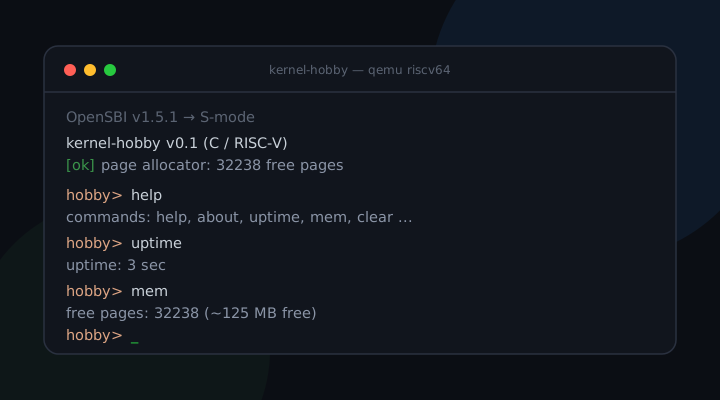
[kernel] entering user mode (U-mode)...
Hello from user mode! (printed by the kernel, requested via ecall)

U-mode로 떨어진 프로그램이 ecall로 부탁하고, 커널이 받아서 처리한 것입니다.

이 한 장이면 권한 경계를 넘나드는 한 번의 왕복이 한눈에 들어옵니다.
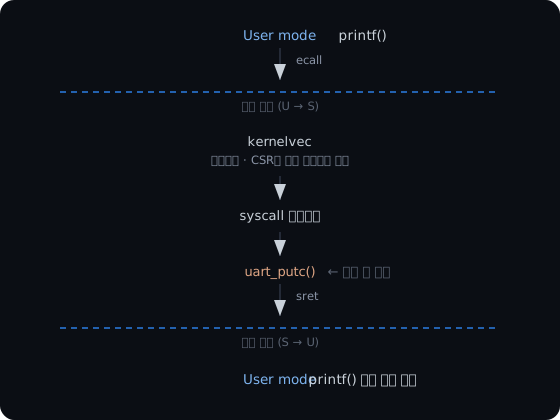
유저모드 printf가 ecall로 S-mode에 진입해 kernelvec·syscall 디스패치·uart_putc를 거쳐 sret로 다시 유저모드로 복귀하는 권한 경계 왕복

별것 아닌 한 줄처럼 보이지만, 권한 경계를 처음 넘은 순간이라 의미가 큽니다.
지금까지 한 덩어리였던 “커널”이 비로소 “커널”과 “그 위에서 도는 프로그램”으로 갈라진 것입니다.

권한 경계는 “막는 것”이자 “넘겨주는 것”이다. U-mode가 못 하게 막는 장치(폴트)와, 합법적으로 넘어가게 해주는 통로(ecall/sret)는 한 쌍입니다.

2. 시간 분할이 풀어야 하는 진짜 문제

하나의 프로그램만 도는 건 아직 OS가 아닙니다.

“CPU 코어는 하나(혹은 몇 개)뿐인데, 실행 흐름은 여럿이다. 어떻게 동시에 도는 것처럼 보이게 하나?”

운영체제다움은 여러 실행 흐름을 번갈아 돌리는 데서 옵니다. 셸이 입력을 기다리는 동안 다른 프로그램이 계산을 돌리고, 그게 또 멈추면 세 번째가 끼어듭니다.
비결은 빠르게 번갈아 태우는 것입니다.
그런데 흐름을 번갈아 태우려면 두 가지를 풀어야 합니다:

  1. 멈췄다 정확히 그 자리에서 다시 시작할 수 있어야 함 → 컨텍스트 스위치(이 절)
  2. 양보를 안 하는 프로그램도 강제로 빼앗을 수 있어야 함 → 선점(아래)

실행 흐름의 “상태”는 어디에 있나

흐름을 멈췄다 재개하려면 무엇을 저장해야 하나?

실행 흐름의 “현재 상태”는 결국 레지스터들에 다 들어 있습니다. 지금 어느 함수의 어디까지 왔는지(ra), 스택은 어디인지(sp), 계산 중이던 값들(s0~s11) 말입니다.
그래서 컨텍스트 스위치는 지금 흐름의 레지스터를 어딘가 저장하고, 다른 흐름의 레지스터를 복원하는 게 전부입니다.
저장해 둔 레지스터 묶음을 우리는 struct context라 부르고, 프로세스마다 하나씩 갖고 있습니다.

그런데 레지스터가 31개나 되는데, 전부 저장할 필요는 없습니다.
swtch평범한 C 함수처럼 호출됩니다.
C 호출 규약(calling convention)상, 함수를 호출하면 a0~a7이나 t0~t6 같은 caller-saved 레지스터는 호출한 쪽이 이미 알아서 스택에 대피시킵니다.
그러니 swtch가 따로 챙길 건 callee-saved 레지스터(s0~s11) + ra(복귀 주소) + sp(스택 포인터), 딱 14개입니다.
한 가지 짚고 갈 게 있습니다. rasp는 호출 규약상 엄밀히는 caller-saved인데, 왜 swtch가 직접 저장할까요?
swtch는 보통 함수처럼 자기를 부른 쪽 으로 돌아가는 게 아니라 다른 실행 흐름으로 돌아가기 때문입니다.
ra(어디로 돌아갈지)와 sp(어느 스택인지)가 바로 그 “흐름의 정체” 라, 이 둘을 저장·복원하는 게 흐름 전환의 본질입니다. 그래서 일반 함수의 caller-saved 규칙과 무관하게 swtch만큼은 직접 챙깁니다.

# swtch.S — void swtch(struct context *old, struct context *new)
# a0 = old(저장할 곳), a1 = new(복원할 곳)
swtch:
sd ra, 0(a0) # 현재 흐름의 ra/sp/s0~s11을 old에 저장
sd sp, 8(a0)
sd s0, 16(a0)
sd s1, 24(a0)
# ... s2 ~ s11 (offset 32 ~ 104) ...
sd s11,104(a0)
ld ra, 0(a1) # 새 흐름의 값을 new에서 복원
ld sp, 8(a1)
ld s0, 16(a1)
# ... s1 ~ s11 ...
ld s11,104(a1)
ret # ra(=새 흐름의 복귀 주소)로 점프 → 갈아탔다

마법은 마지막 ret입니다.
ret은 “ra가 가리키는 곳으로 돌아가라”는 명령인데, 방금 ra새 흐름의 값으로 덮어썼습니다.
그래서 swtch라는 함수를 호출했는데, 정작 return은 전혀 다른 실행 흐름에서 나옵니다.
A가 swtch를 부르면 함수가 “안 돌아오고”, 한참 뒤 B가 양보하며 swtch를 부르는 순간 비로소 A의 swtch가 return합니다.
한 함수 호출의 입구와 출구가 서로 다른 스레드에 걸쳐 있는 셈입니다.

스케줄러와 yield의 핑퐁

스케줄러는 단순합니다.
프로세스 테이블을 돌며 실행 가능한(RUNNABLE) 프로세스를 찾으면, RUNNING으로 바꾸고 swtch로 그 안에 진입합니다.
그 프로세스가 양보(yield)하면 swtch가 return하면서 스케줄러로 돌아오고, 다음 프로세스를 찾아 또 진입합니다(라운드로빈).

// proc.c — 스케줄러 (각 코어가 무한 루프)
void scheduler(void) {
int id = r_tp(); // 이 코어 번호
for (;;) {
intr_on(); // 이 코어가 인터럽트를 받을 수 있게
acquire(&pt_lock);
for (int i = 0; i < NPROC; i++) {
struct proc *p = &proctable[i];
if (p->state == RUNNABLE) {
p->state = RUNNING;
cpu_proc[id] = p;
switch_satp(p->pagetable); // 주소공간 전환(3절)
swtch(&cpu_sched[id], &p->context); // p 실행 → 양보 시 복귀
switch_satp(kernel_pt()); // 복귀 후 커널 주소공간으로
cpu_proc[id] = 0;
}
}
release(&pt_lock);
}
}

반대편엔 yield()가 있습니다. 프로세스가 CPU를 스케줄러에 돌려주는 함수입니다.
스케줄러의 swtchyieldswtch서로의 ra로 핑퐁하면서 두 흐름이 번갈아 깨어나는 구조입니다.

// proc.c — 현재 proc이 CPU를 스케줄러에 양보
void yield(void) {
int id = r_tp();
struct proc *p = cpu_proc[id];
if (!p) return;
acquire(&pt_lock);
if (p->state == RUNNING)
p->state = RUNNABLE; // 다시 스케줄될 수 있게
swtch(&p->context, &cpu_sched[id]); // 스케줄러로 → 나중에 여기로 복귀
release(&pt_lock);
}

pt_lockswtch를 가로질러 들고 다니는 게 보일 겁니다. 스케줄러가 락을 든 채로 프로세스에 진입하고, 프로세스는 첫 실행 시 thread_start/enter_user에서 그 락을 놓습니다(release(&pt_lock)). 일종의 바통 넘기기입니다. 멀티코어(NCPU)에서 프로세스 테이블이 동시에 망가지지 않게 지키는 장치인데, 자세한 건 멀티코어 편에서 다룹니다.

협력형이 풀지 못하는 경우: 선점이 필요한 이유

여기까지는 프로세스가 자발적으로 yield를 불러야 전환됩니다(협력형, cooperative).
그런데 협력형은 한 가지 경우를 못 풉니다. 바로 양보를 안 하는 프로그램입니다.
무한 루프를 도는 프로그램은 영영 양보를 안 하니, 그 순간 다른 모든 흐름이 굶습니다.
그래서 진짜 OS는 양보를 안 해도 강제로 빼앗는 선점(preemption)을 합니다.
열쇠는 타이머 인터럽트입니다.

구분협조적 양보(cooperative)타이머 선점(preemptive)
전환 계기프로세스가 직접 yield() 호출타이머 인터럽트가 대신 yield()
악성/버그 루프영영 양보 안 함 → 전체 정지다음 틱에 강제로 빼앗김
응답성양보 지점 사이엔 응답 불가틱 주기(우리는 0.1초)로 보장
구현 비용작음(yield만)타이머 핸들러에 한 줄

1편에서 만든 주기 타이머에 딱 한 줄만 더하면 선점형이 됩니다.
타이머가 울릴 때마다, 지금 프로세스가 돌고 있으면 대신 yield()를 불러주는 것입니다.

// trap.c — 타이머 인터럽트 처리
ticks++;
w_stimecmp(r_time() + TIMER_INTERVAL); // 다음 타이머 예약
if (current_proc())
yield(); // 실행 중인 스레드를 스케줄러에 강제 양보(= 선점)

프로세스 입장에선 자기가 잘 돌다가 어느 순간 멈췄고, 한참 뒤 아무 일 없었다는 듯 그 자리에서 재개됩니다.
그 “한참” 사이에 다른 프로세스가 타이머 몫만큼 돌았던 것입니다. 본인은 전혀 모릅니다.
이게 멀티태스킹의 환상입니다.

셸도 다시 살렸습니다.
셸은 UART 인터럽트로 동작하니 어느 프로세스가 돌든 키 입력에 응답합니다.
그리고 두 스레드가 진짜로 번갈아 도는지 눈으로 보려고 ps 명령을 추가했습니다. 각 스레드가 스핀하며 카운터를 올리는데, 타이머가 둘을 번갈아 선점하면 두 카운터가 함께 늘어납니다.

hobby> ps
threads (preemptively scheduled):
spinA: ticks=34888638
spinB: ticks=31213595
hobby> ps (1.2초 후)
spinA: ticks=64687087 +30M
spinB: ticks=61305716 +30M

두 카운터가 1.2초 동안 각각 ~30M씩 늘었습니다.
둘 다 비슷하게 자란다는 게 핵심입니다. 타이머가 공평하게 번갈아 태우고 있다는 증거입니다.
선점형 멀티태스킹이 도는 것입니다.

선점은 “프로그램을 못 믿는다”는 설계 결정이다. 협력형은 모든 프로그램이 착하게 양보한다고 믿습니다. 선점형은 그 신뢰를 타이머라는 외부 강제력으로 대체합니다. 그래야 한 악성 루프가 시스템 전체를 인질로 잡지 못합니다.

3. 공간 분할이 풀어야 하는 진짜 문제

2절의 “프로세스”는 사실 커널 스레드였습니다. S-mode에서 돌고, 페이지 테이블도 다 같이 공유했습니다.

“여러 프로그램이 같은 주소공간을 보면, 한쪽이 다른 쪽 메모리를 마음껏 덮어쓸 수 있다. 어떻게 막나?”

같은 주소공간을 공유하면 서로의 메모리를 망가뜨릴 수 있습니다.
이건 진짜 프로세스가 아닙니다.
진짜 프로세스의 핵심은 격리입니다.
1편 5절에서 가상메모리를 만들 때 약속했던 “프로세스마다 다른 번역 표”가 바로 여기서 실현됩니다.
프로세스 A의 0x1000과 B의 0x1000이 서로 다른 물리 페이지로 번역되면, 둘은 같은 주소를 써도 안 부딪히고 서로를 망가뜨릴 수도 없습니다.
그러려면 프로세스마다 페이지 테이블을 따로 줘야 합니다.

페이지 테이블을 어떻게 구성하나: proc_pagetable

유저 페이지만 넣으면 될까? 아니면 커널도 같이 넣어야 하나?

각 프로세스의 페이지 테이블은 두 부분으로 이뤄집니다.
커널 영역(식별 매핑) + 그 프로세스만의 유저 코드·스택(PTE_U 달림)입니다.

// vm.c — 프로세스별 페이지 테이블
pagetable_t proc_pagetable(uint64 ucode_pa, uint64 ustack_pa) {
pagetable_t pt = (pagetable_t)kalloc();
memset(pt, 0, PGSIZE);
map_kernel(pt); // 커널을 이 테이블에도 식별 매핑
mappages(pt, USERVA, PGSIZE, ucode_pa, PTE_R|PTE_X|PTE_U); // 코드: 읽기·실행, 유저 접근
mappages(pt, USERSTACK, PGSIZE, ustack_pa, PTE_R|PTE_W|PTE_U); // 스택: 읽기·쓰기, 유저 접근
return pt;
}

코드 페이지는 R|X(읽기·실행, 쓰기 금지), 스택은 R|W(읽기·쓰기, 실행 금지)입니다. 1편에서 본 권한 비트가 여기서 보호 역할을 합니다.
그리고 둘 다 PTE_U가 붙어 있습니다.
이게 있어야 U-mode 프로그램이 이 페이지에 접근할 수 있습니다(커널 페이지엔 PTE_U가 없으니 유저가 건드리면 폴트가 납니다. 1절의 경계 (3)이 바로 이것입니다).

왜 커널까지 매핑할까요? U-mode에서 트랩(ecall·타이머)이 나는 순간엔 satp여전히 그 프로세스 테이블을 가리킵니다.
그런데 트랩 핸들러(kernelvec)도 결국 메모리에 있는 코드라, 그 주소가 지금 페이지 테이블에 매핑돼 있어야 실행됩니다.
그래서 모든 프로세스 테이블에 커널을 같은 주소(식별 매핑)로 복제해 둡니다. 그러면 satp을 바꾸지 않고도 핸들러가 그대로 돌아갑니다.

여기엔 트레이드오프가 있습니다:

구분커널 전체를 모든 테이블에 복제(우리)트램폴린 한 페이지만(xv6 정석)
매핑하는 양커널 텍스트·데이터 전부진입 코드 한 장 + 트랩프레임 한 장
satp 교체 시점트랩 진입 후 핸들러 안에서 천천히트램폴린에서 즉시
구현 복잡도단순(map_kernel 한 줄)복잡(별도 주소공간 전환 로직)
메모리 비용테이블마다 커널 매핑이 들어가 더 씀최소
보안커널이 유저 테이블에서도 보임커널은 별도 주소공간

우린 학습용이라 “커널을 통째로 복제”하는 더 단순한 길을 택했습니다.
대신 페이지 테이블마다 커널 매핑이 들어가니 메모리를 좀 더 쓰고, 6절에서 그 단순화의 또 다른 대가(SUM 비트)를 만납니다.

주소공간까지 함께 전환: switch_satp

페이지 테이블을 따로 줬으면, 프로세스를 바꿀 때 어느 테이블을 쓸지는 언제 바꾸나?

그게 satp 레지스터입니다(1편에서 페이징을 켰던 그 레지스터).
스케줄러가 프로세스에 진입하기 직전에 satp을 그 프로세스 테이블로 바꾸고, 양보받아 돌아오면 다시 커널 테이블로 되돌립니다.
satp을 바꾸는 순간부터 같은 가상주소라도 전혀 다른 물리 페이지로 번역됩니다. 이게 프로세스마다 독립된 주소공간이 생기는 원리입니다.

// proc.c — scheduler() 안
switch_satp(p->pagetable); // 이 프로세스 주소공간으로 (satp 교체 + TLB flush)
swtch(&cpu_sched[id], &p->context); // 실행 → 양보 시 복귀
switch_satp(kernel_pt()); // 복귀 후 커널 주소공간으로
vm.c
void switch_satp(pagetable_t pt) {
w_satp(MAKE_SATP(pt)); // satp에 새 페이지 테이블의 물리주소
sfence_vma(); // TLB(옛 번역 캐시) flush
}

sfence_vma()를 잊으면 안 됩니다. 주소 번역을 통째로 갈아끼웠으니, CPU가 캐시해 둔 옛 번역(TLB)을 비워야 새 테이블이 진짜로 적용됩니다.

커널 스레드와 유저 프로세스를 같은 swtch로

여기서 우리 설계의 깔끔한 점이 드러납니다.
커널 스레드든 유저 프로세스든 똑같은 swtch로 진입합니다.
차이는 단 하나, 첫 진입점(context.ra) 뿐입니다.

// proc.c — make_thread(): 커널 스레드
p->context.ra = (uint64)thread_start; // 첫 swtch는 그냥 함수로 진입
// proc.c — make_user_proc(): 유저 프로세스
p->context.ra = (uint64)enter_user; // 첫 swtch는 U-mode로 떨어지는 함수로

스케줄러가 처음 이 프로세스에 swtch로 들어가면, retcontext.ra로 점프합니다.
커널 스레드면 thread_start(락 놓고 본체 함수 호출), 유저 프로세스면 enter_user(1절의 그 sret으로 U-mode 진입)로 가는 것입니다.
한쪽은 그냥 S-mode 함수로 계속 돌고, 다른 쪽은 U-mode로 떨어져 유저 프로그램이 됩니다. 같은 메커니즘에 진입점만 다른 것입니다.

구분커널 스레드유저 프로세스
실행 모드S-modeU-mode
페이지 테이블커널 것 공유자체(격리된 주소공간)
유저 코드/스택(PTE_U)없음있음
첫 진입점(context.ra)thread_startenter_user(sret)
전환 메커니즘swtchswtch (동일)
주소공간 전환불필요(커널 공유)switch_satp 필요

데모는 커널 스레드 1개 + 유저 프로세스 1개를 함께 스케줄합니다.
유저 프로세스는 인사 한 번 하고, 틱을 40번 세며 잠깐 일하다가, SYS_exit으로 종료됩니다.

hobby> ps
threads (preemptively scheduled):
spinK: ticks=22453788 ← 커널 스레드(S-mode)
userP: ticks=9 ← 유저 프로세스(U-mode, 자체 페이지 테이블)
hobby> ps (1.5초 후)
spinK: ticks=59812260
userP: ticks=23 ← 카운터 증가 중
hobby> ps (4초 후)
spinK: ticks=215041281
← userP가 SYS_exit으로 종료 → 사라짐

격리된 주소공간을 가진 유저 프로세스가, 커널 스레드와 함께, 선점적으로 스케줄되고, 일을 마치면 깔끔히 사라집니다.
작은 OS의 골격이 섰습니다.

격리는 “다른 번역 표”가 전부다. 같은 가상주소가 프로세스마다 다른 물리 페이지로 가니까, 서로의 존재조차 모르게 됩니다. 거창한 보호 장치가 아니라 페이지 테이블 한 장의 차이입니다.

4. 트랩 프레임을 어디에 둘 것인가

3절은 한 번에 되지 않았습니다.
유저 프로세스가 인사만 출력하고 멈춰버렸습니다(폴트도 없이).
원인을 쫓다 보니, 처음엔 그냥 넘긴 트랩 프레임 설계가 문제였습니다.
이 절과 다음 절은 그 두 버그를 통해 트랩·CSR·권한이 어떻게 얽히는지 정리합니다.

먼저 트랩 프레임이 뭔지부터.

트랩 프레임에 무엇을 저장해야 하나

트랩이 나면 유저(또는 직전 흐름)의 레지스터를 어디에, 무엇까지 저장해야 안전한가?

처음 트랩 진입점은 일반 레지스터 31개만 스택에 저장했습니다.
복귀 PC인 sepc와 모드 비트인 sstatusCSR이니 알아서 잘 있겠지 하고 안 건드렸습니다.
그런데 여기에 함정이 있습니다. sepc/sstatus는 코어마다 딱 한 개씩 있는 레지스터입니다.

이게 왜 문제냐면, 트랩 처리 도중에 또 전환이 일어나기 때문입니다.
프로세스 A가 트랩에 들어와 처리하던 중에 타이머가 울려 yield로 B에 넘어가고, B가 또 트랩(ecall이든 타이머든)을 일으키면, 그 하나뿐인 sepc가 B의 값으로 덮입니다.
나중에 A로 돌아와 sret하면, A는 자기 복귀 주소가 아니라 B가 남긴 주소로 점프합니다. 엉뚱한 곳으로 날아가 페이지 폴트가 납니다.

재밌는 건 커널 스레드만 있던 2절에선 이게 안 터졌다는 점입니다.
스레드들이 전부 같은 코드(spinA/spinB는 사실상 같은 함수)를 돌아서, 복귀 PC가 누구 값으로 덮이든 우연히 맞아떨어졌습니다.
순전히 운이었습니다.
그런데 U-mode 유저 프로세스(복귀 주소 = 유저 코드)와 S-mode 커널 스레드(복귀 주소 = 커널 코드)가 섞이는 순간, 서로의 sepc를 덮으며 바로 터졌습니다.

해결: CSR도 프레임에 저장한다

해결은 일반 레지스터처럼 sepc/sstatus도 트랩 프레임에 저장/복원하는 것입니다. 그래야 트랩마다 자기 복귀 상태를 독립적으로 갖습니다.
실제 kernelvec.S를 보면, 일반 레지스터 31개를 오프셋 0~232에 저장한 뒤, 그 두 CSR을 240·248에 이어 저장합니다(프레임 총 256바이트).

# kernelvec.S — 일반 레지스터(0~232)를 저장한 직후
csrr t0, sepc
sd t0, 240(sp) # 복귀 PC도 프레임에
csrr t0, sstatus
sd t0, 248(sp) # (트랩마다 독립 → 여러 프로세스 인터리빙 안전)
csrr tp, sscratch # 덤: tp(코어 번호)도 복구 — 유저가 tp를 덮었을 수 있어서

복귀할 때(trapret)는 반대로 프레임의 240·248을 읽어 sepc/sstatus로 되돌린 뒤 sret합니다.
이렇게 하니 1절에서 w_sepc()가 아니라 **f->sepc += 4**로 프레임을 고쳤던 이유도 분명해집니다. CSR을 직접 만지면 인터리빙에 휩쓸리지만, 프레임 사본을 고치면 그 트랩만의 복귀 상태로 안전하게 남습니다.
이게 xv6 트랩프레임의 핵심입니다.

트랩 프레임을 어디에 둘까: 우리의 선택과 대가

여기서 한 가지 더 짚고 갈 게 있습니다. 트랩 프레임 자체를 어느 스택에 쌓느냐는 별개의 결정입니다.

구분별도 커널 스택에(xv6 정석)유저 스택 위에(우리)
트랩 시 스택 교체sscratch로 유저↔커널 스택 스왑스왑 없음, 유저 스택 그대로
핸들러가 만지는 메모리커널 페이지(PTE_U 없음)유저 페이지(PTE_U 있음)
SUM 비트 필요?불필요필요(6절의 버그 원인)
구현 복잡도높음(스택 스왑 로직)낮음

우린 단순화를 위해 유저 스택 위에서 트랩을 처리하는 길을 택했습니다.
그게 6절에서 만날 두 번째 버그의 씨앗입니다. 단순함의 대가는 다음 절에서 청구됩니다.

트랩 프레임은 “트랩마다 독립적인 복귀 상태”여야 한다. 코어에 하나뿐인 CSR을 믿으면 인터리빙에 무너집니다. 프레임이라는 사본에 복귀 상태를 박제해 둬야 여러 프로세스가 트랩을 겹쳐도 안전합니다.

5. SUM 비트: 커널이 유저 페이지를 만질 권한

4절을 고쳤는데 그래도 멈췄습니다.
이번엔 더 고약한, 출력도 폴트 메시지도 없는 완전한 hang이었습니다.

“1절에서 ‘커널 페이지는 유저가 못 만진다’를 봤다. 그럼 반대로, 커널이 유저 페이지를 만질 땐 어떻게 되나?”

계측하려고 커널 스레드가 주기적으로 점(.)을 찍게 했더니 점조차 안 찍혔습니다. 스케줄러가 유저 프로세스 안에서 영영 못 빠져나오고 있었던 것입니다.

왜 hang이 났나

범인은 SUM(Supervisor User Memory access) 비트였습니다.
4절에서 정한 대로, 저는 유저 프로세스의 트랩도 유저 스택 위에서 처리했습니다. 트랩 프레임을 별도 커널 스택이 아니라 그냥 유저 스택에 쌓은 것입니다.
그런데 보안상 기본적으로 S-mode는 PTE_U 달린 유저 페이지를 못 만집니다(커널이 실수로 유저 메모리를 건드리는 걸 막는 장치입니다. 1절 경계의 대칭입니다).
S-mode가 유저 페이지에 접근하려면 sstatus.SUM=1이 필요합니다.

문제는 4절에서 sstatus를 트랩마다 저장/복원하게 만든 것과 충돌했다는 점입니다.
SUM도 sstatus의 한 비트니까, 이제 프로세스마다 SUM 값이 달라집니다.
커널 스레드는 SUM=0으로 돌다 멈췄는데, 스케줄러가 유저 프로세스의 트랩 핸들러(유저 스택에서 실행 중)를 재개하는 순간 그 SUM=0 상태로 깨어납니다.
연쇄는 이렇습니다:

  1. 유저 스택 접근 → SUM=0이라 폴트
  2. 그 폴트를 처리하려고 트랩 진입 → 또 유저 스택을 건드림 → 또 폴트
  3. 출력 한 줄 못 내고 무한 재폴트 → 즉 hang

해결: SUM을 항상 1로 고정

해결은 SUM을 부팅 때 켜고 항상 1로 유지하는 것입니다.
trap_init()에서 한 번 켜두고, U-mode로 내려가는 enter_user/proc_execsstatus 세팅에도 SUM을 늘 포함시켜서, 어떤 트랩이 깨어나도 SUM=1이 보장되게 했습니다.

// trap.c — trap_init()에서 한 번만
w_sstatus(r_sstatus() | SSTATUS_SUM); // SUM=1 고정: 커널이 항상 유저 페이지 접근 가능
// proc.c — enter_user() / proc_exec()의 sstatus 세팅에도 항상 포함
s |= SSTATUS_SUM;

이건 학습 커널다운 단순화입니다.
xv6는 트랩을 별도 커널 스택에서 처리하고 sscratch로 유저/커널 스택을 교체해서, 애초에 트랩 핸들러가 유저 페이지를 만질 일이 없게 더 정석으로 풉니다(4절 표의 왼쪽 열).
우린 “유저 스택에서 트랩 처리 + SUM 항상 1”이라는 지름길을 택했고, 그 대가로 이 버그를 만난 것입니다.

흔한 오해 정정: SUM=1로 고정하는 건 “그냥 켜두면 편하니까” 가 아닙니다. 그건 제가 4절에서 트랩을 유저 스택 위에서 처리하기로 한 결정에서 강제로 따라 나오는 결과입니다. xv6처럼 별도 커널 스택을 쓰면 SUM은 평소 0이어야 맞습니다. 커널이 유저 메모리를 실수로 건드리는 걸 잡아주기 때문입니다. SUM을 어떻게 다룰지는 트랩 프레임을 어디 두느냐에 종속됩니다.

두 버그 다 수정 자체는 두어 줄이지만, 여기까지 오며 트랩 ↔ CSR ↔ 권한이 어떻게 얽히는지 손으로 만져보며 이해하게 됐습니다.
책으로 읽을 땐 그냥 넘겼던 부분입니다.

6. 정리

이번 글은 “여러 실행 흐름을 같은 CPU 위에서 안전하게, 격리한 채, 강제로 번갈아 돌리려면 무엇이 필요한가”를 세 분할로 풀었습니다:

  • 권한 분할: U-mode가 CSR·장치·커널 페이지를 못 만지게 막고(폴트), ecall/sret으로 합법적 통로를 연다. 막는 장치와 넘겨주는 통로는 한 쌍.
  • 시간 분할: swtch(14레지스터)로 흐름을 멈췄다 재개하고, 타이머 인터럽트로 선점해 양보 안 하는 프로그램도 빼앗는다. 협력형의 신뢰를 외부 강제력으로 대체.
  • 공간 분할: 프로세스마다 페이지 테이블(proc_pagetable)을 줘 같은 가상주소가 다른 물리 페이지로 가게 한다. 격리는 “다른 번역 표” 한 장의 차이.

그리고 이걸 만들며 만난 두 디버깅이 설계의 핵심을 드러냈습니다:

  • 트랩 프레임: 코어에 하나뿐인 sepc/sstatus(CSR)를 프레임에 저장해야(240·248, 256B) 트랩 인터리빙에 안전하다. 그래서 w_sepc()가 아니라 f->sepc += 4.
  • SUM 비트: 트랩을 유저 스택에서 처리하기로 한 단순화가 SUM=1 고정을 강제한다. CSR을 어떻게 다룰지는 설계 결정에 종속된다.

이제 여러 프로그램이 각자 격리된 주소공간에서, 선점적으로, 생성·종료되는 작은 운영체제가 됐습니다.
다음은 진짜 프로그램을 다루는 쪽입니다. fork/exec + ELF 로더(지금은 임베드된 프로그램), 그리고 파일시스템으로 갑니다.

코드: github.com/dj258255/kernel-hobby
다음 글: fork/exec + 파일시스템 (예정)

참고 (1차 자료 우선)

0. Introduction

In Part 1 I built the skeleton of the kernel — boot, UART output, traps/timer, keyboard + shell, page allocator, Sv39 paging.
But up to that point, every line of code runs with kernel privilege (S-mode).
What actually makes an operating system an operating system is the boundary: “a low-privilege user program asks the kernel to do work on its behalf.”

What this post builds is that boundary, and the processes that sit on top of it.
It all reduces to one question — what does it take to run multiple execution flows on the same CPU, safely, isolated, forcibly taking turns?
We split that question into three pieces and answer each in turn.

  1. User mode + system calls — drop into U-mode and call the kernel via ecall (privilege split)
  2. Processes + a preemptive scheduler — forcibly alternate flows via context switching (time split)
  3. User processes — give each process its own page table to isolate its address space (space split)

The last two sections are the two things I learned from debugging while building this (shared CSRs, the SUM bit).
Honestly those two bugs were where I learned the most in this stage, so I broke them out into their own sections.

The reference is still xv6 (MIT 6.S081). But rather than dropping in the textbook structures like a trampoline and per-process trap frames all at once, I took the simplest path that works first (and you’ll see the price of that below).

1. The Real Problem the Privilege Boundary Has to Solve

“A user program must not have as much power as the kernel. And yet it still has to do real work, like screen output.”

Simple to state, but those two pull in opposite directions.
Until now our whole kernel ran in S-mode — the shell, the timer, the page allocator, all of it.
S-mode can do basically anything: read and write CSRs (control & status registers — special registers like satp/sstatus that hold CPU config/state) freely, touch device memory (UART, PLIC), swap out page tables.

The problem is that running a “program” with that much power is dangerous.

// what if a user program ran with S-mode power?
*(volatile uint64 *)0x80200000 = 0; // zero out kernel text — kernel suicide
w_satp(0); // turn off paging — isolation collapses

One bug in a user’s program that writes to the wrong address could take down the kernel itself.
So RISC-V splits privilege into three levels — M (machine) > S (supervisor) > U (user) — and an OS confines user programs to the lowest-privilege U-mode.

The boundaries the CPU has to enforce are three:

  1. U-mode can’t touch CSRs → can’t poke system state like satp or sstatus
  2. U-mode can’t touch device memory → no direct UART/PLIC access
  3. U-mode faults the instant it even reads a page without PTE_U (a kernel page) → kernel memory is isolated

So how does real work like screen output happen?
It asks the kernel.
That’s a system call.
Think of a U-mode program as a diner and the kernel as the kitchen.
The diner can’t walk into the kitchen and work the stove, so they write an order on a slip and hand it to the waiter.
On RISC-V that “order” is the ecall (environment call) instruction.

How ecall hands over privilege

How does the user deliver the “request,” and how does the CPU rise into S-mode?

To ask the kernel for something, the user has to put the arguments in agreed-upon places.
Like xv6, we settled on a7 for the call number and a0 onward for arguments.

li a7, 1 # a7 = SYS_putchar (call number)
li a0, 85 # a0 = 'U' (argument)
ecall # "kernel, please print this character"

Running ecall from U-mode makes the CPU raise a trap.
It’s the exact trap mechanism from Part 1 — it jumps to the handler pointed to by stvec (kernelvec) and rises into S-mode.
The only difference is that scause comes in as 8 (Environment call from U-mode).
So we just add one branch to the trap handler built in Part 1.

// trap.c — kerneltrap()
} else if (cause == SCAUSE_U_ECALL) {
// A user program 'asked' the kernel via ecall = a system call.
syscall(f);
f->sepc += 4; // return to the instruction *after* the ecall (patch the frame's sepc)
}

That f->sepc += 4 matters.
sepc holds the PC of the instruction that trapped — for an exception like ecall it’s that instruction itself, whereas for an interrupt it’s the address to resume at. ecall is an exception, so sepc holds the address of the ecall instruction itself.
Returning as-is would re-run the same ecall and spin forever.
ecall is always a 4-byte instruction (it has no compressed form), so we add 4 to sepc to return to the next instruction.

Common misconception fix: why patch f->sepc (a frame copy) instead of writing the CSR directly with w_sepc()? You might think “it’s the same value anyway” — it isn’t. The CSR sepc is a single register per core, so it gets overwritten when traps interleave. Patching the copy inside the trap frame keeps that one trap’s return state safe. The precise reason is the first debugging story in §4.

The dispatcher that branches on the call number lives in user.c.
The real code has 16 syscalls (fork/exec/read/mmap/tcp…), but the skeleton looks like this.

// user.c — system-call dispatch (kernel side)
void syscall(struct regframe *f) {
switch (f->a7) { // branch on a7 = call number
case SYS_putchar:
uart_putc((char)f->a0); // a0 = the character the user asked for
f->a0 = 0; // write the return value into the frame's a0
break;
// SYS_fork / SYS_exec / SYS_read / ...
}
}

The thing to notice is that the return value is written into f->a0.
f is the trap frame — a copy of the user’s registers saved on trap entry.
Patch a0 here, and when we return from the trap that value gets restored into the user’s a0 register.
From the user’s side it’s “I did an ecall and the result is sitting in a0” — exactly like a function call.

Sending a program into U-mode for the first time — a single sret

We built the path that receives a request; now we need the path that first sends a user program down into U-mode.
This is surprisingly simple — a single sret.

sret is normally the “return from a trap” instruction.
When the CPU sees sret, it checks sstatus.SPP to decide “which mode was I in before the trap?” and returns to that mode.
So if we fake the state as though a trap had fired from U-mode and then sret, the CPU happily “returns” to U-mode — even though we were never actually there.

In our code enter_user() does exactly that.

// proc.c — wrapper a user process goes through on its first run
static void enter_user(void) {
release(&pt_lock); // drop the lock the scheduler held (first run)
uint64 s = r_sstatus();
s &= ~SSTATUS_SPP; // SPP=0 → sret drops to U-mode
s |= SSTATUS_SPIE; // enable interrupts in U-mode (= preemptible)
s |= SSTATUS_SUM; // kernel may touch user pages (we meet this again in §5)
w_sstatus(s);
w_sepc(USERVA); // return address = user entry point
// set sp to the top of the user stack and sret. Never returns.
asm volatile("mv sp, %0\n sret\n" :: "r"((uint64)USERSTACKTOP));
}

SPP=0 is the lie “the previous mode was U-mode,” SPIE says “enable interrupts once in U-mode” (you need this for the timer to preempt the user — strictly, SPIE is the value SIE is restored to, so on sret interrupts come on via SIE ← SPIE), and sepc=USERVA says “return here.”
Hitting sret drops privilege to U-mode and jumps to USERVA, where the user program’s first instruction lives.

[kernel] entering user mode (U-mode)...
Hello from user mode! (printed by the kernel, requested via ecall)

A program dropped into U-mode made a request via ecall, and the kernel received and handled it.

This one picture captures the round trip across the privilege boundary.

User-mode printf crosses into S-mode via ecall, through kernelvec, syscall dispatch and uart_putc, then returns to user mode via sret

It may look like a trivial one-liner, but it matters: it’s the first time we crossed the privilege boundary.
What used to be a single blob called “the kernel” has finally split into “the kernel” and “a program running on top of it.”

A privilege boundary is both a wall and a gate. The mechanism that stops U-mode (the fault) and the channel that lets it legally cross over (ecall/sret) come as a pair.

2. The Real Problem Time-Sharing Has to Solve

Running just one program isn’t an OS yet.

“There’s only one core (or a few), but many execution flows. How do you make them look like they run at the same time?”

The OS-ness comes from alternating between multiple execution flows — while the shell waits for input, another program crunches numbers, and when that stalls a third one cuts in.
The trick is to rapidly take turns on the CPU.
But to take turns you have to solve two things:

  1. Be able to stop a flow and resume it at exactly the same spot → context switch (this section)
  2. Be able to forcibly take the CPU even from a program that won’t yield → preemption (below)

Where does a flow’s “state” live

To stop and resume a flow, what exactly do you have to save?

A flow’s “current state” lives entirely in its registers — how far it got in which function (ra), where its stack is (sp), the values it was computing (s0s11).
So a context switch is nothing more than saving the current flow’s registers somewhere and restoring another flow’s registers.
We call that saved register bundle a struct context, and each process has one.

There are 31 general registers, but you don’t need to save all of them.
swtch is called like an ordinary C function.
By the C calling convention, when you call a function the caller has already spilled the caller-saved registers (a0a7, t0t6) to the stack itself.
So all swtch has to preserve is the callee-saved registers (s0s11) + ra (return address) + sp (stack pointer) — exactly 14.
One thing to note — strictly by the ABI, ra and sp are caller-saved, so why does swtch save them itself?
Because swtch doesn’t return to its caller like an ordinary function — it returns into a different execution flow.
ra (where to resume) and sp (which stack) are the “identity of the flow,” so saving and restoring those two is the essence of switching flows. That’s why swtch handles them itself, regardless of the ordinary caller-saved rule.

# swtch.S — void swtch(struct context *old, struct context *new)
# a0 = old (where to save), a1 = new (where to restore)
swtch:
sd ra, 0(a0) # save current flow's ra/sp/s0~s11 into old
sd sp, 8(a0)
sd s0, 16(a0)
sd s1, 24(a0)
# ... s2 ~ s11 (offsets 32 ~ 104) ...
sd s11,104(a0)
ld ra, 0(a1) # restore the new flow's values from new
ld sp, 8(a1)
ld s0, 16(a1)
# ... s1 ~ s11 ...
ld s11,104(a1)
ret # jump to ra (= new flow's return address) → switched

The magic is that final ret.
ret means “go back to where ra points,” but we just overwrote ra with the new flow’s value.
So you call a function named swtch, yet the return comes out of a completely different execution flow.
When A calls swtch the function “doesn’t return”; much later, the moment B yields by calling swtch, A’s swtch finally returns.
A single function call’s entry and exit straddle two different threads.

The scheduler/yield ping-pong

The scheduler is simple.
It scans the process table, and when it finds a runnable (RUNNABLE) process it flips it to RUNNING and enters it via swtch.
When that process yields (yield), swtch returns to the scheduler, which finds the next process and enters it too (round-robin).

// proc.c — scheduler (each core runs this loop forever)
void scheduler(void) {
int id = r_tp(); // this core's id
for (;;) {
intr_on(); // so this core can take interrupts
acquire(&pt_lock);
for (int i = 0; i < NPROC; i++) {
struct proc *p = &proctable[i];
if (p->state == RUNNABLE) {
p->state = RUNNING;
cpu_proc[id] = p;
switch_satp(p->pagetable); // switch address space (§3)
swtch(&cpu_sched[id], &p->context); // run p → returns when it yields
switch_satp(kernel_pt()); // back to kernel address space
cpu_proc[id] = 0;
}
}
release(&pt_lock);
}
}

On the other side is yield() — the function by which a process hands the CPU back to the scheduler.
The scheduler’s swtch and yield’s swtch ping-pong off each other’s ra, so the two flows wake each other in turn.

// proc.c — current proc yields the CPU to the scheduler
void yield(void) {
int id = r_tp();
struct proc *p = cpu_proc[id];
if (!p) return;
acquire(&pt_lock);
if (p->state == RUNNING)
p->state = RUNNABLE; // so it can be scheduled again
swtch(&p->context, &cpu_sched[id]); // to the scheduler → later resumes here
release(&pt_lock);
}

You’ll notice pt_lock is carried across the swtch — the scheduler enters a process holding the lock, and the process drops it on first run inside thread_start/enter_user (release(&pt_lock)). It’s a kind of baton pass. On multicore (NCPU) it keeps the process table from being corrupted concurrently; the details belong to the multicore post.

The case cooperative scheduling can’t solve — why preemption

So far a switch only happens if a process voluntarily calls yield (cooperative scheduling).
But cooperative scheduling can’t solve one case — a program that won’t yield.
A program stuck in an infinite loop never yields, and the instant it does, every other flow starves.
So a real OS does preemption — taking the CPU away even without a yield.
The key is the timer interrupt.

AspectCooperative yieldTimer preemption
Switch triggerthe process calls yield() itselfthe timer interrupt calls yield() for it
Malicious/buggy loopnever yields → whole system stallsforcibly taken away on the next tick
Responsivenessnone between yield pointsbounded by the tick period (0.1s for us)
Implementation costtiny (just yield)one line in the timer handler

Just one more line on top of the periodic timer from Part 1 makes it preemptive.
Every time the timer fires, if a process is running, we call yield() on its behalf.

// trap.c — timer interrupt handling
ticks++;
w_stimecmp(r_time() + TIMER_INTERVAL); // schedule the next timer
if (current_proc())
yield(); // force the running thread to yield to the scheduler (= preempt)

From the process’s view it was running along, paused at some instant, and resumed at the same spot a while later as if nothing happened.
In that “while” some other process ran for the timer’s slice — and it never knew.
That’s the illusion of multitasking.

I brought the shell back too.
The shell runs off UART interrupts, so it responds to keystrokes no matter which process is running.
And to actually see two threads taking turns, I added a ps command — each thread spins incrementing a counter, and when the timer preempts back and forth between them, both counters climb together.

hobby> ps
threads (preemptively scheduled):
spinA: ticks=34888638
spinB: ticks=31213595
hobby> ps (1.2s later)
spinA: ticks=64687087 +30M
spinB: ticks=61305716 +30M

Over 1.2 seconds both counters grew by ~30M each.
The point is that both grow at a similar rate, not just one — proof that the timer is fairly taking turns between them.
Preemptive multitasking is running.

Preemption is the design decision “we don’t trust programs.” Cooperative scheduling trusts every program to yield politely. Preemptive scheduling replaces that trust with an external force — the timer — so that one malicious loop can’t hold the whole system hostage.

3. The Real Problem Space-Sharing Has to Solve

The “processes” in §2 were really kernel threads — they ran in S-mode and all shared one page table.

“If multiple programs see the same address space, one can freely overwrite another’s memory. How do you stop that?”

Sharing the same address space, they can corrupt each other.
That’s not a real process.
The essence of a real process is isolation.
The “a different translation table per process” we promised back in §5 of Part 1 comes true right here.
If process A’s 0x1000 and B’s 0x1000 translate to different physical pages, the two can use the same address without colliding — and can’t corrupt each other.
For that, you have to give each process its own page table.

How to build the page table — proc_pagetable

Is it enough to put in just the user pages? Or do you have to include the kernel too?

Each process’s page table is made of two parts.
The kernel region (identity mapping) + that process’s own user code and stack (marked PTE_U).

// vm.c — per-process page table
pagetable_t proc_pagetable(uint64 ucode_pa, uint64 ustack_pa) {
pagetable_t pt = (pagetable_t)kalloc();
memset(pt, 0, PGSIZE);
map_kernel(pt); // identity-map the kernel here too
mappages(pt, USERVA, PGSIZE, ucode_pa, PTE_R|PTE_X|PTE_U); // code: read/exec, user-accessible
mappages(pt, USERSTACK, PGSIZE, ustack_pa, PTE_R|PTE_W|PTE_U); // stack: read/write, user-accessible
return pt;
}

The code page is R|X (read/exec, no write) and the stack is R|W (read/write, no exec) — the permission bits from Part 1 doing their protection job here.
Both carry PTE_U.
That bit is what lets a U-mode program access these pages (kernel pages have no PTE_U, so a user touching one faults — that’s exactly boundary (3) from §1).

Why map the kernel in too? The instant a trap (ecall, timer) fires in U-mode, satp still points at that process’s table.
But the trap handler (kernelvec) is just code in memory too, and its address has to be mapped in the current page table to execute.
So we replicate the kernel into every process table at the same address (identity mapping) — then the handler runs as-is without changing satp.

There’s a trade-off here:

AspectReplicate the whole kernel into every table (ours)A single trampoline page (xv6, proper)
What gets mappedall kernel text/dataone entry stub page + one trap-frame page
When satp is swappedlazily, inside the handler after trap entryimmediately, in the trampoline
Implementation complexitysimple (one map_kernel call)complex (separate address-space switch logic)
Memory costevery table carries the kernel mapping → moreminimal
Securitythe kernel is visible even from a user tablethe kernel is in a separate address space

Since this is a learning kernel we took the simpler “replicate the whole kernel” path.
The cost is that every page table carries the kernel mapping, so we use a bit more memory — and in §5 we meet another price of this simplification (the SUM bit).

Switching the address space too — switch_satp

Once each process has its own table, when do you switch which table is active?

That’s the satp register (the one we used to turn paging on in Part 1).
Right before entering a process the scheduler points satp at that process’s table, and once it yields back, points it at the kernel table again.
From the instant satp changes, the same virtual address translates to an entirely different physical page — that’s how each process gets its own independent address space.

// proc.c — inside scheduler()
switch_satp(p->pagetable); // into this process's address space (set satp + flush TLB)
swtch(&cpu_sched[id], &p->context); // run → returns on yield
switch_satp(kernel_pt()); // back to kernel address space
vm.c
void switch_satp(pagetable_t pt) {
w_satp(MAKE_SATP(pt)); // satp = physical address of the new page table
sfence_vma(); // flush the TLB (old translation cache)
}

Don’t forget sfence_vma() — we swapped out the whole address translation, so the CPU’s cached old translations (the TLB) must be flushed for the new table to actually take effect.

Kernel threads and user processes under one swtch

Here’s the clean part of our design.
Kernel thread or user process, both enter through the same swtch.
The only difference is the initial entry point (context.ra).

// proc.c — make_thread(): kernel thread
p->context.ra = (uint64)thread_start; // first swtch enters a plain function
// proc.c — make_user_proc(): user process
p->context.ra = (uint64)enter_user; // first swtch enters a function that drops to U-mode

When the scheduler first enters this process via swtch, the ret jumps to context.ra.
For a kernel thread that’s thread_start (drop the lock, call the body function); for a user process it’s enter_user (the sret into U-mode from §1).
One keeps running as an S-mode function, the other drops into U-mode and becomes a user program — the same mechanism, just a different entry point.

AspectKernel threadUser process
Execution modeS-modeU-mode
Page tableshares the kernel’sits own (isolated address space)
User code/stack (PTE_U)noneyes
Initial entry (context.ra)thread_startenter_user (sret)
Switch mechanismswtchswtch (same)
Address-space switchnot needed (shares kernel)needs switch_satp

The demo schedules 1 kernel thread + 1 user process together.
The user process greets once, counts 40 ticks while doing a bit of work, then terminates via SYS_exit.

hobby> ps
threads (preemptively scheduled):
spinK: ticks=22453788 ← kernel thread (S-mode)
userP: ticks=9 ← user process (U-mode, its own page table)
hobby> ps (1.5s later)
spinK: ticks=59812260
userP: ticks=23 ← counter climbing
hobby> ps (4s later)
spinK: ticks=215041281
← userP exited via SYS_exit → gone

A user process with an isolated address space gets preemptively scheduled alongside a kernel thread, and cleanly disappears once it’s done.
The skeleton of a small OS is standing.

Isolation is nothing but “a different translation table.” The same virtual address maps to a different physical page per process, so the processes don’t even know the others exist. It’s not some elaborate protection device — it’s the difference of one page table.

4. Where to Put the Trap Frame

Part 3 didn’t work on the first try.
The user process only printed its greeting and then froze (with no fault).
Chasing the cause led to something I’d glossed over at first — the trap-frame design.
This section and the next walk through those two bugs to see how traps, CSRs, and permissions tangle together.

First, what a trap frame even is.

What has to be saved in the trap frame

When a trap fires, where and how much of the user’s (or previous flow’s) registers must be saved to be safe?

My first trap entry point saved only the 31 general-purpose registers onto the stack.
The return PC sepc and the mode bits sstatus are CSRs, so I figured they’d just stay put and left them alone.
There’s a trap hiding there — sepc/sstatus are a single register per core.

Why is that a problem? Because another switch can happen while a trap is being handled.
Process A enters a trap, and mid-handling the timer fires and yields to B; if B then raises its own trap (an ecall or a timer), the one and only sepc gets overwritten with B’s value.
Later, returning to A, the sret jumps not to A’s return address but to the one B left behind — off into the weeds, page fault.

The funny thing is that the kernel-thread-only stage (§2) never blew up.
The threads all ran the same code (spinA/spinB are essentially the same function), so whoever’s value overwrote the return PC, it happened to line up.
Pure luck.
But the moment a U-mode user process (return address = user code) and an S-mode kernel thread (return address = kernel code) mixed, they overwrote each other’s sepc and it broke instantly.

The fix — save the CSRs in the frame too

The fix is to save/restore sepc/sstatus in the trap frame just like the general registers — so each trap holds its own return state independently.
In the real kernelvec.S, after saving the 31 general registers at offsets 0–232, it saves those two CSRs at 240 and 248 (the frame is 256 bytes total).

# kernelvec.S — right after saving the general registers (0~232)
csrr t0, sepc
sd t0, 240(sp) # return PC into the frame too
csrr t0, sstatus
sd t0, 248(sp) # (per-trap → safe interleaving across processes)
csrr tp, sscratch # bonus: restore tp (core id) — a user may have clobbered it

On the way out (trapret) it reads back 240/248 into sepc/sstatus before sret.
This also makes clear why in §1 we patched f->sepc += 4 instead of w_sepc() — touching the CSR directly gets swept up in the interleaving, but editing the frame copy safely keeps that one trap’s return state.
This is the heart of the xv6 trap frame.

Where to put the trap frame — our choice and its price

One more thing to call out here — which stack the trap frame itself is pushed onto is a separate decision.

AspectOn a separate kernel stack (xv6, proper)On the user stack (ours)
Stack swap on trapswap user↔kernel stack via sscratchno swap, stay on the user stack
Memory the handler toucheskernel pages (no PTE_U)user pages (with PTE_U)
Needs the SUM bit?noyes (the cause of §5’s bug)
Implementation complexityhigh (stack-swap logic)low

For simplicity we chose to handle traps on the user stack.
That’s the seed of the second bug we meet in §5 — the price of simplicity is billed in the next section.

A trap frame must be “return state independent per trap.” Trust the single-per-core CSRs and you collapse under interleaving. Pinning the return state into a copy — the frame — is what keeps multiple processes safe even when their traps overlap.

5. The SUM Bit — the Kernel’s Permission to Touch User Pages

I fixed §4 and it still froze.
This time it was nastier: a complete hang with no output and no fault message.

“In §1 we saw ‘a user can’t touch kernel pages.’ So what about the reverse — when the kernel touches a user page?”

For instrumentation I made the kernel thread periodically print a dot (.) — and even the dots stopped, meaning the scheduler was never escaping the user process.

Why the hang happened

The culprit was the SUM (Supervisor User Memory access) bit.
As decided in §4, I handled the user process’s trap on the user stack too — pushing the trap frame onto the user stack rather than a separate kernel stack.
But by default, for security, S-mode can’t touch a PTE_U user page (it guards against the kernel accidentally poking at user memory — the mirror image of §1’s boundary).
For S-mode to access a user page you need sstatus.SUM=1.

The trouble is this collided with making sstatus save/restore per trap in §4.
SUM is just one bit of sstatus, so now its value varied per process.
The kernel thread stalled while running with SUM=0, and the instant the scheduler resumed the user process’s trap handler (running on the user stack), it woke up with that SUM=0.
The chain goes:

  1. accessing the user stack → faults because SUM=0
  2. handling that fault enters a trap → touches the user stack again → faults again
  3. never prints a line, endless re-fault → i.e. a hang

The fix — pin SUM to 1 forever

The fix is to turn SUM on at boot and keep it 1 forever.
Set it once in trap_init(), and always include SUM in the sstatus setup in enter_user/proc_exec that drops to U-mode, so whichever trap wakes up, SUM=1 is guaranteed.

// trap.c — once in trap_init()
w_sstatus(r_sstatus() | SSTATUS_SUM); // SUM=1 pinned: kernel can always touch user pages
// proc.c — always included in enter_user() / proc_exec()'s sstatus setup
s |= SSTATUS_SUM;

This is a learning-kernel simplification.
xv6 handles traps on a separate kernel stack and swaps user/kernel stacks via sscratch, so its trap handler never needs to touch user pages in the first place — the proper way (the left column of §4’s table).
We took the shortcut of “handle traps on the user stack + keep SUM always 1,” and met this bug as the price.

Common misconception fix: pinning SUM=1 isn’t “just leave it on, it’s convenient.” It’s a forced consequence of the decision in §4 to handle traps on the user stack. If you use a separate kernel stack like xv6, SUM should normally be 0 — that’s what catches the kernel accidentally touching user memory. How you treat SUM is subordinate to where you put the trap frame.

Both fixes are only a couple of lines, but getting here let me feel, hands-on, how traps ↔ CSRs ↔ permissions tangle together.
It’s the part I’d just skim past when reading a book.

6. Wrap-up

This post tackled “what does it take to run multiple execution flows on the same CPU, safely, isolated, forcibly taking turns” as three splits:

  • Privilege split — stop U-mode from touching CSRs/devices/kernel pages (faults), and open a legal channel with ecall/sret. The wall and the gate are a pair.
  • Time split — stop and resume a flow with swtch (14 registers), and preempt via the timer interrupt so even a non-yielding program gets taken away. Cooperative trust replaced by external force.
  • Space split — give each process its own page table (proc_pagetable) so the same virtual address maps to a different physical page. Isolation is the difference of one translation table.

And the two debugging episodes along the way exposed the heart of the design:

  • Trap frame — the single-per-core sepc/sstatus (CSRs) must be saved in the frame (240/248, 256B) to be safe against trap interleaving. Hence f->sepc += 4 rather than w_sepc().
  • SUM bit — the simplification of handling traps on the user stack forces pinning SUM=1. How you treat a CSR is subordinate to a design decision.

Now it’s a small operating system where multiple programs are created and terminated, preemptively, each in its own isolated address space.
Next up is the side that deals with real programs — fork/exec + an ELF loader (right now the programs are embedded), and then a filesystem.

Code: github.com/dj258255/kernel-hobby
Next post: fork/exec + filesystem (coming soon)

References (Primary Sources First)

Author
작성자 @범수

오늘의 노력이 내일의 전문성을 만든다고 믿습니다.

댓글

댓글 수정/삭제는 GitHub Discussions에서 가능합니다.