제목, 태그, 카테고리로 검색

모든 글
약 34분 분량 이론/데이터베이스

DB 스토리지 내부 ②: Row Store vs Column Store
목차

0. 들어가며

스토리지 시리즈 2편이에요. 1편에서 페이지·힙·인덱스·B+Tree를 다뤘다면, 이번 편은 한 단계 위 질문을 다룹니다 — “같은 데이터를 디스크에 어떻게 배치할 것인가?”

핵심을 한 줄로 압축하면: Row store는 같이 읽는 데이터를 같이 배치하고, column store는 같이 계산하는 데이터를 같이 배치한다. 같은 데이터의 다른 배치일 뿐이고, 어느 쪽이 우월한 게 아니라 어떤 쿼리를 자주 던지느냐가 둘 중 하나를 선택하게 만들어요. PostgreSQL/MySQL이 row store인 이유, ClickHouse·Parquet·Snowflake가 column store인 이유, 그리고 둘 다 한 시스템에 담으려는 hybrid 접근(TimescaleDB, Spanner Columnar Engine) — 모두 이 트레이드오프 위에서 설명됩니다.

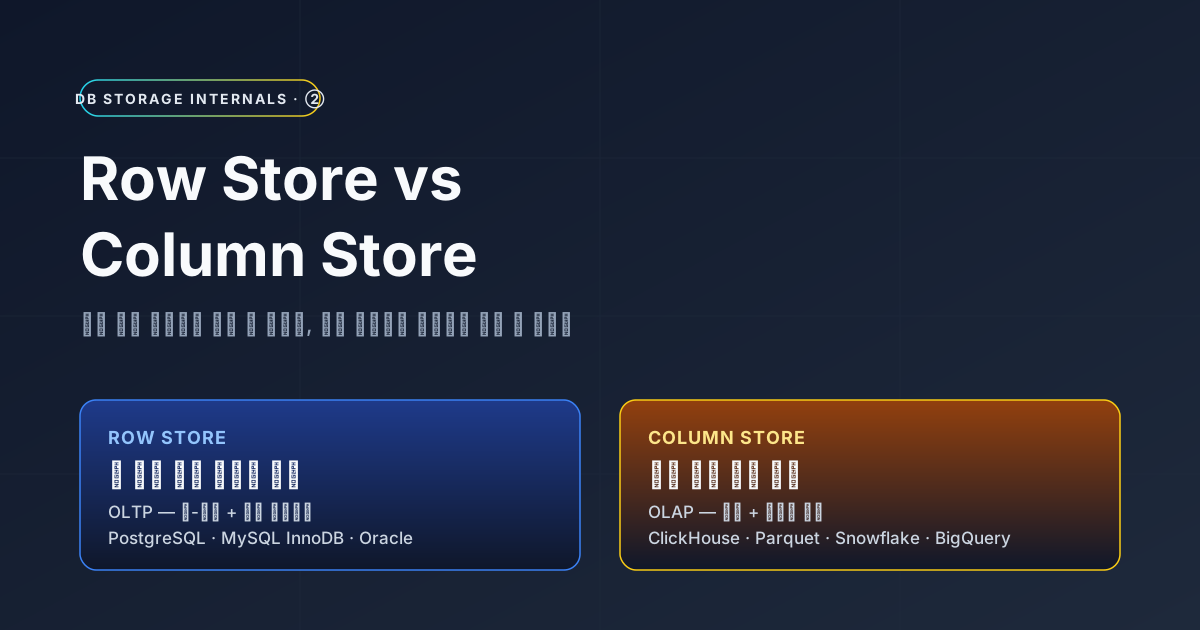
Row Store vs Column Store 시리즈 커버

1. 왜 두 가지 방식이 존재하는가

데이터베이스에 던지는 쿼리는 크게 두 종류로 나뉘어요.

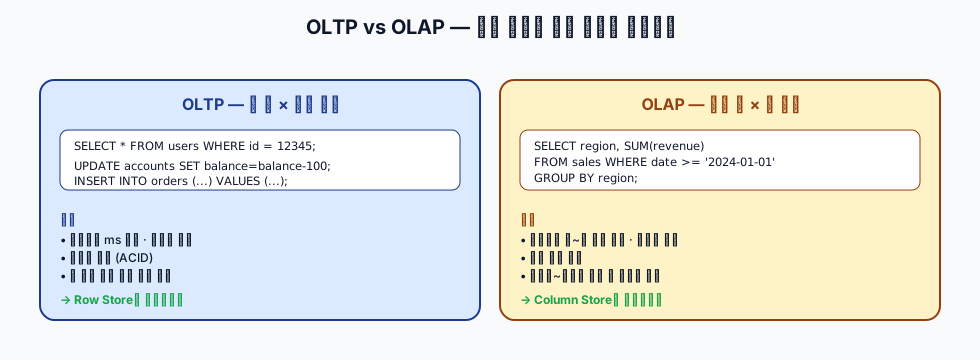
OLTP vs OLAP — 접근 패턴이 저장 방식을 결정한다

OLTP (Online Transaction Processing) — 점-쿼리 + 짧은 트랜잭션

SELECT * FROM users WHERE id = 12345;
UPDATE accounts SET balance = balance - 100 WHERE id = 7;
INSERT INTO orders (...) VALUES (...);

특징: 한 번에 몇 개 행에 여러 컬럼을 읽고 씀. 응답 시간 ms 단위. 동시성 높음. 정확성 필수(ACID).

OLAP (Online Analytical Processing) — 집계 + 광범위 스캔

SELECT region, SUM(revenue) FROM sales WHERE date >= '2024-01-01' GROUP BY region;
SELECT product_id, AVG(price) FROM transactions GROUP BY product_id;

특징: 한 번에 수백만~수십억 행에 몇 개 컬럼만 봄. 응답 시간 초~분 단위 허용. 동시성 낮음. 보통 읽기 전용에 가까움.

이 두 워크로드는 완전히 다른 접근 패턴을 가져요. OLTP는 행 단위로 좁게, OLAP는 컬럼 단위로 넓게. 이 패턴 차이가 디스크에 데이터를 어떻게 배치할 것인가를 결정합니다.

1장 요약 — OLTP는 몇 행 × 많은 컬럼, OLAP는 많은 행 × 몇 컬럼. 접근 패턴이 다르므로 최적 저장 방식도 달라요.

2. Row Store — 행 단위로 모은다

Row Store: 한 행의 모든 컬럼이 디스크 상에서 연속된 위치에 함께 저장됨. PostgreSQL, MySQL, Oracle 등 대부분의 전통 RDBMS가 이 방식.

디스크 배치
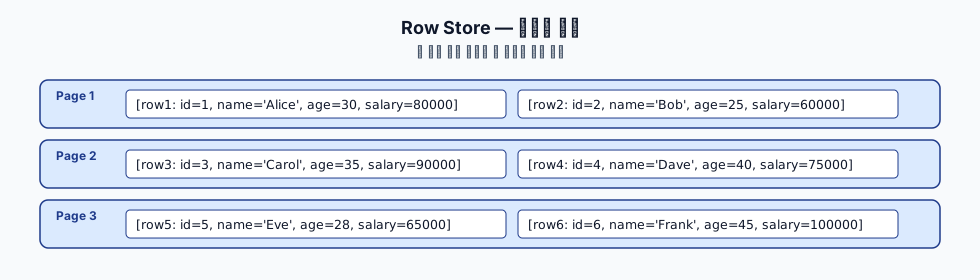
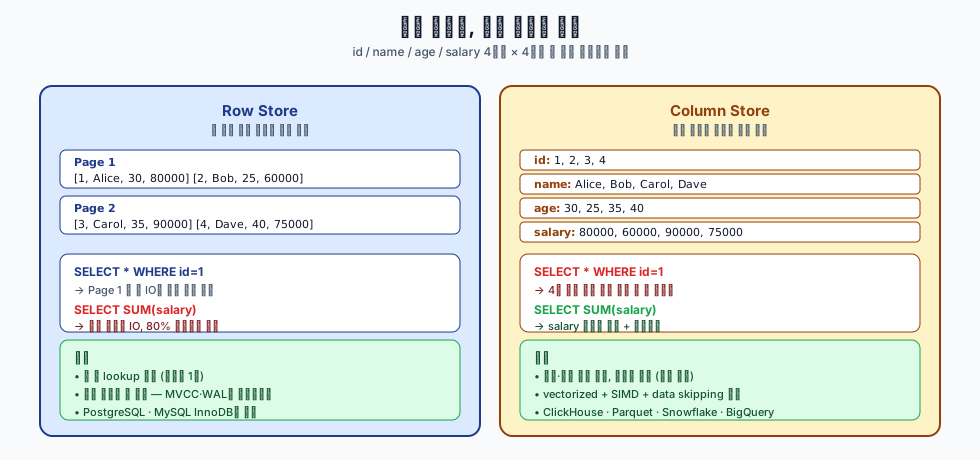
Row Store 디스크 배치 — 한 페이지에 여러 행이 함께

한 행의 모든 필드가 물리적으로 인접해요. 이게 단순한 1편의 모델 — 우리가 페이지·힙·인덱스를 이야기할 때 암묵적으로 가정한 배치입니다.

Row Store의 강점

  • 한 행 lookup이 빠름: WHERE id = ?로 한 행 찾으면 모든 컬럼이 그 페이지에 함께 있어요. IO 한 번이면 행 전체 확보.
  • INSERT/UPDATE 변경 단위가 행 중심: 새 행은 free space가 있는 페이지(PostgreSQL은 FSM 기반 탐색)나 clustered index 위치(InnoDB는 PK 순서)에 배치돼요. UPDATE는 논리적으로 한 행 변경이지만, MVCC 구현에서는 새 row version 생성 + 인덱스 갱신이 동반될 수 있어요(PostgreSQL의 HOT update가 가능하면 인덱스 갱신을 회피하는 최적화). 핵심은 변경 단위가 행 중심이라는 점이고, 이게 OLTP 트랜잭션 처리·WAL·MVCC와 자연스럽게 맞물립니다.
  • 트랜잭션 자연스러움: ACID 보장이 행 단위 락·MVCC와 잘 맞물려요.

Row Store의 약점

  • 집계 쿼리가 비효율적: SELECT SUM(salary) FROM employees를 실행하면, salary만 필요한데 모든 컬럼이 든 페이지를 다 읽어야 함. 페이지의 80% 이상이 불필요한 데이터.
  • 압축 효율 낮음: 한 행 안에는 서로 다른 타입의 값들(int + string + date + …)이 섞여있어 압축 알고리즘이 패턴을 못 찾음.
  • 컬럼 수 많은 wide table에 약함: 100개 컬럼 중 3개만 쿼리해도 모든 100개 컬럼 데이터를 디스크에서 끌어오게 됨.

2장 요약 — Row store는 한 행의 컬럼들을 연속 배치합니다. 점-쿼리와 트랜잭션에 자연스럽지만, 집계 쿼리에서는 불필요한 컬럼까지 IO해야 해서 비효율적이에요.

3. Column Store — 컬럼 단위로 모은다

Column Store (= Columnar Storage): 같은 컬럼의 값들이 디스크 상에서 연속된 위치에 함께 저장됨. ClickHouse, Apache Parquet, ORC, DuckDB, Amazon Redshift, Snowflake, Google BigQuery 등이 이 방식.

디스크 배치

같은 직원 데이터를 column store로 저장하면:
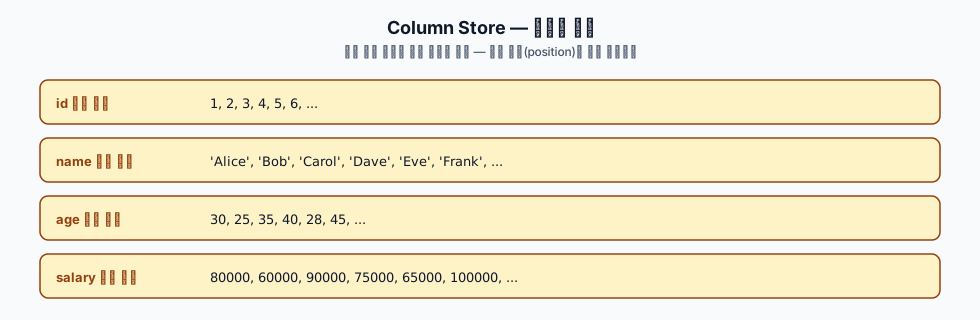
Column Store 디스크 배치 — 컬럼별 별도 영역

각 컬럼이 별도의 영역(보통 별도 파일 또는 별도 페이지 묶음)에 저장돼요. 같은 행의 데이터를 모으려면 각 컬럼의 같은 위치에서 가져와 조립해야 합니다.

이래서 컬럼들은 같은 row group/segment 안에서 position(위치)을 공유 해요 — 같은 위치의 값들을 조합해 논리적 행을 재구성합니다. 즉 모든 값마다 명시적 row ID가 붙는 것은 아니지만, 위치 정렬이 행 매칭의 기준 이 돼요. ClickHouse도 각 컬럼 값을 순차 저장하고, 같은 인덱스 위치의 값들을 묶어 행을 만들어요.

같은 데이터, 다른 배치

같은 데이터, 다른 디스크 배치 — Row Store vs Column Store

근본적으로 같은 데이터예요. 단지 어느 차원으로 먼저 자르느냐 가 다를 뿐:

측면Row StoreColumn Store
연속 저장 단위한 행의 모든 컬럼한 컬럼의 모든 값
자연스러운 접근 패턴”이 행 전체 줘""이 컬럼만 다 줘”
SELECT * 비용저렴 (페이지 한 번)비쌈 (컬럼 수만큼 다른 영역 접근)
SELECT SUM(salary) 비용비쌈 (모든 컬럼 페이지 IO)저렴 (salary 영역만 스캔)
압축 효율낮음 (혼합 타입)높음 (같은 타입·유사 값)

3장 요약 — Column store는 같은 컬럼의 값들을 연속 배치해요. 행을 재구성하려면 여러 영역을 합쳐야 하지만, 컬럼 단위 스캔은 자연스럽고 빠릅니다.

4. 3가지 쿼리로 비교 — 인덱스 없는 풀 스캔 기준

인덱스를 의도적으로 빼고 순수한 저장 구조 차이만 봅니다. 100만 행, 10개 컬럼 직원 테이블 가정.

쿼리 A: 점-쿼리 — WHERE ssn = '666'name

Row store:

  1. 모든 페이지를 순차 스캔 (각 페이지에 여러 행, 모든 컬럼 포함).
  2. 각 행의 ssn 비교, 일치하면 같은 행의 name 추출.
  3. 한 페이지 IO로 행 전체가 메모리에 있으므로 name 추출은 추가 IO 없음.

비용: 전체 페이지 수만큼 IO. 하지만 한 번 행을 찾으면 다른 컬럼도 거의 공짜.

Column store:

  1. ssn 컬럼 영역만 스캔 → ‘666’의 위치(예: 행 ID 1006) 찾음.
  2. 그 위치를 갖고 name 컬럼 영역으로 점프 → 1006번째 값 추출.

비용: ssn 영역의 IO + name 영역의 1번 IO. ssn 영역이 row store의 전체 페이지보다 훨씬 작으므로 유리. 하지만 행 ID 매칭으로 컬럼 영역 간 점프가 필요.

승자 (인덱스 없는 풀 스캔 기준): 컬럼 수를 줄이는 효과 덕분에 column store가 유리해 보일 수 있어요. 다만 점-쿼리는 column store의 주력 패턴이 아닙니다 — row group metadata, zone map, encoding/compression, random access 비용, 데이터 정렬 여부에 따라 실제 성능은 크게 달라져요. 실전 OLTP에서는 row store + index가 일반적으로 훨씬 적합하고, 이 비교는 어디까지나 순수 저장 구조 차이만 보기 위한 통제 실험입니다.

쿼리 B: SELECT * FROM employees WHERE id = 1

Row store:

  1. id 위치 찾으면 (인덱스 또는 스캔으로) → 그 페이지에 모든 컬럼이 함께 있음.
  2. 한 페이지 IO로 답.

비용: 페이지 1개 IO. 매우 저렴.

Column store:

  1. id 영역 스캔 → 행 ID 1001 위치 찾음.
  2. 각 컬럼 영역(또는 column chunk)에서 같은 위치의 값을 가져옴 → 10개 컬럼이면 10개 영역에 대한 별도 접근.
  3. 메모리에서 행 재구성.

비용: 컬럼 수만큼의 분산된 영역 접근. row store처럼 한 페이지로 끝나지 않고 접근이 분산돼요(다만 vectorized read와 prefetch가 부분 완화). 단일 행 lookup에서는 row store가 압승.

승자: 압도적으로 row store. SELECT *처럼 많은 컬럼을 행 단위로 재구성해야 하는 쿼리는 column store의 장점이 크게 줄어드는 패턴.

쿼리 C: SELECT SUM(salary) FROM employees

Row store:

  1. 모든 페이지를 순차 스캔.
  2. 각 페이지에서 salary 컬럼만 추출, 다른 컬럼은 버림.
  3. 합산.

비용: 전체 페이지 IO. 페이지의 80~90%가 불필요한 컬럼 데이터.

Column store:

  1. salary 영역만 스캔.
  2. 연속된 숫자들을 일괄 합산.

비용: salary 영역의 IO만. 압축까지 적용되면 *전체 데이터의 5~10%*만 디스크에서 읽으면 됨 (5~10× 압축이 일반적).

승자: 압도적으로 column store. 집계 쿼리는 column store가 빛을 발하는 영역.

4장 요약 — 인덱스 없는 풀 스캔 기준: 점-쿼리는 column store가 읽는 데이터 양에서는 유리하지만 주력 패턴 아님(실전 OLTP는 row store + index가 적합), SELECT * 류는 row store 압승, 집계는 column store 압승. 어느 쿼리가 자주 던져지느냐가 선택의 기준이에요.

5. Column Store가 빠른 진짜 이유 — 압축 + Vectorized Execution

“더 적은 IO” 외에도, 현대 column store의 진짜 강점은 CPU 효율 에 있어요.

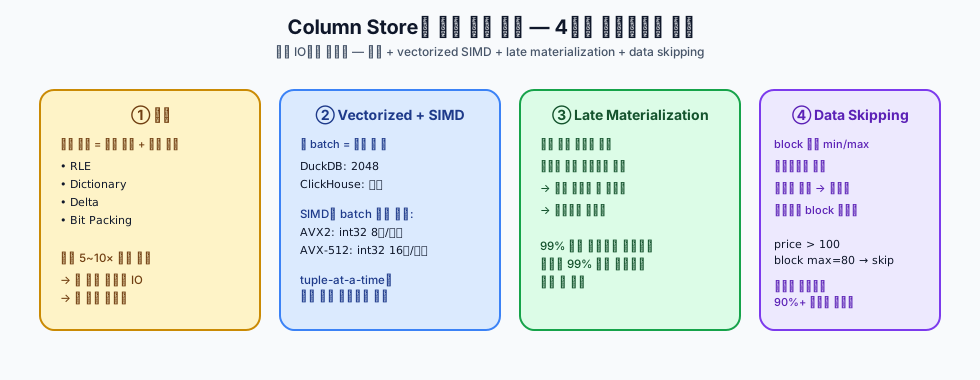
Column Store가 빠른 진짜 이유 — 4가지 메커니즘의 결합

압축 (Compression)

같은 컬럼의 값들은 같은 타입 + 유사한 분포를 가져요. 그래서 압축이 잘 먹습니다:

  • Run-Length Encoding (RLE): 같은 값이 반복되면 (값, 횟수)로 저장. 정렬된 컬럼이나 boolean에 효과적.
  • Dictionary Encoding: 자주 나오는 문자열을 정수 ID로 치환 (예: 국가 컬럼의 ‘KR’ → 1, ‘US’ → 2).
  • Delta Encoding: 정렬된 숫자/타임스탬프의 증분만 저장.
  • Bit Packing: 작은 정수값을 정확히 필요한 비트 수로만 저장.

이런 기법들로 데이터 분포가 잘 맞으면 수 배 이상의 압축률 이 흔히 보고돼요 (Airbyte 등 업계 자료에서 5~10× 압축 사례 다수). 특히 low cardinality(반복되는 값이 많은) 컬럼이나 정렬된 타임스탬프/숫자 컬럼에서 높은 압축률이 나오기 쉬워요. 다만 실제 압축률은 cardinality, 정렬 여부, encoding 방식, null 비율에 따라 크게 달라집니다. 압축의 부수 효과는 명확해요 — 더 적은 디스크 IO + 더 적은 메모리 사용 = 더 빠른 쿼리.

Vectorized Execution + SIMD

전통적인 row store 엔진들은 행 하나씩(tuple-at-a-time) 처리하는 경향이 있어요 — 각 행에 함수 호출, 분기, 메모리 접근이 따라오는 Volcano iterator model 이 고전 표준입니다. 다만 PostgreSQL/MySQL 등도 실행기 최적화가 다양하므로 모든 전통 시스템이 순수 tuple-at-a-time이라 단정할 수는 없어요. 핵심은 row sequential processing 의 오버헤드가 column-vectorized 처리 에 비해 크다는 점.

Column store는 값 한 묶음(vector)을 한꺼번에 처리 해요. 모던 엔진은 보통 수천 개 값을 한 batch로 처리합니다 — DuckDB의 STANDARD_VECTOR_SIZE는 2048, ClickHouse도 비슷한 규모. 이게 가능한 이유:

  • 같은 컬럼의 값들은 같은 타입이라 한 번에 같은 연산을 적용 가능.
  • 메모리에 연속 배치되어 있어 CPU 캐시 친화적.
  • SIMD (Single Instruction, Multiple Data) 명령어로 한 번에 여러 값을 병렬 처리.

예: WHERE country = 'USA' 필터링을 vector batch(예: 2048개) 단위로 처리하면서, 내부 루프에서 SIMD 명령으로 수 개에서 수십 개의 값을 동시에 비교해요 (SIMD 레지스터 폭과 데이터 타입에 따라 다름 — AVX2는 256비트, AVX-512는 512비트 폭으로, int32 기준 각각 8개·16개를 한 명령에 처리). 즉 vector batch는 엔진 차원의 단위고, SIMD는 CPU 차원의 단위 이며, 둘이 결합해 처리량을 극대화합니다. Row store에서는 각 행마다 함수 호출 → 분기 → 메모리 접근이 반복되는데, vectorized engine은 이 오버헤드를 크게 줄여요. 한 단계 더 들어가면, 같은 타입 값이 연속 배치되어 branch prediction이 안정적이고 CPU cache line 사용률도 높아져, row store와는 다른 CPU 차원의 특성을 보입니다.

실측 효과: Spanner의 columnar engine은 분석 쿼리 최대 200× 가속 보고 (Google Cloud, 2025). TimescaleDB는 5×~166× 향상 보고.

Late Materialization

전통적인 쿼리 실행은 일찍 행을 재구성해요 — 필터링 전에 모든 컬럼을 합쳐서 행을 만든 후 조건 비교. Late materialization 은 정반대입니다:

  1. 필터 조건에 쓰이는 컬럼만 먼저 스캔 → 통과한 행의 *위치 리스트(position list)*만 보관.
  2. 다음 단계에서 통과한 위치만 다른 컬럼에서 가져옴.
  3. 마지막에 결과 컬럼만 모아서 행으로 재구성.

결과: 필터에서 99% 행이 탈락하면 나머지 99% 컬럼 데이터를 아예 안 읽음. 메모리 사용·CPU 캐시 효율 모두 향상.

Zone Map과 Data Skipping

현대 column store의 또 하나의 핵심 무기 — 데이터 블록(row group, granule, segment 등) 단위로 min/max 통계를 메타데이터로 저장 해두고, 쿼리 필터와 비교해 통째로 건너뛸 수 있는 블록을 빠르게 골라내요. Oracle은 이를 zone map, IBM DB2는 synopsis 라 부르고, Parquet/ORC는 row group/stripe 단위 min/max를 footer에 저장합니다. ClickHouse의 sparse primary index도 이 개념의 한 형태(granule 단위 첫 키 저장).

예: WHERE price > 100 쿼리에서 row group 1의 max=80이면 row group 1은 통째로 스킵. 선택적인 필터에서는 90% 이상의 데이터를 아예 건드리지 않고 끝나는 경우가 흔해요(IBM Research의 Extensible Data Skipping 논문 등 다수 측정).

확장 형태로 Bloom filter(equality 필터에 효과적)와 dictionary filter 도 함께 쓰여요. ClickHouse, DuckDB, Snowflake, Spark, Trino, Dremio 등 거의 모든 현대 OLAP 엔진이 이 메커니즘을 활용합니다.

다만 한계도 명확해요 — 필터 selectivity가 낮거나(스킵할 수 있는 블록이 적음) 데이터가 정렬되어 있지 않으면(min-max 범위가 모든 블록에서 비슷하게 넓음) data skipping 효과는 제한적입니다. 그래서 column store에서 ORDER BY 키 설계와 데이터 정렬은 압축률뿐 아니라 skipping 효율에도 결정적으로 영향 을 줘요.

5장 요약 — Column store가 빠른 이유는 적은 IO만이 아니라, 높은 압축률 + vectorized SIMD 처리 + late materialization + zone map/data skipping이 결합된 결과예요. 자료구조와 CPU 아키텍처가 한 단위로 묶인 설계.

6. Row Store가 강한 진짜 이유 — Locality + 단순성 + 트랜잭션

Row store의 강점도 몇 행 lookup이 빠르다 그 이상이에요.

Locality

한 행의 모든 데이터가 물리적으로 인접해요. OLTP의 전형적 패턴 — 한 사용자의 정보를 몽땅 가져오기, 한 주문의 모든 컬럼을 업데이트하기 — 이때 한 번 페이지에 적중하면 추가 컬럼 접근 비용이 낮습니다. CPU 캐시도 한 행 단위로 잘 머물러요. (단, 인덱스를 통한 lookup의 경우 어느 페이지에 도달할 것인가는 인덱스 동작에 좌우돼요 — 예를 들어 PostgreSQL heap + B+Tree index는 leaf의 CTID가 가리키는 페이지에 random 접근하게 됩니다. 페이지 내부 locality페이지 간 locality 는 별개의 문제예요.)

Column store에서 같은 작업을 하려면 컬럼 수만큼의 영역 접근이 필요해요 — 여러 컬럼 영역에 분산된 접근으로 인해 메모리 locality와 CPU 캐시 효율이 떨어집니다 (HDD 시대에는 디스크 seek 비용까지 컸지만, SSD 환경에서는 캐시·prefetch 효율 저하가 주된 비용).

단순성과 트랜잭션

  • WAL 기록: WAL에는 페이지 변경을 반영하는 로그 레코드들이 기록되는데, MVCC에서 UPDATE는 새 row version 생성 + old tuple mark dead + 필요 시 인덱스 변경을 포함할 수 있어 실제 WAL 기록은 단일 델타라기보다 여러 변경의 집합이 돼요 (체크포인트 직후 첫 변경이면 full page write까지). 그래도 row store에서는 이 변경들이 한 행 단위로 응집되어 발생 하고(InnoDB의 Redo Log는 ARIES 계열의 physiological logging 모델을 따라 “어느 페이지에 어떤 논리적 연산을 어떻게 적용할 것인가” 를 기록), column store는 같은 행 UPDATE가 여러 컬럼 단위 변경으로 발생할 수 있어 변경 단위가 row store에 비해 분산됩니다. (PostgreSQL은 ARIES 식 명시적 undo log 대신 MVCC + CLOG로 처리하는 다른 길을 가지만, 변경이 행 중심으로 응집된다는 점은 동일.)
  • MVCC: 행 단위 버전 관리가 row store에서 자연스럽게 맞물려요. Column store에서는 version 정보가 컬럼 단위로 분산될 수 있어 row 단위 snapshot을 유지하는 구현이 row store보다 복잡해지고, 그래서 시스템마다 다양한 방식으로 해결합니다 — ClickHouse는 delete bitmap (_row_exists 마스크)과 MergeTree 기반 mutation을 쓰고 (실제로 MVCC + Snapshot Isolation 제공), 일부는 delta store + main store 분리, 일부는 version column 등을 활용해요.
  • 인덱스 동작: row store의 secondary index는 *행 위치(CTID)*만 가리키면 되어 자연스러워요. Column store에서는 인덱스가 컬럼 영역과 어떻게 연결되는가가 시스템마다 다르고(예: ClickHouse의 sparse primary index는 행이 아닌 granule 단위로 가리킴), row store만큼 단순하지는 않습니다.

결과 — 왜 OLTP DB는 row store인가

PostgreSQL, MySQL InnoDB의 기본 저장 방식은 row store예요. Oracle, SQL Server도 기본 OLTP 경로는 row 기반이지만, 분석 성능을 위해 columnar 구조를 부분적으로 도입해왔습니다(아래 7장에서). 짧은 트랜잭션 + 점-쿼리 + 동시성이라는 전통적인 OLTP 워크로드에서는 row store가 일반적으로 더 자연스럽고 효율적인 선택이 돼요 — 다만 LSM 기반(RocksDB 계열)이나 일부 HTAP 시스템처럼 다른 접근으로 OLTP 영역을 다루는 시스템도 존재합니다.

6장 요약 — Row store가 OLTP에 강한 이유는 행 locality + 행 단위 응집된 변경 단위 + 자연스러운 인덱스 매핑이에요. 트랜잭션 시스템에서 row store가 기본 선택이 되는 데에는 이 구조적 이유들이 있습니다.

7. 실제 시스템들 — 누가 무엇을 쓰는가

Row-oriented OLTP 중심

  • PostgreSQL, MySQL InnoDB: 기본 저장 방식이 순수 row store. 1편에서 다룬 모든 메커니즘(Heap, B+Tree, MVCC, WAL)이 row store 가정 위에서 설계됨.
  • Oracle, SQL Server: 기본 OLTP 경로는 row 기반이지만, 분석 워크로드를 위해 columnar 구조를 함께 제공 — 아래 hybrid 섹션 참고.

Columnar OLAP 중심

  • Apache Parquet, ORC: 데이터 레이크의 파일 포맷 표준. Spark, Hive, Presto 등이 읽음. 압축 + 통계 메타데이터 내장.
  • ClickHouse: 오픈소스 OLAP DB. 로그·메트릭 분석에서 널리 쓰임.
  • DuckDB: 임베디드 분석 DB. SQLite의 OLAP 버전이라 부를 만함.
  • Amazon Redshift, Google BigQuery, Snowflake: 클라우드 데이터 웨어하우스의 대표 사례. columnar storage 기반에 vectorized execution + 분산 처리를 결합.

Hybrid 접근 — OLTP와 OLAP를 한 시스템에

이게 최근의 흐름이에요. 데이터를 두 번 쓰지 않으면서 두 워크로드를 한 시스템에서 처리하려는 시도:

  • TimescaleDB: PostgreSQL 확장. 최근 데이터는 row store, 오래된 데이터는 자동으로 columnar 압축으로 전환. TimescaleDB 2.12부터 SIMD vectorized execution 지원.
  • Google Spanner Columnar Engine: 기존 row-based Spanner에 columnar engine을 추가해 같은 데이터를 두 형식으로 유지하는 hybrid 접근. Google Cloud 발표 기준 분석 쿼리 최대 200× 가속.
  • MySQL HeatWave: MySQL에 인메모리 column store 분석 엔진 추가.
  • Oracle In-Memory Column Store: 디스크는 row store, 메모리는 column store dual format.
  • PostgreSQL의 columnar 확장들: Citus의 columnar(이전 cstore_fdw), Hydra 등.

HTAP (Hybrid Transactional/Analytical Processing)

이런 hybrid 시스템들이 추구하는 것이 HTAP — 한 시스템에서 OLTP와 OLAP를 모두 처리. 학계 연구로는 Lang et al.의 Data Blocks (2016) — 압축된 컬럼 형식 + light-weight 인덱스 + JIT 컴파일 + vectorized scan을 결합한 접근 — 이 대표적 사례로, CMU의 15-721 강의에서도 핵심 자료로 다뤄집니다.

7장 요약 — 전통 RDBMS는 row store, 데이터 웨어하우스는 column store가 표준이에요. 최근에는 둘을 한 시스템에서 다루는 hybrid/HTAP 접근이 중요한 흐름 중 하나로 자리잡고 있습니다.

8. 정리 — 어느 쪽을 선택할 것인가

결정 가이드

질문Yes →No →
워크로드가 OLTP (트랜잭션, 점-쿼리, 짧은 응답)?Row Store (PostgreSQL, MySQL)다음 질문
워크로드가 OLAP (분석, 집계, 광범위 스캔)?Column Store (ClickHouse, Parquet, Snowflake)다음 질문
둘 다 필요? 데이터를 두 번 쓰기 싫음?Hybrid/HTAP (TimescaleDB, Spanner, HeatWave)워크로드 재정의 필요

핵심 통찰

  • 같은 데이터, 다른 배치: Row store는 같이 읽는 데이터를 같이 배치하고, column store는 같이 계산하는 데이터를 같이 배치해요. 우열의 문제가 아니라 접근 패턴 적합성 의 문제.
  • OLTP는 row store, OLAP는 column store: 점-쿼리·트랜잭션에는 row, 집계·스캔에는 column이 일반적으로 더 자연스럽습니다. 다만 LSM(RocksDB 계열)이나 HTAP처럼 다른 접근으로 OLTP 영역을 다루는 시스템도 있어요.
  • SELECT *는 column store의 약점이 드러나는 패턴: 컬럼 영역마다 행을 재구성해야 해서 장점이 크게 줄어듭니다. 행 단위가 자주 필요하면 row store로.
  • 압축은 column store의 부수 효과가 아니라 핵심: 같은 타입·유사 분포 덕분에 데이터 분포에 따라 수 배 이상의 압축이 흔히 보고됨 (정확한 수치는 cardinality, 정렬, encoding, null 비율에 따라 달라짐).
  • Vectorized + SIMD + Data Skipping이 진짜 가속의 출처: column store가 빠른 건 적은 IO만이 아니라, CPU 효율(vectorized batch + SIMD)과 zone map/min-max metadata 기반 data skipping이 결합된 결과예요. 현대 OLAP 엔진은 읽지 않을 데이터를 빨리 골라내는 메커니즘 에 사활을 겁니다.
  • Hybrid/HTAP가 중요한 흐름: TimescaleDB, Spanner Columnar Engine, Oracle Database In-Memory 같은 HTAP 접근이 데이터를 두 번 쓰지 않으면서 두 워크로드를 처리하는 방향으로 발전 중이에요. 모든 워크로드를 다 대체하지는 않지만, OLTP/OLAP 경계가 모호한 경우 강력한 선택지.

결국 row vs column 선택은 어떤 차원(행 vs 컬럼)에 대해 locality를 최적화할 것인가 의 문제예요. 행 차원의 locality를 최적화하면 OLTP에 자연스러워지고, 컬럼 차원의 locality를 최적화하면 OLAP에 자연스러워집니다. 자료구조의 선택이 곧 어떤 쿼리를 빠르게 만들고 어떤 쿼리를 포기할 것인가의 선언이에요.

글의 범위와 한계

이 글은 row store vs column store의 개념적 대비 를 다뤘어요. 실제 시스템은 둘 중 하나로 깔끔히 떨어지지 않는 경우가 많다는 점은 짚어둘 필요가 있습니다:

  • LSM 기반 스토리지(RocksDB, Cassandra, Scylla 등) — row store도 column store도 아닌 Sorted String Table + write-ahead 메커니즘 기반의 third path. OLTP 영역의 일부를 다른 방식으로 해결.
  • HTAP 시스템(TimescaleDB, Spanner Columnar Engine, Oracle Database In-Memory 등) — 같은 데이터를 row와 column 두 형식으로 동시에 유지하거나, 자동 변환을 통해 두 워크로드를 한 시스템에서 처리.
  • Columnar index / columnstore index(SQL Server, MySQL HeatWave 등) — 기본은 row store인데 columnar 구조를 보조 인덱스/엔진으로 추가.

따라서 이 글의 모델은 개념적 이해를 위한 단순화된 그림 이고, 실전 시스템 선택에서는 워크로드 패턴 + 데이터 양 + 일관성 요구사항 + 운영 비용 등 다양한 차원이 함께 고려됩니다.

참고 (1차 자료 우선)

0. Introduction

Storage series, part 2. If Part 1 covered pages, heap, indexes, and B+Trees, this part addresses one level up — “how do we lay the same data out on disk?”

Compressed to one line: Row stores keep what is read together together; column stores keep what is computed together together. It is just a different layout of the same data — neither is superior; which queries you fire most often decides which one you pick. Why PostgreSQL/MySQL are row stores, why ClickHouse, Parquet, Snowflake are columnar, and the hybrid approaches (TimescaleDB, Spanner Columnar Engine) trying to fit both into one system — all of them are explained on top of this trade-off.

Row Store vs Column Store series cover

1. Why Two Layouts Exist

Queries hitting a database fall broadly into two kinds.

OLTP vs OLAP — access patterns decide the storage layout

OLTP (Online Transaction Processing) — point queries + short transactions

SELECT * FROM users WHERE id = 12345;
UPDATE accounts SET balance = balance - 100 WHERE id = 7;
INSERT INTO orders (...) VALUES (...);

Characteristics: a few rows × many columns at a time, ms-scale response, high concurrency, correctness essential (ACID).

OLAP (Online Analytical Processing) — aggregation + wide scans

SELECT region, SUM(revenue) FROM sales WHERE date >= '2024-01-01' GROUP BY region;
SELECT product_id, AVG(price) FROM transactions GROUP BY product_id;

Characteristics: millions to billions of rows × a few columns at a time, seconds-to-minutes response acceptable, low concurrency, mostly read-only.

These two workloads have completely different access patterns. OLTP is narrow per row, OLAP is wide per column. This pattern difference decides how data is laid out on disk.

Section 1 takeaway — OLTP is a few rows × many columns; OLAP is many rows × a few columns. Different access patterns → different optimal storage.

2. Row Store — Group by Row

Row Store: every column of a row is stored contiguously on disk. PostgreSQL, MySQL, Oracle and most traditional RDBMSs use this layout.

Disk layout

Row Store disk layout — many rows packed in one page

All fields of a row are physically adjacent. This is the simple model from Part 1 — the layout we implicitly assumed when discussing pages, heap, and indexes.

Strengths

  • Fast single-row lookup: WHERE id = ? returns a row whose all columns sit on the same page. One IO retrieves the whole row.
  • Row-centric INSERT/UPDATE: a new row goes to free space on a page (PostgreSQL uses FSM) or to its clustered-index location (InnoDB orders by PK). UPDATE is logically a one-row change, but in MVCC implementations it can entail creating a new row version + index updates (PostgreSQL’s HOT update is an optimization that avoids index updates when possible). The point is the change unit is row-centric, which dovetails with OLTP transaction handling, WAL, and MVCC.
  • Natural transactions: ACID guarantees mesh well with row-level locking and MVCC.

Weaknesses

  • Inefficient aggregation: SELECT SUM(salary) FROM employees only needs salary, but reads pages containing every column. 80%+ of the page is unnecessary.
  • Low compression: a single row mixes types (int + string + date + …), and compression algorithms can’t find patterns.
  • Weak on wide tables: if 100 columns exist and you query 3, you still pull all 100 columns from disk.

Section 2 takeaway — Row stores keep a row’s columns contiguous. Natural for point queries and transactions, but inefficient for aggregations because unneeded columns also incur IO.

3. Column Store — Group by Column

Column Store (= columnar storage): values from the same column are stored contiguously on disk. ClickHouse, Apache Parquet, ORC, DuckDB, Amazon Redshift, Snowflake, Google BigQuery, etc.

Disk layout

The same employee data stored in a column store:

Column Store disk layout — each column in its own area

Each column lives in a separate area (typically a separate file or page group). To gather a row, you fetch from the same position of each column area and assemble.

So columns share positions inside the same row group/segment — values at the same position combine into a logical row. Not every value carries an explicit row ID, but positional alignment is the matching basis. ClickHouse stores each column’s values sequentially and assembles rows from values at the same index.

Same data, different layout

Same data, different disk layout — Row Store vs Column Store

Fundamentally the same data — the difference is which dimension you cut along first:

DimensionRow StoreColumn Store
Contiguous unitAll columns of a rowAll values of a column
Natural access pattern”give me this whole row""give me this entire column”
SELECT * costcheap (one page)expensive (column-count separate areas)
SELECT SUM(salary) costexpensive (IO every page)cheap (scan only salary area)
Compressionlow (mixed types)high (same type, similar values)

Section 3 takeaway — Column stores keep values from the same column contiguous. Reconstructing a row requires assembling several areas, but column-wise scanning is natural and fast.

4. Three Queries Compared — Indexless Full Scan Baseline

Indexes are deliberately omitted to isolate pure storage-layout difference. 1M rows, 10-column employee table.

Query A: point query — name for WHERE ssn = '666'

Row store:

  1. Sequentially scan every page (each holds rows with all columns).
  2. Compare ssn for each row; on a match, extract that row’s name.
  3. Once a page is in memory, the row is fully present, so name extraction has no extra IO.

Cost: IO over the entire page count. But once the row is found, other columns are nearly free.

Column store:

  1. Scan only the ssn area → find ‘666”s position (e.g., row ID 1006).
  2. With that position, jump to the name area → fetch the value at index 1006.

Cost: IO over the ssn area + 1 IO into the name area. The ssn area is much smaller than the row store’s full pages, so favorable. But cross-area jumps with row-ID matching are required.

Winner (indexless full-scan baseline): column store may look favorable thanks to reduced column count. But point queries are not the column store’s main pattern — actual performance heavily depends on row-group metadata, zone maps, encoding/compression, random-access cost, and data sortedness. In real OLTP, row store + index is generally a better fit; this comparison is purely a controlled experiment to isolate layout differences.

Query B: SELECT * FROM employees WHERE id = 1

Row store:

  1. Locate the id (via index or scan) → all columns sit on that page.
  2. One page IO and you’re done.

Cost: 1 page IO. Very cheap.

Column store:

  1. Scan id area → locate row ID 1001.
  2. From each column area (or column chunk), fetch the value at the same position → 10 column areas separately for 10 columns.
  3. Reconstruct the row in memory.

Cost: column-count distributed area accesses. Unlike row store, it doesn’t end with one page; access is scattered (vectorized read and prefetch partially mitigate). For a single-row lookup, row store wins decisively.

Winner: overwhelmingly row store. SELECT *-style queries that need many columns reassembled into rows is exactly the pattern where column store’s strengths shrink.

Query C: SELECT SUM(salary) FROM employees

Row store:

  1. Sequentially scan every page.
  2. Pull only salary out of each page; throw away other columns.
  3. Sum.

Cost: full-page IO. 80~90% of each page is unrelated columns.

Column store:

  1. Scan only the salary area.
  2. Sum the contiguous numbers in bulk.

Cost: IO over the salary area only. With compression, often only 5~10% of total data needs to be read from disk (5~10× compression is common).

Winner: overwhelmingly column store. Aggregation is column store’s home turf.

Section 4 takeaway — Indexless full-scan baseline: point queries favor column store in bytes read but aren’t its main pattern (real OLTP wants row store + index); SELECT * style favors row store decisively; aggregation favors column store decisively. The query mix is the selection criterion.

5. Why Column Stores Are Truly Fast — Compression + Vectorized Execution

Beyond “less IO,” the real strength of modern column stores is CPU efficiency.

Why column stores are fast — combination of 4 mechanisms

Compression

Same-column values share type and a similar distribution, so compression works well:

  • Run-Length Encoding (RLE): repeated values stored as (value, count). Effective for sorted columns or booleans.
  • Dictionary Encoding: frequent strings replaced by integer IDs (e.g., country ‘KR’ → 1, ‘US’ → 2).
  • Delta Encoding: only deltas of sorted numbers/timestamps are stored.
  • Bit Packing: small integers stored using exactly the bits needed.

When the data distribution fits, multi-fold compression ratios are commonly reported (Airbyte and others document 5~10× compression). Especially low-cardinality columns (many repeats) and sorted timestamp/number columns yield high ratios. Actual ratios vary by cardinality, sort order, encoding, and null share. The side effects are clear — less disk IO + less memory use = faster queries.

Vectorized Execution + SIMD

Traditional row-store engines tend to process tuple-at-a-time — each row carries function-call, branch, memory-access overhead in the classic Volcano iterator model. PostgreSQL/MySQL etc. apply many executor optimizations, so it’s not fair to call all traditional systems pure tuple-at-a-time. The point is row-sequential processing has more overhead than column-vectorized processing.

Column stores process values in batches (vectors). Modern engines typically batch thousands at a time — DuckDB’s STANDARD_VECTOR_SIZE is 2048; ClickHouse is similar. Why this works:

  • Same-column values share a type, so one operation applies uniformly.
  • Contiguous in memory → CPU-cache friendly.
  • SIMD (Single Instruction, Multiple Data) instructions process multiple values per instruction.

Example: WHERE country = 'USA' is filtered in vector batches (e.g., 2048 at a time), and inside the inner loop SIMD instructions compare several to dozens of values per instruction (depending on SIMD register width and data type — AVX2 is 256-bit, AVX-512 is 512-bit, so int32 is 8 or 16 per instruction respectively). So vector batches are the engine-level unit, SIMD is the CPU-level unit, and they combine to maximize throughput. In a row store, every row triggers function call → branch → memory access; vectorized engines collapse this overhead. One step deeper, contiguous same-type values give stable branch prediction and high CPU cache-line utilization — distinctively different CPU-level characteristics from row stores.

Measured: Spanner’s columnar engine reports up to 200× speedup on analytics (Google Cloud, 2025). TimescaleDB reports 5×~166× improvements.

Late Materialization

Traditional execution reconstructs rows early — assemble all columns before filtering. Late materialization flips it:

  1. Scan only the columns used in filter conditions → keep only the position list of qualifying rows.
  2. In the next stage, fetch values for those positions from other columns.
  3. Reassemble result columns into rows at the very end.

If a filter eliminates 99% of rows, the remaining 99% of column data is never read. Improves both memory use and CPU-cache efficiency.

Zone Maps and Data Skipping

Another key weapon of modern column stores — store min/max statistics per data block (row group, granule, segment) as metadata, compare against query filters, and quickly drop entire blocks. Oracle calls this zone maps; IBM DB2 calls them synopses; Parquet/ORC store row-group/stripe min/max in the footer. ClickHouse’s sparse primary index is a flavor of this (one key per granule).

Example: WHERE price > 100 and a row group with max=80 → skip the entire row group. With selective filters, it’s common to skip 90%+ of data (per IBM Research’s Extensible Data Skipping and many others).

Extended forms include Bloom filters (effective for equality filters) and dictionary filters. Practically every modern OLAP engine — ClickHouse, DuckDB, Snowflake, Spark, Trino, Dremio — leverages this mechanism.

Limits exist — when filter selectivity is low (few skippable blocks) or data is unsorted (min-max ranges look similar across blocks), data-skipping efficacy is limited. So in column stores, ORDER BY key design and data sorting decisively affect not just compression ratio but skipping efficiency.

Section 5 takeaway — Column stores are fast not just because of less IO, but because high compression + vectorized SIMD + late materialization + zone-map/data-skipping combine. Data structures and CPU architecture bundled into one design.

6. Why Row Stores Are Truly Strong — Locality + Simplicity + Transactions

Row store strengths go beyond “single-row lookup is fast.”

Locality

A row’s data is physically adjacent. Typical OLTP — fetch all info for one user, update every column of one order — once you hit a page, accessing extra columns is cheap. The CPU cache stays warm at row granularity. (Caveat: when looking up via index, which page you reach depends on index behavior — e.g., PostgreSQL heap + B+Tree index does random access to the page the leaf’s CTID points to. In-page locality and page-to-page locality are separate concerns.)

In a column store, the same operation requires column-count area accesses — scattered access across column areas degrades memory locality and CPU cache. (In the HDD era this also paid disk-seek costs; on SSDs the dominant cost is degraded cache/prefetch efficiency.)

Simplicity and transactions

  • WAL records: WAL records log entries reflecting page changes; under MVCC, an UPDATE can entail a new row version + marking the old tuple dead + possibly index changes, so a real WAL record is a set of changes rather than a single delta (with a full-page write thrown in if it’s the first change after a checkpoint). Even so, in a row store these changes are aggregated at row granularity (InnoDB’s redo log follows the ARIES family’s physiological logging model — “on which page, apply which logical operation, how”), while in a column store an update on one row can decompose into per-column changes — change units more scattered than row stores. (PostgreSQL takes a different path with MVCC + CLOG instead of explicit ARIES-style undo log, but the row-centric aggregation property is the same.)
  • MVCC: Row-level versioning meshes naturally with row stores. In column stores, version metadata may scatter across columns, making row-level snapshot maintenance more complex than in row stores — different systems solve this differently. ClickHouse uses a delete bitmap (_row_exists mask) and MergeTree-based mutations (and actually provides MVCC + Snapshot Isolation); some split into delta store + main store; some use version columns.
  • Index behavior: a row store’s secondary index simply points to a row position (CTID) — natural. In column stores, how indexes link to column areas varies (e.g., ClickHouse’s sparse primary index points at granules, not rows) and isn’t as simple as in row stores.

Result — why OLTP DBs are row stores

PostgreSQL and MySQL InnoDB default to row store. Oracle and SQL Server use row-based default OLTP paths but have partially adopted columnar structures for analytics (see Section 7). For traditional OLTP workloads — short transactions + point queries + concurrency — row store is generally the more natural and efficient choice. Other approaches do exist for OLTP-style workloads (LSM-based systems like RocksDB, certain HTAP systems).

Section 6 takeaway — Row stores are strong in OLTP because of row locality + row-aggregated change units + naturally fitting indexes. There are structural reasons row store is the default in transactional systems.

7. Real Systems — Who Uses What

Row-oriented OLTP

  • PostgreSQL, MySQL InnoDB: pure row store by default. Every mechanism in Part 1 (Heap, B+Tree, MVCC, WAL) is designed atop the row-store assumption.
  • Oracle, SQL Server: row-based default OLTP path, but ships columnar structures for analytics — see hybrid section.

Columnar OLAP

  • Apache Parquet, ORC: standard data-lake file formats. Spark, Hive, Presto read them. Compression + statistics metadata built in.
  • ClickHouse: open-source OLAP DB widely used for log/metrics analytics.
  • DuckDB: embedded analytics DB — the “OLAP version of SQLite.”
  • Amazon Redshift, Google BigQuery, Snowflake: leading cloud data warehouses. Columnar storage + vectorized execution + distributed processing.

Hybrid — OLTP and OLAP in one system

This is the recent direction. Avoid storing data twice while serving both workloads from one system:

  • TimescaleDB: a PostgreSQL extension. Recent data in row store, older data automatically converted to columnar compression. SIMD vectorized execution since 2.12.
  • Google Spanner Columnar Engine: a hybrid approach that adds a columnar engine to row-based Spanner, maintaining the same data in two formats. Up to 200× analytics speedup per Google Cloud’s announcement.
  • MySQL HeatWave: in-memory columnar analytics engine added to MySQL.
  • Oracle In-Memory Column Store: row store on disk, column store in memory — dual format.
  • PostgreSQL columnar extensions: Citus’s columnar (formerly cstore_fdw), Hydra, etc.

HTAP (Hybrid Transactional/Analytical Processing)

What these hybrid systems chase is HTAP — both OLTP and OLAP in one system. On the academic side, Lang et al.’s Data Blocks (2016) — combining compressed columnar format + lightweight index + JIT compilation + vectorized scan — is a representative example, taught as a core reading in CMU’s 15-721.

Section 7 takeaway — Traditional RDBMSs are row stores; data warehouses are columnar — that’s the standard. Recently, hybrid/HTAP approaches that handle both in one system have become a key direction.

8. Wrap-up — Which One to Pick

Decision guide

QuestionYes →No →
Workload is OLTP (transactions, point queries, short responses)?Row Store (PostgreSQL, MySQL)next question
Workload is OLAP (analytics, aggregation, wide scans)?Column Store (ClickHouse, Parquet, Snowflake)next question
Both, and don’t want to store data twice?Hybrid/HTAP (TimescaleDB, Spanner, HeatWave)redefine workload

Key insights

  • Same data, different layout: row store keeps what is read together together; column store keeps what is computed together together. Not a question of superiority but of fit to access pattern.
  • OLTP → row store, OLAP → column store: row is more natural for point queries/transactions; column for aggregation/scans. Other approaches (LSM systems like RocksDB, HTAP) handle parts of OLTP differently.
  • SELECT * is the pattern that exposes column-store weakness: row reconstruction across column areas erases much of the gain. If you frequently need rows, go row store.
  • Compression is core, not a side effect, in column stores: same-type and similar-distribution values give multi-fold compression in many cases (exact numbers depend on cardinality, sort order, encoding, and null share).
  • Vectorized + SIMD + Data Skipping is the real source of acceleration: column-store speed isn’t just less IO — it’s CPU efficiency (vectorized batches + SIMD) combined with zone-map/min-max metadata-driven skipping. Modern OLAP engines bet on quickly identifying data they don’t need to read.
  • Hybrid/HTAP is an important trend: TimescaleDB, Spanner Columnar Engine, Oracle Database In-Memory and similar HTAP approaches are evolving toward serving both workloads without storing data twice. Won’t replace every workload, but a strong choice when OLTP/OLAP boundaries blur.

Ultimately the row-vs-column choice is a question of which dimension (rows or columns) to optimize locality for. Optimize locality along the row dimension → natural for OLTP. Optimize along the column dimension → natural for OLAP. The data-structure choice is itself a declaration of which queries you’ll make fast and which you’ll give up.

Scope and limitations

This post covers a conceptual contrast between row and column stores. Many real systems do not cleanly land in one bucket:

  • LSM-based storage (RocksDB, Cassandra, Scylla, etc.) — neither row store nor column store but a third path based on Sorted String Tables + write-ahead mechanisms. Solves part of the OLTP space differently.
  • HTAP systems (TimescaleDB, Spanner Columnar Engine, Oracle Database In-Memory, etc.) — keep the same data in both row and column formats simultaneously, or convert automatically, to handle both workloads in one system.
  • Columnar / columnstore index (SQL Server, MySQL HeatWave, etc.) — primarily row store with a columnar structure added as a secondary index/engine.

So the model in this post is a simplified picture for conceptual understanding; in real-world system selection, workload pattern + data volume + consistency requirements + operational cost all factor in.

References (Primary Sources First)

Author
작성자 @범수

오늘의 노력이 내일의 전문성을 만든다고 믿습니다.

댓글

댓글 수정/삭제는 GitHub Discussions에서 가능합니다.