모든 글
약 17분 분량 학습 프로젝트/토이 DB

DB 내부 ⑤: 진짜 psql이 붙는 서버, PostgreSQL wire protocol 해부
목차

0. 들어가며: 프로토콜은 계약이다

4편까지의 엔진은 로컬 REPL이었습니다. 진짜 DB는 네트워크 서버입니다. 그리고 서버와 클라이언트 사이엔 프로토콜이라는 계약이 있습니다.

이 편의 목표는 하나였습니다: 아무 psql이나 접속하게 하라. PostgreSQL wire protocol v3를 말하는 서버를 만들면, psql은 상대가 진짜 PG인지 구분하지 못합니다. 클라이언트를 새로 만들지 않고 계약을 지켜서 기존 생태계(psql, JDBC, 각종 드라이버)를 통째로 빌립니다. 이게 wire protocol 호환이 강력한 이유고, CockroachDB·YugabyteDB 같은 신생 DB들이 PG wire protocol을 말하는 이유이기도 합니다.

흔한 오해 정정: “PG wire 호환이면 PostgreSQL 호환이다” 계약이 보장하는 건 바이트의 모양까지입니다. CockroachDB·YugabyteDB는 wire는 PG를 말하지만 격리 수준의 기본값과 동작, SQL 방언, 에러의 결이 PostgreSQL과 다릅니다. 드라이버가 붙는 것과 애플리케이션이 같게 동작하는 건 별개의 문제입니다. 이 글의 400줄 서버가 그 산 증거입니다(psql은 붙지만, 이건 PostgreSQL이 아니죠).

결론부터: 400줄 서버로 실제 psql 14가 붙었고, SQL 실행기는 한 줄도 안 바꿨습니다.

1. 놀라운 건 재사용의 규모다

이 편에서 새로 짠 코드는 딱 두 가지입니다. 이벤트 루프와, 바이트를 빅엔디안으로 조립·해석하는 헬퍼입니다. SQL 실행은 기존 실행기를 그대로 부릅니다.

if (type == 'Q') { /* Simple Query */
db->cur_session = c->session; /* 커넥션 = 세션 */
FILE *of = open_memstream(&obuf, &olen);
db_exec(db, payload, of); /* ← 기존 실행기, 무개조 */
fclose(of);
reply_from_output(c->fd, payload, obuf, txn_status); /* 텍스트 → wire */
}

실행기는 여전히 FILE*에 사람이 읽는 텍스트를 씁니다. 서버는 그 텍스트를 open_memstream으로 가로채 wire 메시지로 번역할 뿐입니다. 계층이 깨끗하게 분리돼 있던 덕에 네트워크가 실행기 위에 무개조로 얹혔습니다. 좋은 추상화의 배당금입니다.

그리고 결정적으로, TCP 커넥션을 4편의 트랜잭션 세션에 하나씩 매핑합니다. 커넥션마다 자기 트랜잭션 핸들이 자동 배정됩니다. 다중 트랜잭션 세션이 사실은 이 편을 위한 사전 준비였던 셈입니다.
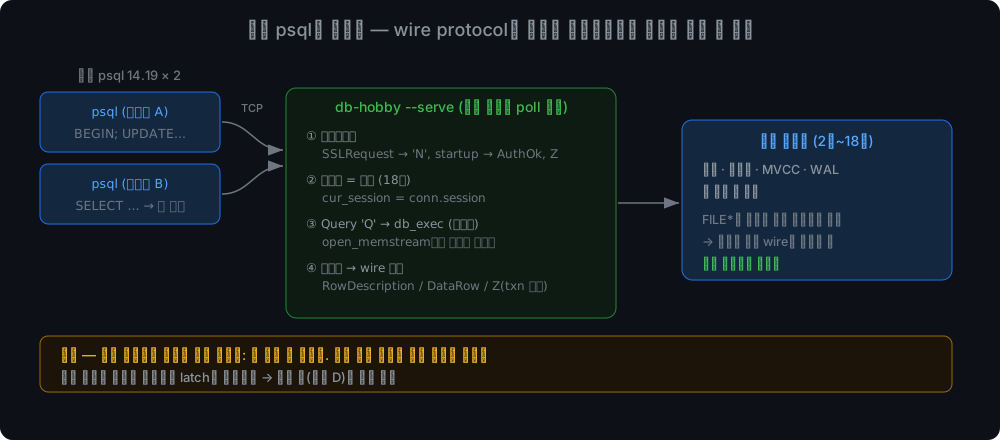
wire protocol 서버: psql이 startup 핸드셰이크를 지나 Simple Query를 보내면, 서버가 실행기 출력을 wire 메시지로 번역한다

2. 프로토콜을 바이트로 뜯어본다

PostgreSQL wire protocol v3는 의외로 소박합니다. 핸드셰이크만 지나면 대부분 [타입 1바이트][길이 4바이트][페이로드] 프레임입니다(길이는 빅엔디안, 길이 자신을 포함).

핸드셰이크가 유일한 변칙입니다. 공식 문서의 첫 문장 그대로, “To begin a session, a frontend opens a connection to the server and sends a startup message.” 이 startup 메시지엔 타입 바이트가 없습니다(길이부터 옵니다). 그리고 기본 설정(sslmode=prefer)의 psql은 접속하자마자 SSLRequest(매직 넘버 80877103)부터 보내는데, SSL이 없으면 한 바이트로 거절하면 됩니다.

if (code == 80877103 || code == 80877104) { /* SSL / GSS 요청 */
write(c->fd, "N", 1); /* 'N' = 안 함. psql은 평문으로 다시 startup을 보낸다 */
}

(이 “물어보고 거절당하면 평문” 왕복도 진화 중입니다. PostgreSQL 17부터는 첫 바이트부터 TLS로 시작하는 direct TLS(sslnegotiation=direct)가 추가됐습니다.)

진짜 startup(프로토콜 버전 196608 = 3.0)이 오면 네 개의 메시지로 “준비 완료”를 알립니다.

send_msg(fd, 'R', ...0); /* AuthenticationOk */
send_msg(fd, 'S', "client_encoding" "UTF8"); /* ParameterStatus */
send_msg(fd, 'K', pid, key); /* BackendKeyData (취소용) */
send_ready(fd, 'I'); /* ReadyForQuery — "쿼리 받을 준비 됨" */

두 가지 정직한 축약이 있습니다. 실제 PostgreSQL은 ParameterStatus를 하나가 아니라 여러 개 보냅니다. server_version, standard_conforming_strings, DateStyle 등입니다. 일부 드라이버는 이 값들을 요구하지만, psql만 상대할 땐 client_encoding 하나로 충분했습니다. 인증도 마찬가지입니다. 이 서버는 누구든 무조건 AuthenticationOk를 받는 trust 상당이고, 실제 PostgreSQL의 기본은 SCRAM-SHA-256 챌린지-응답입니다.

BackendKeyData의 pid·key는 쿼리 취소용인데, 여기에 프로토콜의 재미있는 설계가 있습니다. 실행 중인 커넥션은 쿼리를 처리하느라 바쁘니, CancelRequest(매직 넘버 80877102)는 startup 대신 이 매직을 실은 별도의 새 커넥션으로 날아옵니다. db-hobby는 키만 발급하고 취소 처리는 구현하지 않았습니다.

여기서 이 프로토콜의 영리한 디테일이 하나 있습니다. ReadyForQuery의 상태 바이트입니다. 공식 문서의 정의로 “‘I’ if idle (not in a transaction block); ‘T’ if in a transaction block; or ‘E’ if in a failed transaction block”. 서버가 매 응답 끝에 이 한 바이트로 트랜잭션 상태를 알려주면, psql이 프롬프트를 => / =*> / =!>로 바꿔 그립니다. 커넥션의 세션이 in_txn이냐로 이 바이트를 정하니, 엔진의 트랜잭션 상태가 그대로 psql 프롬프트에 반영됩니다.

이 계약의 무게를 보여주는 숫자가 하나 있습니다. 위의 196608(v3.0)은 PostgreSQL 7.4(2003년)부터 지금까지 그대로입니다. v2 지원이 제거된 게 PostgreSQL 14, 첫 마이너 상향(3.2)이 PostgreSQL 18에서야 나왔습니다. 20년 넘게 안 바뀐 계약이었기에 psql·JDBC·수많은 드라이버 생태계가 그 위에 쌓일 수 있었던 겁니다.

3. 결과를 돌려주는 세 가지 모양

실행기의 텍스트 출력을 psql이 이해하는 메시지로 번역하는 갈래는 셋입니다.

  • ① SELECT 결과: RowDescription(컬럼 정의, 전부 text OID 25로 단순화) + 행마다 DataRow + CommandComplete("SELECT N"). 실행기 출력의 헤더\n행…\n(N행) 꼴에서 꼬리를 찾아 헤더와 행을 가릅니다.
  • ② EXPLAIN: 진짜 PostgreSQL처럼 QUERY PLAN 단일 컬럼의 여러 행으로. 플랜 트리가 psql 안에서 예쁘게 나옵니다.
  • ③ 그 외(INSERT/COMMIT/…): 첫 줄을 CommandComplete 태그로. "ERROR"로 시작하면 ErrorResponse로 감싸 psql이 빨간 ERROR:로 그리게 합니다.

정직한 한계: SELECT 응답을 실행기의 텍스트 출력을 파싱해 만드는 건 지름길이다. TEXT 값 안에 " | "가 들어가면 컬럼이 갈린다. 제대로 하려면 실행기가 구조화된 로우(진짜 DB의 tuple descriptor)를 직접 내보내야 하는데, 그건 실행기 전체를 건드리는 일이다. 그리고 extended query protocol도 없다. psql의 기본 대화는 simple query라 붙는 데 충분하지만, §0에서 말한 “JDBC 생태계를 통째로 빌린다”엔 이 부재가 선을 긋는다. pgJDBC는 extended query protocol이 기본이라 이 서버엔 붙지 못한다. “동작하는 psql”을 최소 변경으로 얻는 게 목표였다.

못 지킨 계약의 나머지 절반: extended query protocol

실제 애플리케이션 드라이버들의 기본 대화는 simple query가 아니라 extended query protocol입니다. 한 문장이 다섯 메시지로 쪼개집니다. Parse(SQL 텍스트를 이름 붙은 문장으로), Bind(파라미터 값을 채워 portal 생성), Describe(결과 모양 조회), Execute(portal 실행), Sync(경계 표시)입니다. 이렇게 쪼갠 이유는 셋입니다. 파싱·플래닝을 한 번 하고 플랜을 재사용할 수 있고(prepared statement), 값을 텍스트가 아닌 바이너리 포맷으로 보낼 수 있고, 무엇보다 SQL 텍스트와 값이 서로 다른 메시지로 갑니다.

흔한 오해 정정: “prepared statement는 성능 기능일 뿐이다” 프로토콜 관점에선 보안 장치입니다. Parse에 실리는 SQL엔 $1 자리표시자만 있고 값은 Bind에 따로 실리니, 값이 SQL로 해석될 경로 자체가 없습니다. 문자열 이어붙이기가 만드는 SQL 인젝션이 애플리케이션의 이스케이프 실력이 아니라 프로토콜 수준에서 차단되는 겁니다.

4. 클라이맥스: 네트워크 너머의 “reader는 writer를 안 막는다”

4편의 그 장면을 이제 진짜 psql 두 개로 재현합니다.

터미널 A (writer):

db-hobby=> BEGIN;
db-hobby=*> UPDATE t SET v = 999 WHERE id = 1;
1개 행 수정됨 -- 아직 커밋 안 함. 프롬프트가 =*> (트랜잭션 중)

터미널 B (reader), A가 미커밋 UPDATE를 쥐고 있는 동안:

db-hobby=> SELECT * FROM t WHERE id = 1;
id | v
----+-----
1 | 100 -- 안 막힌다! 옛 버전 100을 읽는다
db-hobby=> UPDATE t SET v = 555 WHERE id = 1;
ERROR: 테이블 't'가 다른 트랜잭션에 잠겨 있습니다 (쓰기 충돌)

터미널 ACOMMIT; 하면, 터미널 B:

db-hobby=> SELECT * FROM t WHERE id = 1;
1 | 999 -- 커밋 후엔 새 값

지어낸 트랜스크립트가 아닙니다. 실제 psql 14.19 두 개를 띄워 잡은 출력입니다. reader는 거부당하지도 기다리지도 않고 스냅샷의 옛 버전을 읽고, 쓰기끼리만 충돌합니다. MVCC의 존재 이유가 네트워크 너머에서 두 클라이언트로 증명됐습니다. 단, 터미널 B가 받은 즉시 ERROR는 db-hobby의 이중 단순화, 곧 테이블 단위 락에 기다리지 않는 no-wait가 만든 모양입니다.

흔한 오해 정정: “MVCC에서 쓰기 충돌은 즉시 에러가 난다” 실제 PostgreSQL에서 터미널 B의 UPDATE는 에러 없이 행 락을 기다리며 멈춰 있습니다. A가 커밋하면 READ COMMITTED에선 최신 버전으로 조건을 재평가해 그냥 진행하고, REPEATABLE READ에서만 ERROR: could not serialize access due to concurrent update가 납니다. InnoDB도 기다리는 쪽이라, innodb_lock_wait_timeout(기본 50초)을 넘겨야 ERROR 1205 (HY000): Lock wait timeout exceeded; try restarting transaction을 봅니다. 기다림을 원치 않으면 그걸 명시하는 게 관행입니다. PostgreSQL의 lock_timeout이나 SELECT ... FOR UPDATE NOWAIT가 그 방법입니다.

5. 커넥션당 스레드, 그리고 굵은 latch

처음 서버는 단일 스레드 poll() 루프였습니다. 진짜 병렬이 아니라 인터리브였습니다. 커넥션마다 OS 스레드를 주는 thread-per-connection으로 바꾸면 네트워크 I/O는 진짜 병렬이 됩니다. PostgreSQL이 커넥션마다 프로세스를 포크하는 것의 스레드판입니다.

단, 정직하게 말하면 실행 자체는 전역 엔진 latch 하나로 직렬화했습니다. 실행기 전 계층이 아직 단일 스레드 가정이라, 우선 굵은 latch 하나로 정확성을 샀습니다. 1편에서 스레드 안전하게 만든 버퍼 풀이 “이 굵은 latch를 계층별로 걷어낼 첫 발판”이고, 그 걷어내는 여정(병렬 스캔부터 실측까지)이 8편입니다.

실무/면접 포인트: 커넥션당 스레드/프로세스는 단순하지만 커넥션 수만큼 자원을 먹는다. 그래서 실무 PostgreSQL 앞엔 거의 항상 PgBouncer 같은 커넥션 풀러가 선다. 이 구도의 이론은 DB 커넥션 풀Tomcat NIO 요청 처리에서.

실무 안티패턴: PgBouncer를 transaction 모드로 두고 prepared statement·SET·temp table을 쓰는 것. 이 글의 서버가 보여주듯 wire 세계에서 세션 상태는 특정 백엔드(커넥션)에 귀속되는데, transaction 모드는 트랜잭션마다 백엔드를 갈아끼우니 “아까 준비한 문장”이 없는 백엔드에 Execute가 도착합니다. 간헐적으로만 터지는 prepared statement "S_1" does not exist의 정체입니다.

6. 정리

  • 프로토콜은 계약: 계약만 지키면 기존 생태계(psql·드라이버)를 통째로 빌린다. CockroachDB 등이 PG wire를 말하는 이유.
  • v3 프레임은 소박하다: [타입 1B][길이 4B][페이로드]. 변칙은 startup(타입 없음)과 SSLRequest(‘N’ 한 바이트 거절)뿐.
  • ReadyForQuery 상태 바이트 하나가 psql 프롬프트(=>/=*>/=!>)를 바꾼다. 프로토콜에 트랜잭션 상태가 새겨져 있다.
  • 좋은 계층 분리의 배당금: 실행기 무개조로 서버가 얹혔다. 대신 텍스트 파싱 응답·simple query only라는 정직한 지름길.
  • MVCC가 네트워크 너머에서 증명: 두 psql, reader는 안 막히고 writer끼리만 충돌(즉시 에러는 db-hobby의 no-wait 단순화이고, 실제 PG는 행 락 대기).

다음 편은 플래너가 멍청해지는 순간을 다룹니다. “인덱스가 있으면 무조건 쓴다”는 규칙이 틀리는 지점에서 비용 기반 옵티마이저가 시작됩니다.

참고 (1차 자료 우선)

0. Introduction — the Protocol Is a Contract

The engine through Part 4 was a local REPL. A real DB is a network server — and between server and client sits a contract called the protocol.

The goal of this part was singular: let any psql connect. Build a server that speaks PostgreSQL wire protocol v3 and psql cannot tell it isn’t real PG. Rather than writing a new client, you honor the contract and borrow the whole existing ecosystem — psql, JDBC, every driver. That’s why wire-protocol compatibility is powerful, and why newer databases like CockroachDB and YugabyteDB speak the PG wire protocol.

Common misconception, corrected: “PG-wire-compatible means PostgreSQL-compatible” — the contract only guarantees the shape of the bytes. CockroachDB and YugabyteDB speak PG on the wire, but their isolation defaults and behavior, SQL dialect, and the texture of their errors differ from PostgreSQL. A driver connecting and an application behaving identically are separate questions — this article’s 400-line server is living proof (psql connects, and this is emphatically not PostgreSQL).

The punchline: a ~400-line server that a real psql 14 connects to — without changing one line of the SQL executor.

1. The Striking Part Is the Scale of Reuse

Only two things were newly written: the event loop, and helpers that assemble/parse big-endian bytes. SQL execution calls the existing executor as-is:

if (type == 'Q') { /* Simple Query */
db->cur_session = c->session; /* connection = session */
FILE *of = open_memstream(&obuf, &olen);
db_exec(db, payload, of); /* ← the existing executor, unmodified */
fclose(of);
reply_from_output(c->fd, payload, obuf, txn_status); /* text → wire */
}

The executor still writes human-readable text to a FILE*. The server intercepts it via open_memstream and merely translates it into wire messages. Clean layering paid its dividend: the network stacked on top with zero executor changes.

Crucially, each TCP connection maps to one of Part 4’s transaction sessions — every connection automatically gets its own transaction handle. The multi-transaction sessions turned out to be preparation for this part.

Wire protocol server — psql passes the startup handshake, sends Simple Query, and the server translates executor output into wire messages

2. Dissecting the Protocol in Bytes

PostgreSQL wire protocol v3 is surprisingly modest. Past the handshake, nearly everything is a [type 1 byte][length 4 bytes][payload] frame (length big-endian, including itself).

The handshake is the one irregularity — as the official docs’ opening line puts it, “To begin a session, a frontend opens a connection to the server and sends a startup message.” That startup message has no type byte (it begins with the length). And psql under its default setting (sslmode=prefer) opens by sending an SSLRequest (magic 80877103); with no SSL, refuse with a single byte:

if (code == 80877103 || code == 80877104) { /* SSL / GSS request */
write(c->fd, "N", 1); /* 'N' = no. psql retries startup in plaintext */
}

(Even this ask-then-fall-back round trip is evolving — PostgreSQL 17 added direct TLS, sslnegotiation=direct, starting TLS from the very first byte.)

When the real startup arrives (protocol 196608 = 3.0), four messages declare readiness:

send_msg(fd, 'R', ...0); /* AuthenticationOk */
send_msg(fd, 'S', "client_encoding" "UTF8"); /* ParameterStatus */
send_msg(fd, 'K', pid, key); /* BackendKeyData (for cancels) */
send_ready(fd, 'I'); /* ReadyForQuery */

Two honest abbreviations here. Real PostgreSQL sends not one ParameterStatus but several — server_version, standard_conforming_strings, DateStyle, and more. Some drivers require those values, but for psql alone, client_encoding sufficed. Same for authentication — this server is trust-equivalent, handing everyone an unconditional AuthenticationOk, while real PostgreSQL’s default is a SCRAM-SHA-256 challenge-response.

BackendKeyData’s pid and key are for query cancellation, and there’s a fun bit of protocol design here — a connection mid-query is busy processing it, so a CancelRequest (magic 80877102) arrives on a separate, brand-new connection carrying that magic instead of a startup. db-hobby only issues the key; cancellation itself isn’t implemented.

One clever detail: ReadyForQuery’s status byte — in the official definition, “‘I’ if idle (not in a transaction block); ‘T’ if in a transaction block; or ‘E’ if in a failed transaction block”. The server appends this one byte to every response, and psql redraws its prompt as => / =*> / =!>. We derive it from whether the connection’s session is in_txn — the engine’s transaction state surfaces directly in psql’s prompt.

One number that shows this contract’s weight — the 196608 (v3.0) above has been unchanged since PostgreSQL 7.4 (2003). v2 support was removed only in PostgreSQL 14, and the first minor bump (3.2) arrived only in PostgreSQL 18. A contract stable for over twenty years is what let the psql/JDBC/driver ecosystem pile up on top of it.

3. Three Shapes of Response

Translating executor text into psql-comprehensible messages forks three ways:

  • ① SELECT resultsRowDescription (column definitions, all simplified to text OID 25) + one DataRow per row + CommandComplete("SELECT N").
  • ② EXPLAIN — like real PostgreSQL: multiple rows under a single QUERY PLAN column. Plan trees render nicely inside psql.
  • ③ Everything else (INSERT/COMMIT/…) — first line becomes the CommandComplete tag; lines starting with "ERROR" get wrapped in ErrorResponse so psql paints them red.

Honest limits: building SELECT responses by parsing the executor’s text output is a shortcut — a TEXT value containing " | " splits columns. Doing it right means the executor emitting structured rows (a real DB’s tuple descriptor), which touches the whole executor. There’s also no extended query protocol: psql’s default conversation is simple query, which suffices — but this absence draws the line under §0’s “borrow the whole JDBC ecosystem.” pgJDBC defaults to the extended query protocol, so JDBC cannot connect to this server. The goal was a working psql with minimal change.

The Other Half of the Contract, Unkept — the Extended Query Protocol

Real application drivers’ default conversation isn’t simple query but the extended query protocol. One statement splits into five messages — Parse (SQL text into a named statement), Bind (fill in parameter values, creating a portal), Describe (ask for the result shape), Execute (run the portal), Sync (mark the boundary). Three reasons for the split: parse and plan once and reuse the plan (prepared statements), send values in binary format rather than text, and above all, SQL text and values travel in different messages.

Common misconception, corrected: “Prepared statements are just a performance feature” — from the protocol’s viewpoint they are a security device. The SQL carried in Parse holds only $1 placeholders and the values ride separately in Bind, so there is simply no path by which a value can be interpreted as SQL. The SQL injection that string concatenation invites gets blocked not by the application’s escaping skills but at the protocol level.

4. The Climax — “Readers Don’t Block Writers,” Across the Network

Part 4’s scene, now with two real psql clients.

Terminal A (writer):

db-hobby=> BEGIN;
db-hobby=*> UPDATE t SET v = 999 WHERE id = 1;
UPDATE 1 -- uncommitted; prompt shows =*> (in transaction)

Terminal B (reader) — while A holds the uncommitted UPDATE:

db-hobby=> SELECT * FROM t WHERE id = 1;
id | v
----+-----
1 | 100 -- not blocked! reads the old version
db-hobby=> UPDATE t SET v = 555 WHERE id = 1;
ERROR: table 't' is locked by another transaction (write conflict)

After Terminal A commits — Terminal B:

db-hobby=> SELECT * FROM t WHERE id = 1;
1 | 999 -- the new value after commit

Not an invented transcript — captured from two real psql 14.19 clients. The reader is neither rejected nor made to wait; it reads its snapshot’s old version, and only writers collide. MVCC’s reason for existing, proven across the network by two clients. One caveat: Terminal B’s immediate ERROR is the shape of db-hobby’s double simplification — table-granularity locks, plus no-wait instead of waiting.

Common misconception, corrected: “Under MVCC, a write conflict errors out immediately” — in real PostgreSQL, Terminal B’s UPDATE hangs waiting on the row lock, with no error. Once A commits, READ COMMITTED re-evaluates the predicate on the newest version and simply proceeds; only REPEATABLE READ raises ERROR: could not serialize access due to concurrent update. InnoDB waits too — you only see ERROR 1205 (HY000): Lock wait timeout exceeded; try restarting transaction after innodb_lock_wait_timeout (default 50 s) expires. If you don’t want the wait, the convention is to say so — PostgreSQL’s lock_timeout, or SELECT ... FOR UPDATE NOWAIT.

5. Thread-per-Connection — and the Coarse Latch

The first server was a single-threaded poll() loop — interleaving, not true parallelism. Switching to thread-per-connection makes network I/O genuinely parallel — the thread version of PostgreSQL forking a process per connection.

Honestly, though — execution itself was serialized under one global engine latch. The executor stack still assumed a single thread, so correctness was bought with one coarse latch first. The thread-safe buffer pool from Part 1 is “the first foothold for peeling that coarse latch off layer by layer” — and that peeling journey (parallel scans through measurement) is Part 8.

Practical/interview point: thread/process-per-connection is simple but consumes resources per connection — which is why production PostgreSQL almost always sits behind a connection pooler like PgBouncer. Theory in DB Connection Pool and Tomcat NIO Request Handling.

Production anti-pattern: running PgBouncer in transaction mode while using prepared statements, SET, or temp tables. As this article’s server shows, in the wire world session state belongs to a specific backend (connection) — and transaction mode swaps backends per transaction, so an Execute lands on a backend that never saw “the statement you prepared earlier.” That’s the identity of the intermittent prepared statement "S_1" does not exist.

6. Wrap-up

  • The protocol is a contract — honor it and you borrow the entire ecosystem. Why CockroachDB and friends speak PG wire.
  • The v3 frame is modest[type 1B][length 4B][payload]; the only irregularities are startup (no type byte) and SSLRequest (a one-byte ‘N’).
  • One ReadyForQuery status byte drives psql’s prompt (=>/=*>/=!>) — transaction state is engraved into the protocol.
  • Clean layering’s dividend — the server stacked onto an unmodified executor; the honest shortcuts are text-parsed responses and simple-query-only.
  • MVCC proven across the network — two psqls; the reader unblocked, only writers collide (the immediate error is db-hobby’s no-wait simplification — real PG waits on the row lock).

Next: the moment the planner gets stupid — where “always use an index if you can” goes wrong, and the cost-based optimizer begins.

References (primary sources first)

Author
작성자 @범수

오늘의 노력이 내일의 전문성을 만든다고 믿습니다.

댓글

댓글 수정/삭제는 GitHub Discussions에서 가능합니다.