DB 내부 ④: 격리, 2PL에서 MVCC 스냅샷 격리까지, reader가 writer를 안 막기까지
목차
0. 들어가며 : 동시에 여럿이 올 때
3편까지로 크래시엔 안 깨지게 됐습니다. 이번 문제는 동시성입니다. 두 트랜잭션이 같은 행을 동시에 건드리면? 하나는 읽고 하나는 쓰면?
이 편은 그 답의 두 철학(2PL vs MVCC)에서 시작해, MVCC를 실제로 구현하며 부딪힌 벽들을 순서대로 밟습니다. 스포일러: MVCC의 핵심은 “버전을 쌓는다”가 아니라 가시성 규칙 한 줄이고, 그 한 줄을 지키려면 DELETE조차 지우면 안 되고, 지우지 않으면 청소부(VACUUM)가 필요해지고, 청소까지 끝나면 마침내 “reader가 writer를 안 막는다” 가 시연이 아니라 실행이 됩니다.
격리 수준과 이상현상의 이론 전체 그림은 트랜잭션 ACID ②: Isolation에 있습니다. 이 편은 그 이론이 코드로 서는 과정입니다.
1. 두 철학 : 충돌을 막을까, 피할까
두 트랜잭션이 같은 행을 동시에 건드릴 때, 안전하게 만드는 답은 둘입니다.
2PL(잠금): 충돌을 미리 막는다. 읽으려면 공유 락(S), 쓰려면 배타 락(X)을 잡습니다. 누가 잠근 건 못 건드립니다. 비관적(pessimistic) 접근. 락이 서로를 기다리다 사이클이 생기면 교착(deadlock) 이라, wait-for 그래프로 탐지해 한쪽을 abort해야 합니다.
MVCC(버전): 충돌을 피한다. 쓰면 덮어쓰는 대신 새 버전을 만들고, 읽으면 자기 트랜잭션 시점의 스냅샷을 봅니다. 읽는 쪽과 쓰는 쪽이 서로 다른 버전을 보니 막을 일이 없습니다.
| 이상현상 | 2PL의 처방 | MVCC의 처방 |
|---|---|---|
| dirty read | X 잠긴 행을 못 읽음 | 미커밋 버전은 애초에 안 보임 |
| lost update | X 락으로 쓰기 직렬화 | 쓰기 충돌만 별도 처리(방식은 DB마다 다름, 5절 표) |
| non-repeatable read | S 락을 커밋까지 쥠 | 스냅샷을 트랜잭션 단위로 고정할 때 차단 |
같은 문제를 한쪽은 “잠가서”, 한쪽은 “버전을 갈라서” 풉니다. 그리고 공짜 점심은 없습니다:
| 2PL (잠금) | MVCC (버전) | |
|---|---|---|
| 얻는 것 | 단순한 저장(행당 버전 1개) | 읽기가 쓰기를 안 막음 |
| 치르는 비용 | 동시성 저하, 교착 탐지·abort | dead tuple 누적, VACUUM |
| 비용 청구 시점 | 실행 중(락 대기) | 나중에 백그라운드(청소) |
실무/면접 포인트: “MVCC가 빠르다”보다 정확한 설명은 “MVCC는 읽기-쓰기 충돌을 없앤다” 다. 일반 SELECT가 락 없이 스냅샷을 읽으니 reader와 writer가 서로 안 기다린다(
FOR UPDATE같은 명시적 락은 예외). 다만 쓰기-쓰기 충돌은 MVCC에서도 남는다(5절). PostgreSQL의 높은 읽기 동시성이 여기서 나오고, 그 값으로 PG는 VACUUM을 떠안고 산다.
db-hobby는 2PL(테이블 S/X 락, strict 2PL, wait-for 교착 탐지)을 먼저 만들어 “막는” 쪽을 확인한 뒤, MVCC로 갈아탔습니다. 이 갈아타기가 이 편의 나머지 전부입니다.
2. MVCC의 두뇌 : 가시성 규칙 한 줄
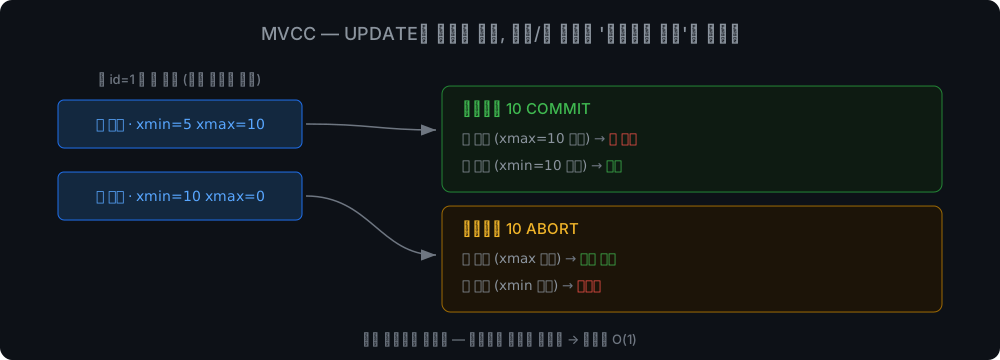
MVCC는 “버전을 쌓는다”가 전부처럼 보이지만, 그걸 작동시키는 두뇌는 가시성 규칙 한 줄입니다. 각 행 버전이 두 개의 트랜잭션 ID를 답니다.
xmin: 이 버전을 만든(INSERT한) 트랜잭션xmax: 이 버전을 지운(DELETE한) 트랜잭션 (0이면 아직)
가시성 규칙: 어떤 행 버전은, (
xmin이 나 자신이거나 커밋됐고) AND NOT (xmax가 나 자신이거나 커밋됨)일 때만 보인다.
int mvcc_visible(const TxnLog *log, int xmin, int xmax) { if (txnlog_status(log, xmin) != TXN_COMMITTED) return 0; /* 생성자가 미커밋/abort -> 없는 행 */ if (xmax != 0 && txnlog_status(log, xmax) == TXN_COMMITTED) return 0; /* 커밋된 삭제 -> 안 보임 */ return 1;}TxnLog는 트랜잭션 id마다 상태(진행/커밋/아보트)를 담은 배열로, PostgreSQL의 CLOG(pg_xact)에 대응합니다. 행 저장은 1편의 행 포맷 맨 앞에 8바이트 헤더([xmin(4)][xmax(4)])를 붙이는 것으로 끝납니다.
코드의 mvcc_visible은 남의 트랜잭션에 대한 핵심 판정입니다. 실제 게이트(db.c의 row_visible)엔 xmin == my_txn || … 조항이 하나 더 붙습니다. 자기 트랜잭션의 미커밋 쓰기는 자기에겐 보여야 하기 때문입니다(방금 INSERT한 행을 내 다음 SELECT가 못 보면 곤란합니다). PostgreSQL은 여기서 한 단계 더 갑니다. 같은 트랜잭션 안에서도 cmin/cmax로 문장 단위 가시성을 갈라서, 실행 중인 UPDATE가 자기가 방금 만든 새 버전을 또 읽어 다시 갱신하는 사고(Halloween problem)를 막습니다.
왜 PostgreSQL 튜플 헤더엔 hint bits가 있나: db-hobby의 TxnLog는 메모리 배열이라 상태 조회가 즉시지만, PostgreSQL의 CLOG(
pg_xact)는 디스크에 있습니다(SLRU 캐시 경유). 매 가시성 판정마다 CLOG를 뒤지면 비싸니, 한 번 알아낸 커밋/아보트 결과를 튜플 헤더의 hint bits에 캐시합니다. 이 캐시 쓰기 때문에 “대량 적재 직후 첫 SELECT가 유난히 느리다(읽기가 쓰기를 유발한다)“는 PostgreSQL 특유의 현상이 생깁니다.
여기서 “이전 버전을 어디에 두느냐” 가 실제 DB들을 가르는 분기점입니다.
| db-hobby | PostgreSQL | InnoDB | |
|---|---|---|---|
| 옛 버전 위치 | 같은 힙 (행 헤더 xmin/xmax) | 같은 힙 (튜플 헤더) | 별도 Undo Log |
| UPDATE | 옛 버전에 xmax + 새 버전(새 RID) | 새 튜플 append | in-place 수정 + before를 undo에 |
| 트랜잭션 상태 | TxnLog | CLOG(pg_xact) | rollback segment 포인터 |
db-hobby는 PostgreSQL을 따라 같은 힙 안(append-only)에 둡니다. 이 선택의 우아한 보상이 하나 있습니다. 롤백이 공짜입니다. abort하면 TxnLog에 “아보트”라 적기만 하면, 그 트랜잭션이 만든 모든 버전이 가시성 규칙에 의해 자동으로 안 보이게 됩니다. 행을 하나하나 되돌릴 필요가 없습니다. (InnoDB는 반대로 undo log를 재생해 물리적으로 되돌리는 대신, 힙이 항상 최신 버전만 들고 있어 읽기가 가볍습니다. 이 트레이드오프의 전체 그림은 ACID ①.)
흔한 오해 정정: “롤백은 어느 DB든 싸다”. 옛 버전을 어디 두느냐가 롤백 비용까지 정합니다. PostgreSQL은 db-hobby처럼 CLOG에 ‘아보트’라 적으면 끝이라 즉시 반환되지만, 만들어 둔 dead tuple의 청구서는 VACUUM으로 이월됩니다. InnoDB는 undo log를 재생해 물리적으로 되돌리니 대형 트랜잭션의 롤백이 커밋보다 오래 걸릴 수 있습니다. 수백만 행 UPDATE를 롤백해 본 사람이 아는 그 대기 시간입니다.
3. DELETE는 지우지 않는다 : xmax 도장과 아홉 갈래 게이트
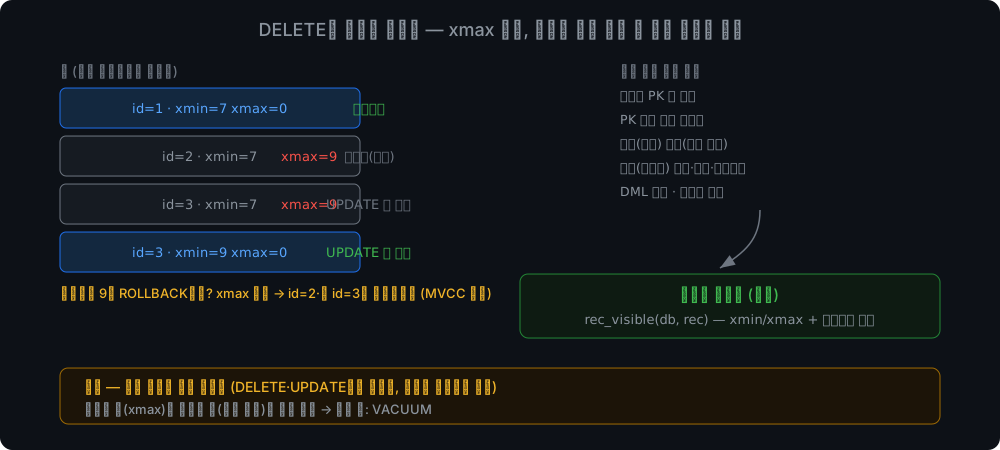
가시성 규칙이 성립하려면 치명적인 전제가 하나 있습니다. DELETE가 행을 물리적으로 지우면 안 됩니다. 지워 버리면 “커밋 안 된 삭제는 여전히 보여야 한다”(reader의 스냅샷)를 지킬 수 없습니다. DELETE 롤백도 물리 복원에 기대야 합니다.
그래서 DELETE는 슬롯을 지우는 대신 xmax 4바이트만 제자리에서 덮어씁니다. 도장을 찍는 것입니다.
static int stamp_xmax(Table *t, RID rid, int32_t xmax) { uint8_t rec[PAGE_SIZE]; uint16_t len; heap_get(&t->heap, rid, rec, &len); memcpy(rec + 4, &xmax, 4); /* MVCC 헤더 = [xmin(4)][xmax(4)] */ return heap_overwrite(&t->heap, rid, rec, len); /* 같은 길이 제자리 덮어쓰기 */}UPDATE도 같은 결입니다. 옛 버전에 stamp_xmax, 새 버전을 새 RID로 삽입. PostgreSQL이 UPDATE를 다루는 방식 그대로입니다.
대가 : 힙을 읽는 모든 경로가 가시성을 알아야 한다
“지워진 행이 물리적으로 존재”하게 된 순간, 힙을 읽는 모든 경로가 버전을 걸러야 합니다. 세어 보니 아홉 갈래였습니다. 풀스캔, PK 점 조회, PK 범위, 보조 인덱스, 조인 세 방식(중첩 루프·해시 빌드·인덱스 NLJ), 집계/정렬 materialize, DML 대상 수집, CREATE INDEX 빌드. 게이트는 한 줄인데, 그 한 줄을 아홉 군데 다 달아야 정확합니다. 하나라도 빼먹으면 그 경로만 유령(지워진 행)을 봅니다.
여기서 인덱스에 관한 중요한 관찰:
인덱스는 MVCC를 모른다. B+Tree는 (키 → RID)만 알지, 그 RID의 행이 어느 트랜잭션에 보이는지 모른다. 그래서 모든 인덱스 경로가 “인덱스로 후보를 찾고 → 힙에서 행을 읽고 → 게이트로 판정”하는 2단 구조가 된다. PostgreSQL의 인덱스 스캔이 힙에 들러 가시성을 확인하는 것(그리고 그 비용을 아끼려 visibility map을 두는 것)과 같은 이유다. 2편의 “인덱스는 후보일 뿐, 진실은 힙에” 원칙이 MVCC에서 생존 조건이 된다.
보상은 즉시 왔습니다. DELETE 롤백이 되살아납니다. xmax를 찍은 트랜잭션이 아보트되면 가시성 규칙이 그 도장을 무효로 치니까, ROLLBACK 한 번에 지운 행이 돌아옵니다. 물리 복원이 아니라 논리의 귀결입니다.
4. 일부러 만든 쓰레기 : VACUUM
이제 새 문제가 생겼습니다. DELETE가 안 지우니 죽은 버전(dead tuple)이 무한히 쌓입니다. DELETE를 해도 파일이 1바이트도 안 줄어듭니다. 이게 MVCC가 청구하는 비용이고, 청소부가 VACUUM입니다.
누가 죽었는가: 판정 원칙은 “지금은 물론 앞으로도 아무 트랜잭션에게 보일 수 없는 버전”. 일반적으론 실행 중인 모든 스냅샷을 고려하는 까다로운 판정인데(PostgreSQL의 oldest xmin horizon), db-hobby에선 “커밋된 xmax가 찍힌 버전”으로 떨어집니다. exec_vacuum이 어느 세션이든 열린 트랜잭션이 있으면 VACUUM 자체를 거부해서, 판정 시점에 살아있는 스냅샷이 없음이 보장되기 때문입니다. PostgreSQL은 다르게 갑니다. 다른 세션의 트랜잭션이 열려 있어도 VACUUM은 돌고, 다만 oldest xmin보다 새로운 dead tuple을 그 회차에 못 치울 뿐입니다. 자기 자신이 트랜잭션 블록 안이면 실행 불가(VACUUM cannot run inside a transaction block)라는 건 그와 별개의 제약입니다.
청소부의 세 가지 일: 순서가 중요합니다.
① 죽은 버전을 가리키던 인덱스 항목을 지운다 (B+Tree lazy 삭제)② 힙 슬롯을 비우고 페이지를 compaction한다 (슬롯 번호 = RID 불변!)③ 꼬리가 전부 빈 페이지면 파일을 자른다 (조건부 truncate)②에서 슬롯 번호를 보존하는 이유는 1편의 그 원칙, 슬롯 번호가 곧 RID고 인덱스가 RID로 가리키기 때문입니다. ③은 파일 끝의 전부-빈 페이지만 자르고 가운데 빈 페이지는 남깁니다. PostgreSQL VACUUM도 정확히 이래서, “VACUUM 했는데 파일이 안 줄어요” 가 흔한 겁니다(공간은 재사용 가능해졌지만 OS에 반납되진 않은 상태).
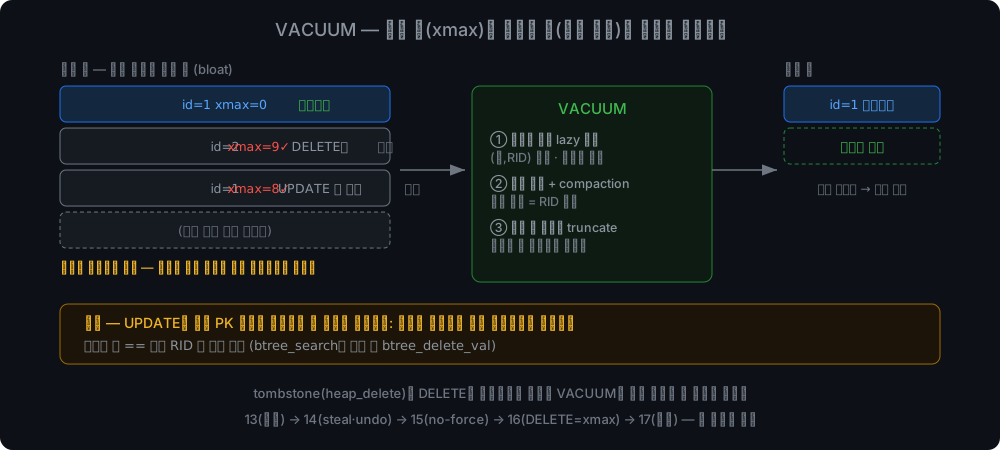
B+Tree 삭제: 교과서와 다르게. 죽은 버전을 치우면 인덱스 항목이 허공을 가리키니 지워야 하는데, 교과서(병합·재분배)를 이식하기 전에 진짜 DB를 봤습니다. PostgreSQL nbtree는 재분배를 안 합니다. 리프에서 항목을 지우고, 페이지가 완전히 비면 트리에서 떼어 재활용할 뿐입니다. 노드가 반쯤 비어도 그냥 둡니다. 그래서 lazy 삭제로 충분합니다. 포인트는 키가 아니라 (키, RID) 짝을 지우는 것입니다. UPDATE된 PK는 같은 키가 살아있는 새 버전을 가리키고 있어서, 짝으로 지워야 산 항목을 안 다칩니다.
트랜잭션 ID도 유한하다. db-hobby의 TxnLog는 고정 배열(TXN_MAX)이라 ID를 소진하면 재시작 전까진 끝입니다. 미니 DB라서 허용한 한계입니다. PostgreSQL의 XID는 32비트 순환 카운터라 약 40억에서 한 바퀴 돕니다(wraparound). 옛 튜플의 xmin이 ‘미래’로 해석되는 순간 데이터가 사라져 보이기 때문에, VACUUM이 충분히 오래된 튜플의 xmin을 ‘영원히 과거’(frozen)로 바꿔 둡니다. 공식 문서가 routine vacuuming의 존재 이유로 “to protect against loss of very old data due to transaction ID wraparound” 를 명시할 만큼 운영에서 무거운 주제입니다.
실무 안티패턴: 트랜잭션을 열어 둔 채 방치하는 것(idle in transaction). PostgreSQL에선 그 세션의 스냅샷이 oldest xmin을 붙들어 그보다 새로운 dead tuple을 VACUUM이 못 치우고, 테이블이 부풉니다(bloat).
pg_stat_activity의xact_start로 오래 열린 트랜잭션을,pg_stat_user_tables의n_dead_tup으로 쌓인 시체를 확인하고,idle_in_transaction_session_timeout으로 방치 자체를 끊는 게 상비책입니다.
5. 진짜 스냅샷 격리 : reader의 락을 없애다
부품이 다 모였습니다. 이제 철학 전환의 마지막 한 수입니다. SELECT가 락을 안 잡습니다.
static int acquire_stmt_locks(Database *db, const Statement *st, int txn, FILE *out) { switch (st->type) { case STMT_INSERT: case STMT_DELETE: case STMT_UPDATE: return lock_one(db, ..., LOCK_X, txn, out); /* 쓰기만 X락 */ default: return 0; /* SELECT: 락 없음 */ }}“락 없이 dirty read를 어떻게 막지?” 그건 더 이상 락의 일이 아닙니다. writer의 미커밋 버전은 xmin이 미커밋이라 게이트가 거릅니다. UPDATE의 옛 버전은 xmax가 미커밋이라 여전히 보입니다. reader는 거부당하는 게 아니라 그냥 옛 버전을 읽습니다. 막는 대신 가르는 것입니다. 1절의 표가 코드가 된 순간입니다.
시간을 고정한다: BEGIN 시점 스냅샷. 락을 없앴으니 격리는 온전히 가시성이 정하는데, “지금 커밋된 것”을 보면 read committed입니다(같은 SELECT 두 번 사이에 남이 커밋하면 결과가 바뀜). 스냅샷 격리라 부르려면 시간을 BEGIN에 고정해야 합니다. 구현은 PostgreSQL 스냅샷의 축소판입니다. BEGIN 때 ① 이후에 태어날 트랜잭션의 경계(snap_next)와 ② 지금 열려 있는 남의 트랜잭션 목록(snap_inprog)을 기록하고, 가시성 판정이 이 스냅샷을 통과해야 “커밋됨”으로 칩니다. PG 스냅샷의 xmax(경계)와 xip(in-progress 목록)에 정확히 대응합니다. 이로써 db-hobby는 트랜잭션 안은 REPEATABLE READ, 밖의 단문은 read committed입니다. PostgreSQL로 치면 SET TRANSACTION ISOLATION LEVEL REPEATABLE READ를 항상 켜 둔 셈입니다. PostgreSQL의 기본값(READ COMMITTED)은 명시적 트랜잭션 안에서도 문장마다 새 스냅샷을 찍고, “트랜잭션 안 = 스냅샷 고정”이 기본인 건 오히려 InnoDB(기본 REPEATABLE READ)의 구도입니다.
흔한 오해 정정: “스냅샷은 BEGIN이 찍는다”. db-hobby는 정말 BEGIN 시점에 찍지만, 실제 DB들은 미룹니다. PostgreSQL의 REPEATABLE READ가 고정하는 건 공식 문서 표현으로 “a snapshot as of the start of the first non-transaction-control statement in the transaction”, 즉 BEGIN이 아니라 첫 일반 문장 시점입니다. InnoDB도 첫 consistent read 시점이고, 시작하자마자 고정하려면
START TRANSACTION WITH CONSISTENT SNAPSHOT을 명시해야 합니다. “BEGIN만 해 두면 그 시각이 기준”이라는 가정은 두 DB 모두에서 어긋납니다.
쓰기-쓰기만은 막는다. 두 트랜잭션이 같은 데이터를 고치는 것만은 버전으로 못 피합니다(lost update). db-hobby의 답은 쓰기에만 X락(테이블 단위)을 유지하고, 충돌하면 기다리지 않고 뒤에 온 쪽이 즉시 에러를 받는 것입니다(no-wait). 그런데 이 지점이야말로 이론과 구현이, 구현과 구현이 갈립니다:
| 동시 UPDATE 충돌 처리 | |
|---|---|
| 이론의 SI (Berenson et al. 1995) | first-committer-wins(커밋 시점에 뒤에 커밋하는 쪽이 abort) |
| PostgreSQL READ COMMITTED | 행 락 대기 → 상대가 커밋하면 최신 버전으로 조건 재평가 후 진행 |
| PostgreSQL REPEATABLE READ | 행 락 대기 → 상대가 커밋하면 ERROR: could not serialize access due to concurrent update |
| InnoDB REPEATABLE READ | 행 락 대기 → 그대로 덮어씀(충돌 감지 없음, lost update는 애플리케이션 몫) |
| db-hobby | 테이블 락 no-wait, 즉시 에러 |
실무/면접 포인트: “MVCC는 lost update를 어떻게 막나”에 한 줄로 답하면 위험한 이유가 이 표다. 이론의 SI는 first-committer-wins인데 PostgreSQL은 first-updater-wins(먼저 행을 갱신한 쪽이 이기고, 뒤에 온 쪽은 대기 후 진행 또는 에러)로 구현했고, InnoDB의 REPEATABLE READ는 아예 감지하지 않아
SELECT ... FOR UPDATE나 낙관적 버전 컬럼으로 애플리케이션이 직접 막아야 한다.
예상 못 한 여파: PK 인덱스가 다중 버전이 되어야 했다. 여기까지 하고 테스트를 돌리니 스냅샷 시나리오가 깨졌습니다. 범인은 PK 인덱스입니다. 지금까지 유니크라서 UPDATE가 키의 항목을 새 RID로 덮어썼는데, 그 순간 옛 버전으로 가는 인덱스 경로가 끊깁니다. 스냅샷 reader가 인덱스로 조회하면 빈 결과, 풀스캔으론 보이는 모순이 생깁니다. 답은 PostgreSQL이 이미 알고 있었습니다. 인덱스 컬럼이 바뀌었거나 HOT이 불가능한 UPDATE에서는, 인덱스도 버전마다 항목을 갖는다. (PostgreSQL은 인덱스 컬럼이 안 바뀌고 같은 페이지에 자리가 있으면 HOT(Heap-Only Tuple) 업데이트로 새 인덱스 항목 없이 힙 안의 버전 체인만 늘리고, 인덱스는 체인의 루트만 가리킵니다. db-hobby엔 HOT이 없으니 모든 UPDATE가 항목을 하나 더 답니다.) PK 인덱스가 한 키에 여러 RID를 매다는 멀티맵(btree_insert_dup)이 되고, 조회가 후보들 중 보이는 버전을 고릅니다. 2편의 부제(“인덱스는 왜 단순 key→value가 아닌가”)의 답이 이것입니다.
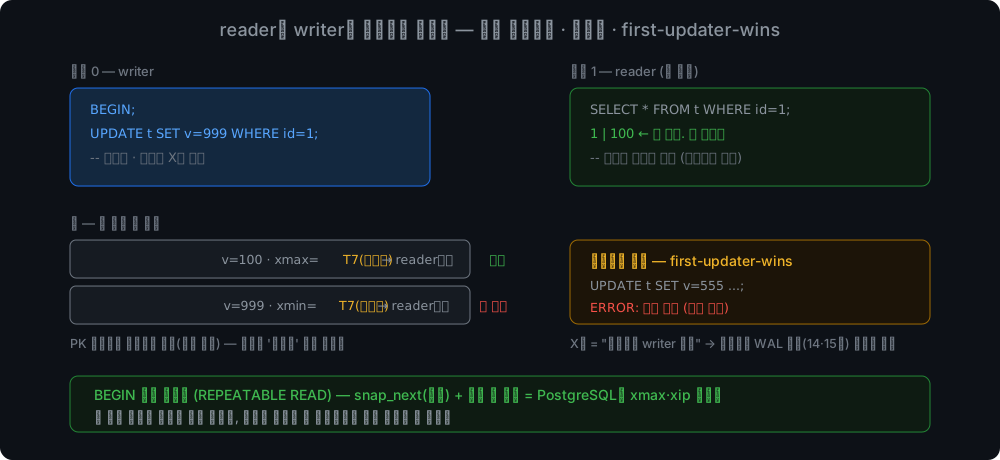
이제 그 장면이 실제로 돕니다:
SESSION 0> BEGIN; UPDATE t SET v = 999 WHERE id = 1; -- 미커밋 쓰기를 쥔 채SESSION 1> SELECT * FROM t WHERE id = 1;1 | 100 -- 막히지 않고 옛 버전을 읽는다SESSION 0> COMMIT;SESSION 1> SELECT * FROM t WHERE id = 1;1 | 999 -- (트랜잭션 밖) 이제 새 값reader가 writer를 안 막는다. 시연이 아니라 실행입니다.
하나만 선을 그어 두겠습니다. 여기 세운 건 스냅샷 격리(SI)지 SERIALIZABLE이 아닙니다. 두 트랜잭션이 서로의 행을 읽고 각자 다른 행을 고치는 write skew(당직 의사 둘이 서로만 남은 걸 확인하고 동시에 퇴근하는 그 시나리오)는 first-updater-wins로도 못 잡습니다. 같은 행을 안 건드리니 충돌 자체가 없습니다. PostgreSQL이 SERIALIZABLE에서 SSI로 이걸 잡는 이야기는 트랜잭션 ACID ②: Isolation에 있습니다.
6. 정리
- 두 철학: 2PL은 충돌을 막고(락, 교착의 비용), MVCC는 버전을 갈라 피한다(dead tuple과 VACUUM의 비용). 비용 청구 시점이 다르다(실행 중 vs 백그라운드).
- MVCC의 두뇌는 가시성 규칙 한 줄: xmin 커밋 AND xmax 미커밋. 트랜잭션 상태 배열(CLOG)과 행 헤더 8바이트가 전부다. 롤백이 공짜로 나온다.
- DELETE는 지우지 않는다: xmax 도장. 그 대가로 힙을 읽는 아홉 갈래 전부에 게이트, 그리고 “인덱스는 MVCC를 모른다” 원칙.
- VACUUM: dead 판정(커밋된 xmax, 열린 트랜잭션이 있으면 거부하기에 가능한 단순화), 인덱스 (키,RID) 짝 삭제(lazy, PG nbtree도 재분배 안 함), RID 불변 compaction, 꼬리만 truncate(그래서 파일이 잘 안 줄어든다).
- 스냅샷 격리: reader 락 제거 + BEGIN 스냅샷(xmax/xip) + 쓰기 충돌만 별도 처리(db-hobby는 no-wait 즉시 에러, PG는 first-updater-wins). 여파로 PK 인덱스가 다중 버전 멀티맵이 된다.
다음 편은 이 엔진에 네트워크를 뚫습니다. 진짜 psql이 접속하는 PostgreSQL wire protocol 서버입니다.
참고 (1차 자료 우선)
- PostgreSQL Documentation: MVCC — Concurrency Control
- PostgreSQL Documentation: Transaction Isolation — REPEATABLE READ의 스냅샷 시점과 동시 UPDATE 동작의 1차 근거
- PostgreSQL Documentation: Routine Vacuuming
- PostgreSQL Documentation: Heap-Only Tuples (HOT)
- MySQL 8.0 Reference: InnoDB Multi-Versioning
- MySQL 8.0 Reference: Consistent Nonlocking Reads
- Hal Berenson et al., A Critique of ANSI SQL Isolation Levels (SIGMOD 1995) — 스냅샷 격리의 고전
- 본 블로그: 트랜잭션 ACID ①: Atomicity · ②: Isolation · 락 메커니즘 총정리
- db-hobby 코드 (GitHub) —
mvcc.c·lock.c·db.c
0. Introduction — When Many Arrive at Once
Through Part 3, crashes no longer corrupt us. The next problem is concurrency — two transactions touching the same row at once; one reading while the other writes.
This part starts from the two philosophies (2PL vs MVCC), then walks the walls hit while actually implementing MVCC. Spoiler: MVCC’s core is not “pile up versions” but one line of visibility rule; keeping that line true means even DELETE must not delete; not deleting demands a janitor (VACUUM); and once the sweeping works, “readers don’t block writers” finally becomes execution rather than demonstration.
The full theory of isolation levels and anomalies lives in Transaction ACID ②: Isolation — this part is that theory standing up in code.
1. Two Philosophies — Prevent Conflicts, or Avoid Them
When two transactions touch the same row, there are two ways to be safe.
2PL (locks) — prevent conflicts up front. Take a shared lock (S) to read, an exclusive lock (X) to write; nobody touches what’s locked. Pessimistic. Locks waiting on each other can cycle into deadlock, requiring wait-for-graph detection and aborting someone.
MVCC (versions) — avoid conflicts. Writes create a new version instead of overwriting; reads see a snapshot as of their transaction. Readers and writers look at different versions, so there’s nothing to block.
| Anomaly | 2PL’s remedy | MVCC’s remedy |
|---|---|---|
| dirty read | can’t read an X-locked row | uncommitted versions simply aren’t visible |
| lost update | X locks serialize writes | write conflicts handled separately — varies by DB (table in §5) |
| non-repeatable read | hold S locks to commit | blocked when the snapshot is pinned per transaction |
Same problems — one side locks, the other splits versions. And there’s no free lunch:
| 2PL (locks) | MVCC (versions) | |
|---|---|---|
| You gain | simple storage (one version/row) | reads never block writes |
| You pay | reduced concurrency, deadlocks | dead-tuple accumulation, VACUUM |
| When billed | during execution (lock waits) | later, in the background (sweeping) |
Practical/interview point: more accurate than “MVCC is fast” is “MVCC eliminates read-write conflicts.” Plain SELECTs read a snapshot without locks, so readers and writers don’t wait on each other (explicit locks like
FOR UPDATEare the exception). But write-write conflicts remain even under MVCC (§5). PostgreSQL’s high read concurrency comes from here — and the price it lives with is VACUUM.
db-hobby built 2PL first (table S/X locks, strict 2PL, wait-for deadlock detection) to see the “prevent” side, then switched to MVCC. That switch is the rest of this part.
2. MVCC’s Brain — One Line of Visibility
MVCC looks like “stack versions,” but the brain that makes it work is the visibility rule. Each row version carries two transaction IDs:
xmin— the transaction that created (INSERTed) this versionxmax— the transaction that deleted it (0 = not yet)
Visibility rule: a row version is visible iff (
xminis me or committed) AND NOT (xmaxis me or committed).
int mvcc_visible(const TxnLog *log, int xmin, int xmax) { if (txnlog_status(log, xmin) != TXN_COMMITTED) return 0; /* creator uncommitted/aborted -> no row */ if (xmax != 0 && txnlog_status(log, xmax) == TXN_COMMITTED) return 0; /* committed delete -> hidden */ return 1;}TxnLog is just an array of per-transaction status (in-progress / committed / aborted) — corresponding to PostgreSQL’s CLOG (pg_xact). Storage-wise, an 8-byte header ([xmin(4)][xmax(4)]) goes at the front of Part 1’s row format.
The mvcc_visible shown is the core judgment for other transactions. The actual gate (row_visible in db.c) carries one more clause — xmin == my_txn || … — because your own uncommitted writes must be visible to you (a row you just INSERTed had better show up in your next SELECT). PostgreSQL goes one step further: even within a transaction it splits visibility per statement via cmin/cmax, preventing a running UPDATE from re-reading and re-updating the new versions it just wrote (the Halloween problem).
Why do PostgreSQL tuple headers carry hint bits? db-hobby’s TxnLog is an in-memory array, so a status lookup is instant; PostgreSQL’s CLOG (
pg_xact) lives on disk (behind an SLRU cache). Consulting CLOG on every visibility check would be expensive, so once a commit/abort verdict is learned it’s cached in the tuple header’s hint bits. That cache write is why “the first SELECT right after a bulk load is oddly slow (reads causing writes)” is a distinctly PostgreSQL phenomenon.
Where the old version lives is the fork that separates real DBs:
| db-hobby | PostgreSQL | InnoDB | |
|---|---|---|---|
| Old version lives | same heap (row header) | same heap (tuple header) | separate Undo Log |
| UPDATE | xmax on old + new version (new RID) | append a new tuple | in-place + before-image to undo |
| Txn status | TxnLog | CLOG (pg_xact) | rollback segment pointers |
db-hobby follows PostgreSQL — old versions stay in the same heap (append-only). That choice pays one elegant dividend: rollback is free. Abort by marking “aborted” in the TxnLog, and every version that transaction created becomes invisible automatically by the visibility rule. Nothing to physically revert. (InnoDB inverts the trade: it replays undo to physically revert, but its heap always holds only the latest version, keeping reads light — the full picture in ACID ①.)
Common misconception, corrected: “Rollback is cheap in every DB” — where the old versions live also decides the cost of rollback. PostgreSQL, like db-hobby, just marks ‘aborted’ in the CLOG and returns immediately — but the bill for the dead tuples it created is deferred to VACUUM. InnoDB replays the undo log to physically revert, so a large transaction’s rollback can take longer than its commit — the wait anyone who has rolled back a multi-million-row UPDATE knows.
3. DELETE Doesn’t Delete — the xmax Stamp and Nine Gates
The visibility rule has one fatal precondition — DELETE must not physically remove the row. Remove it and you can’t keep “an uncommitted delete must still be visible” (to readers’ snapshots), and DELETE rollback would depend on physical restoration.
So DELETE stamps: instead of freeing the slot, it overwrites just the 4 xmax bytes in place.
static int stamp_xmax(Table *t, RID rid, int32_t xmax) { uint8_t rec[PAGE_SIZE]; uint16_t len; heap_get(&t->heap, rid, rec, &len); memcpy(rec + 4, &xmax, 4); /* MVCC header = [xmin(4)][xmax(4)] */ return heap_overwrite(&t->heap, rid, rec, len); /* same length, in place */}UPDATE follows suit — stamp_xmax on the old version, insert the new version at a new RID. Exactly how PostgreSQL handles UPDATE.
The Price — Every Heap-Reading Path Must Know Visibility
The moment “deleted rows physically exist,” every path that reads the heap must filter versions. Counting them: nine — full scan, PK point lookup, PK range, secondary index, three join flavors (nested-loop, hash build, index NLJ), aggregate/sort materialization, DML target collection, CREATE INDEX build. The gate is one line; correctness requires installing it in all nine places. Miss one and that path alone sees ghosts.
One important observation about indexes:
Indexes don’t know MVCC. A B+Tree knows (key → RID), not which transaction can see that RID’s row. So every index path becomes two-stage: “index narrows candidates → read the row from the heap → the gate decides.” The same reason PostgreSQL’s index scans visit the heap for visibility (and keep a visibility map to save that cost). Part 2’s principle — “the index only narrows; the truth lives in the heap” — becomes a survival condition under MVCC.
The reward came instantly — DELETE rollback comes back to life. If the transaction that stamped xmax aborts, the visibility rule voids the stamp: one ROLLBACK and the deleted row returns — as a logical consequence, not physical restoration.
4. Garbage Made on Purpose — VACUUM
Now a new problem: since DELETE doesn’t delete, dead tuples pile up forever. DELETE all you want; the file shrinks by zero bytes. This is MVCC’s bill, and the janitor is VACUUM.
Who’s dead? The principle: “a version that cannot be visible to any transaction, now or ever.” In general that’s a delicate judgment over all live snapshots (PostgreSQL’s oldest-xmin horizon); in db-hobby it collapses to “a version with a committed xmax” — because exec_vacuum refuses to run at all while any session has an open transaction, guaranteeing no live snapshots exist at judgment time. PostgreSQL goes the other way: VACUUM runs even while other sessions hold open transactions — it just can’t remove dead tuples newer than the oldest xmin on that pass. That it can’t run inside your own transaction block (VACUUM cannot run inside a transaction block) is a separate constraint.
The janitor’s three jobs — order matters:
① delete index entries pointing at dead versions (lazy B+Tree deletion)② free heap slots and compact pages (slot numbers = RIDs stay fixed!)③ truncate the file only if trailing pages are all empty② preserves slot numbers for Part 1’s reason — the slot number is the RID and indexes point at it. ③ trims only all-empty trailing pages, leaving empty pages in the middle — exactly what PostgreSQL’s VACUUM does, which is why “I ran VACUUM and the file didn’t shrink” is so common (space became reusable but wasn’t returned to the OS).
B+Tree deletion — unlike the textbook. Cleaning dead versions leaves index entries pointing at nothing, so they must go. Before porting the textbook (merge/redistribute), look at a real DB: PostgreSQL’s nbtree doesn’t redistribute — it removes leaf entries and recycles fully-empty pages, leaving half-empty nodes alone. So lazy deletion suffices. The point is deleting (key, RID) pairs, not keys — an UPDATEd PK’s key already points at the live new version, so deleting by pair protects live entries.
Transaction IDs are finite too. db-hobby’s TxnLog is a fixed array (TXN_MAX) — exhaust the IDs and that’s it until restart, a limit accepted for a mini DB. PostgreSQL’s XID is a 32-bit circular counter that wraps around at about four billion. The moment an old tuple’s xmin reads as “the future,” data appears to vanish — so VACUUM rewrites sufficiently old tuples’ xmin as “forever in the past” (frozen). The official docs list, among routine vacuuming’s reasons for existing, “to protect against loss of very old data due to transaction ID wraparound” — it’s that heavy a topic in operations.
Production anti-pattern: leaving transactions open and idle (idle in transaction). In PostgreSQL that session’s snapshot pins the oldest xmin, so VACUUM cannot remove any dead tuple newer than it, and the table bloats. The standing remedy: spot long-open transactions via
pg_stat_activity’sxact_start, watch the body count viapg_stat_user_tables’n_dead_tup, and cut off the neglect itself withidle_in_transaction_session_timeout.
5. True Snapshot Isolation — Removing the Readers’ Locks
All the parts are assembled. The final move of the philosophy switch: SELECT takes no locks.
static int acquire_stmt_locks(Database *db, const Statement *st, int txn, FILE *out) { switch (st->type) { case STMT_INSERT: case STMT_DELETE: case STMT_UPDATE: return lock_one(db, ..., LOCK_X, txn, out); /* writes only: X lock */ default: return 0; /* SELECT: no lock */ }}“How do you prevent dirty reads without locks?” — that’s no longer the lock’s job. A writer’s uncommitted version has an uncommitted xmin, so the gate filters it. An UPDATE’s old version has an uncommitted xmax, so it’s still visible. The reader isn’t rejected — it simply reads the old version. Splitting instead of blocking; §1’s table became code.
Pinning time — the BEGIN snapshot. With locks gone, isolation is decided wholly by visibility — but seeing “what’s committed now” is read committed (a neighbor’s commit between two identical SELECTs changes the result). For snapshot isolation, pin time at BEGIN. The implementation is a miniature of PostgreSQL’s snapshot: record ① the boundary of transactions born later (snap_next) and ② the list of others’ transactions currently open (snap_inprog); visibility counts a transaction as “committed” only if it also passes the snapshot. Exactly PG’s xmax (boundary) and xip (in-progress list). So db-hobby runs REPEATABLE READ inside a transaction and read committed for bare statements outside — in PostgreSQL terms, as if SET TRANSACTION ISOLATION LEVEL REPEATABLE READ were always on. PostgreSQL’s default (READ COMMITTED) takes a fresh snapshot per statement even inside an explicit transaction; “inside a transaction = pinned snapshot” as the default is actually InnoDB’s scheme (default REPEATABLE READ).
Common misconception, corrected: “BEGIN takes the snapshot” — db-hobby really does pin at BEGIN, but real DBs defer. What PostgreSQL’s REPEATABLE READ pins is, in the official docs’ words, “a snapshot as of the start of the first non-transaction-control statement in the transaction” — the first ordinary statement, not BEGIN. InnoDB likewise pins at the first consistent read; to pin right away you must say
START TRANSACTION WITH CONSISTENT SNAPSHOT. The assumption “BEGIN alone fixes the reference time” fails in both.
Blocking only write-write. Two transactions modifying the same data is the one thing versions can’t dodge (lost update). db-hobby’s answer: keep X locks (table granularity) on writes only, and on conflict the latecomer gets an immediate error instead of waiting (no-wait). But this is exactly where theory and implementations — and implementations and implementations — diverge:
| Concurrent UPDATE conflict handling | |
|---|---|
| Theoretical SI (Berenson et al. 1995) | first-committer-wins — the later committer aborts at commit time |
| PostgreSQL READ COMMITTED | waits on the row lock → after the other commits, re-evaluates the predicate on the newest version and proceeds |
| PostgreSQL REPEATABLE READ | waits on the row lock → after the other commits, ERROR: could not serialize access due to concurrent update |
| InnoDB REPEATABLE READ | waits on the row lock → then overwrites — no conflict detection (lost update is the application’s problem) |
| db-hobby | table lock, no-wait — immediate error |
Practical/interview point: this table is why a one-line answer to “how does MVCC prevent lost updates” is dangerous. Theoretical SI is first-committer-wins; PostgreSQL implemented first-updater-wins (the first to update the row wins; the latecomer waits, then proceeds or errors); and InnoDB’s REPEATABLE READ doesn’t detect it at all — the application must guard itself with
SELECT ... FOR UPDATEor an optimistic version column.
An unexpected aftermath — the PK index had to go multi-version. With all this in place, the snapshot tests broke. The culprit: the PK index, hitherto unique — UPDATE overwrote the key’s entry with the new RID, and at that instant the index path to the old version was severed. A snapshot reader querying via the index got nothing while a full scan showed the row. PostgreSQL already knew the answer — when an UPDATE changes an indexed column or can’t go HOT, the index holds an entry per version. (If no indexed column changed and the page has room, PostgreSQL does a HOT — Heap-Only Tuple — update: no new index entry, just a longer version chain inside the heap, with the index pointing only at the chain’s root. db-hobby has no HOT, so every UPDATE adds an entry.) The PK index becomes a multimap hanging several RIDs off one key (btree_insert_dup), and lookups pick the visible version among candidates. That is the answer to Part 2’s subtitle — “why an index isn’t a simple key→value map.”
And now the scene actually runs:
SESSION 0> BEGIN; UPDATE t SET v = 999 WHERE id = 1; -- holding an uncommitted writeSESSION 1> SELECT * FROM t WHERE id = 1;1 | 100 -- reads the old version, unblockedSESSION 0> COMMIT;SESSION 1> SELECT * FROM t WHERE id = 1;1 | 999 -- (outside a txn) now the new valueReaders don’t block writers — as execution, not demonstration.
One line to draw, though — what stands here is snapshot isolation (SI), not SERIALIZABLE. Write skew — two transactions each reading the other’s row and modifying different rows (the two on-call doctors who each check that the other is still rostered and both sign off) — slips past first-updater-wins too: they never touch the same row, so there’s no conflict to detect. How PostgreSQL catches it with SSI under SERIALIZABLE is in Transaction ACID ②: Isolation.
6. Wrap-up
- Two philosophies: 2PL prevents (locks; deadlock cost), MVCC avoids by splitting versions (dead tuples; VACUUM cost). The bill arrives at different times — during execution vs in the background.
- MVCC’s brain is one line — xmin committed AND xmax not. A transaction-status array (CLOG) plus an 8-byte row header is all it takes. Rollback falls out for free.
- DELETE doesn’t delete — it stamps xmax. The price: gates on all nine heap-reading paths, and the principle “indexes don’t know MVCC.”
- VACUUM — dead = committed xmax (a simplification made possible by refusing to run while any transaction is open); delete index (key,RID) pairs lazily (PG’s nbtree doesn’t redistribute either); RID-preserving compaction; truncate only the tail (hence files rarely shrink).
- Snapshot isolation — remove reader locks + BEGIN snapshot (xmax/xip) + separate handling of write conflicts only (db-hobby: no-wait immediate error; PG: first-updater-wins). Aftermath: the PK index becomes a multi-version multimap.
Next: punching a network hole into this engine — a PostgreSQL wire protocol server that a real psql connects to.
References (primary sources first)
- PostgreSQL Documentation: Concurrency Control (MVCC)
- PostgreSQL Documentation: Transaction Isolation — primary source for REPEATABLE READ’s snapshot timing and concurrent-UPDATE behavior
- PostgreSQL Documentation: Routine Vacuuming
- PostgreSQL Documentation: Heap-Only Tuples (HOT)
- MySQL 8.0 Reference: InnoDB Multi-Versioning
- MySQL 8.0 Reference: Consistent Nonlocking Reads
- Hal Berenson et al., A Critique of ANSI SQL Isolation Levels (SIGMOD 1995)
- This blog: Transaction ACID ①: Atomicity · ②: Isolation · Lock Mechanisms
- db-hobby source (GitHub) —
mvcc.c·lock.c·db.c
댓글
댓글 수정/삭제는 GitHub Discussions에서 가능합니다.