JVM 메모리 ①: Heap 세대 구조
목차
본 문서는 Oracle JDK 17 HotSpot VM 기준이에요. 버전에 따라 default 값이 다르므로, 다른 버전을 쓸 경우 각 버전 문서를 교차 확인해야 해요. JVM 아키텍처 전반(클래스 로더, Runtime Data Areas, Execution Engine, JIT 등)은 0편에서 다뤘고, 이 글은 그중에서 Elasticsearch 운영에 직결되는 Heap 구조만 발췌·심화한 버전이에요.
1. 왜 이 이론을 알아야 하는가
Elasticsearch는 JVM 위에서 돌아가는 Java 애플리케이션이에요. Elasticsearch 노드가 메모리 이슈로 죽거나 느려지는 원인의 대부분이 JVM Heap과 GC에서 발생해요. 그래서 ES의 “heap은 전체 RAM의 50% 이하로 설정하라”는 가이드는 JVM Heap이 무엇인지, 어떻게 쓰이는지를 이해해야 왜 그런지 설명할 수 있어요.
즉, 이 문서는 Xms, Xmx, Young/Old Generation, Eden/Survivor 같은 용어가 구조상 어디에 위치한 무엇을 의미하는지 1차 소스 기준으로 정리해요.
2. JVM 메모리의 큰 그림
JVM 프로세스의 메모리는 크게 두 덩어리로 나뉘어요.
- Heap 영역 —
new로 생성된 객체가 저장되는 영역. GC의 대상이 이 영역이에요. - Non-heap 영역 — 클래스 메타데이터(Metaspace), 스레드 스택, 코드 캐시(JIT), Direct Memory, GC 자체 구조 등.
-Xms, -Xmx가 조절하는 것은 Heap 영역의 크기만이에요. 따라서 “Xmx 8g를 줬는데 JVM 프로세스가 12g를 쓴다”는 건 Non-heap 영역이 추가로 잡혀 있기 때문이고, 이건 버그가 아니에요. (Non-heap의 대표 항목인 Direct Buffer는 Off-heap Memory 편 참조)
3. Heap의 세대별 구조 (Generational Hypothesis)
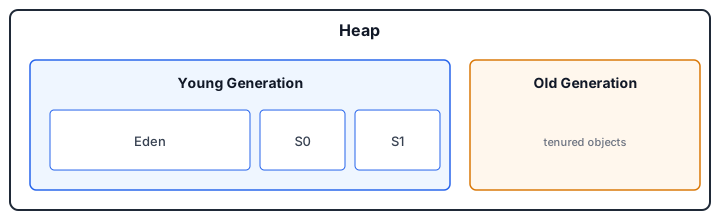
HotSpot은 “대부분의 객체는 금방 죽는다” 라는 세대별 가설(Generational Hypothesis) 에 기반해서 Heap을 두 세대로 나눠요.
위 그림은 Serial/Parallel GC 같은 고전적 세대 collector 의 물리적 레이아웃이에요. G1 GC는 Young/Old를 고정된 연속 메모리로 두지 않고, 동일 크기 region들에 “young”/“old” 라벨을 붙이는 방식을 써요. 즉 개념적으로는 같은 두 세대지만 레이아웃이 달라요. 자세한 내용은 GC 알고리즘 편 참조.
3-1. Young Generation (신세대)
Oracle 공식 문서(JDK 8 GC Tuning Guide, “Generations” 챕터)의 정의:
“The young generation consists of eden and two survivor spaces. … One survivor space is empty at any time, and serves as the destination of any live objects in eden; the other survivor space is the destination during the next copying collection.” — Oracle JDK 8 GC Tuning Guide — Generations
이 구조 설명은 JDK 8 문서가 가장 직설적이라 인용했어요. 같은 개념은 JDK 17 문서의 “Factors Affecting Garbage Collection Performance”에도 eden/survivor 튜닝 문맥으로 등장해요.
정리하면:
- Eden: 새로
new된 객체가 처음 할당되는 곳이에요. - Survivor 0 / Survivor 1 (S0 / S1): 두 개의 동일한 크기 공간. 한 쪽은 항상 비어 있어요.
- Young GC (Minor GC): Eden이 꽉 차면 발생해요. Eden과 현재 사용 중인 Survivor의 살아있는 객체만 다음 Survivor로 복사하고, 나머지는 한 번에 버려요.
- Promotion(승격): Young GC를 일정 횟수 이상 살아남은 객체는 Old Generation으로 옮겨져요. 이 횟수를 tenuring threshold 라고 하며, GC가 동적으로 조정해요.
3-2. Old Generation (구세대)
장수 객체(live data)가 모이는 영역이에요. Major GC(또는 Full GC) 의 대상이에요. Young GC 대비 훨씬 비싸고 STW(Stop-the-World) 시간이 길어요.
3-3. Metaspace (세대가 아님)
Java 8부터 PermGen이 사라지고 Metaspace 로 대체됐어요. Metaspace는 Heap이 아니라 Native Memory에 위치하며, 클래스 메타데이터(메서드 정보, 상수풀 등)를 저장해요. -Xmx와 별개로 관리돼요.
4. 핵심 튜닝 파라미터 (JDK 17 기준)
중요: 아래 파라미터들은 Parallel GC / Serial GC 같은 “고전적 세대 collector” 를 전제로 서술된 문서에서 나온 것이에요. JDK 17의 default collector인 G1 GC에서는
NewRatio,NewSize,Xmn사용을 공식적으로 권장하지 않아요. 자세한 이유는 이 절의 4-2에서 다룰게요.
다음 값들은 Oracle 공식 GC Tuning Guide에서 직접 확인한 내용이에요.
| 파라미터 | Default | 의미 |
|---|---|---|
-Xms / -Xmx | 시스템/ergonomics 의존 | 초기/최대 Heap 크기. 운영에서는 같은 값으로 고정 권장 |
-XX:NewRatio | 2 (Parallel/Serial) | Young:Old = 1:N. 2이면 Young이 전체 Heap의 1/3 |
-XX:SurvivorRatio | 8 | Eden:Survivor = N:1. 8이면 각 Survivor가 Eden의 1/8 |
-XX:NewSize, -XX:MaxNewSize | ergonomics 의존 | Young Generation의 하한/상한 (명시적 값은 버전·플랫폼마다 다르므로 단일 숫자로 표기하지 않음) |
-XX:MinHeapFreeRatio | 40% | Heap free 공간이 이보다 낮으면 확장 시도 |
-XX:MaxHeapFreeRatio | 70% | Heap free 공간이 이보다 높으면 축소 시도 |
“Setting
-XX:NewRatio=3means that the ratio between the young and old generation is 1:3. In other words, the combined size of the eden and survivor spaces will be one-fourth of the total heap size.” — Oracle JDK 17 GC Tuning Guide
“Setting
-XX:SurvivorRatio=6sets the ratio between eden and a survivor space to 1:6. In other words, each survivor space will be one-sixth of the size of eden, and thus one-eighth of the size of the young generation (not one-seventh, because there are two survivor spaces).” — 같은 출처
4-1. 트레이드오프
공식 문서가 직접 짚는 트레이드오프는 다음과 같아요.
“The bigger the young generation, the less often minor collections occur. However, for a bounded heap size, a larger young generation implies a smaller old generation, which will increase the frequency of major collections.” — Oracle JDK 17 GC Tuning Guide
즉, Young을 키우면 Minor GC 빈도가 줄지만 Major GC 빈도가 늘어나요. 무조건 크게 잡는다고 좋지 않아요.
4-2. G1에서는 NewRatio / NewSize / Xmn을 쓰지 말라 (공식 권고)
Oracle JDK 17 G1 Tuning Guide의 명시적 경고:
“Avoid limiting the young generation size to particular values by using options like
-Xmn,-XX:NewRatioand others because the young generation size is the main means for G1 to allow it to meet the pause-time. Setting the young generation size to a single value overrides and practically disables pause-time control.” — Oracle JDK 17 — G1 Garbage Collector Tuning
이유:
- G1은 pause-time 목표(
-XX:MaxGCPauseMillis, default 200ms)를 맞추기 위해 매 young collection마다 Young Generation 크기를 동적으로 재조정해요. NewRatio/Xmn으로 Young 크기를 고정하면 이 자동 조정을 비활성화하는 셈이 되어 pause-time 제어 기능 자체가 무력화돼요.
따라서 G1을 쓰는 환경(= JDK 9+ 기본, 대부분의 Elasticsearch 운영)에서는 위 표의 파라미터 중 Xms/Xmx와 MaxGCPauseMillis만 건드리고 나머지는 default를 그대로 둬야 해요. NewRatio/SurvivorRatio 파라미터를 여기서 먼저 설명한 것은 개념 이해용이며, 실전 튜닝에서 G1 환경에선 건드리지 말라는 뜻이에요.
5. 객체 할당과 승격 흐름 (life cycle)
new Foo()→ TLAB(Thread Local Allocation Buffer) 을 통해 Eden에 할당.- Eden이 꽉 참 → Minor GC 발생.
- 살아남은 객체는 현재 비어있는 Survivor(S1)로 복사.
- Eden과 다른 Survivor(S0)는 한 번에 비워져요.
- 다음 Minor GC에서 S1 → S0로 복사되며 age 카운트가 올라가요.
- age가 tenuring threshold 를 넘으면 → Old Generation으로 Promotion.
- Old Generation이 꽉 참 → Major GC(혹은 Full GC).
“At each garbage collection, the virtual machine chooses a threshold number, which is the number of times an object can be copied before it’s old. This threshold is chosen to keep the survivors half full.” — Oracle JDK 17 GC Tuning Guide
5-1. Survivor가 너무 작으면?
“If survivor spaces are too small, then the copying collection overflows directly into the old generation.” — 같은 출처
즉 Survivor가 작으면 원래 Young에서 수명을 다 채워야 할 객체가 조기 승격(premature promotion) 돼서 Old Generation이 빨리 차고, Major GC가 빨라져요. 이게 Full GC 빈도가 비정상적으로 높은 애플리케이션의 전형적 원인 중 하나예요.
6. Elasticsearch 관점에서의 의미
- ES는 Heap을 최대 ~26~30GB 이하로 권장해요. 이유는 GC 비용과 compressed OOPs 때문이고, 이는 Elasticsearch 메모리 모델 편에서 자세히 다룰게요.
- ES의 Heap 50% 룰은 “나머지 50%는 OS Page Cache용으로 남겨라” 라는 뜻이에요. 즉
Xmx가 JVM Heap에만 해당하고, 나머지 메모리는 OS가 Lucene 인덱스 파일을 캐싱하는 데 쓴다는 전제가 깔려있어요. Page Cache 개념은 OS Page Cache 편 참조. - Heap이 커질수록 GC STW 시간이 길어지고, 그 사이 ES 노드는 heartbeat를 못 보내서 클러스터에서 빠질 수 있어요.
참고 문헌 (1차 소스)
- Oracle JDK 17 HotSpot VM Garbage Collection Tuning Guide — Factors Affecting GC Performance
- Oracle JDK 17 HotSpot VM GC Tuning Guide — Available Collectors
- Oracle JDK 17 — G1 Garbage Collector Tuning
- Oracle JDK 8 GC Tuning Guide — Generations (세대별 가설 원문 설명)
- Oracle JDK 8 GC Tuning Guide — Sizing the Generations
- OpenJDK HotSpot Runtime Overview
이어지는 글: JVM의 GC 알고리즘과 Stop-the-World

This document is based on Oracle JDK 17 HotSpot VM. Default values vary by version, so cross-check with the docs for whichever version you are on. The broader JVM architecture (class loaders, Runtime Data Areas, Execution Engine, JIT) is covered in Part 0; this post is an excerpted, deeper take focused on the Heap structure that directly affects Elasticsearch operations.
1. Why You Need This Theory
Elasticsearch is a Java application running on the JVM. Most of the cases where an Elasticsearch node dies or slows down due to memory issues come from the JVM Heap and GC. That is why the ES guideline “set heap to at most 50% of total RAM” only makes sense once you understand what the JVM Heap is and how it is used.
In other words, this document organizes terms like Xms, Xmx, Young/Old Generation, and Eden/Survivor — what they are and where they sit structurally — based on primary sources.
2. The Big Picture of JVM Memory
A JVM process’s memory is split into two big chunks.
- Heap area — the area where objects created with
newlive. This is what GC operates on. - Non-heap area — class metadata (Metaspace), thread stacks, code cache (JIT), Direct Memory, GC’s own structures, etc.
What -Xms and -Xmx control is only the size of the Heap area. So when you say “I gave Xmx 8g but the JVM process is using 12g”, that is the non-heap area being allocated on top — it is not a bug. (For Direct Buffer, the headline non-heap item, see the Off-heap Memory part.)
3. Generational Heap Structure (Generational Hypothesis)
HotSpot splits the Heap into two generations based on the Generational Hypothesis — “most objects die young.”
The image above is the physical layout of classic generational collectors like Serial/Parallel GC. G1 GC does not keep Young/Old as fixed contiguous memory; it labels equal-size regions as “young”/“old” instead. Conceptually the same two generations, but the layout differs. See the GC Algorithms part for details.
3-1. Young Generation
From the Oracle official docs (JDK 8 GC Tuning Guide, “Generations” chapter):
“The young generation consists of eden and two survivor spaces. … One survivor space is empty at any time, and serves as the destination of any live objects in eden; the other survivor space is the destination during the next copying collection.” — Oracle JDK 8 GC Tuning Guide — Generations
I cited the JDK 8 doc because that structural description is the most direct one. The same concept appears in the JDK 17 doc’s “Factors Affecting Garbage Collection Performance” in the context of eden/survivor tuning.
To summarize:
- Eden: where newly
new-ed objects are first allocated. - Survivor 0 / Survivor 1 (S0 / S1): two equally-sized spaces. One side is always empty.
- Young GC (Minor GC): triggered when Eden fills up. Only the live objects in Eden and the currently-used Survivor are copied to the other Survivor; everything else is discarded in one shot.
- Promotion: objects that survive enough Young GCs are moved to the Old Generation. The threshold is called the tenuring threshold and the GC adjusts it dynamically.
3-2. Old Generation
The area where long-lived (live data) objects collect. Subject to Major GC (or Full GC), which is much more expensive than Young GC and has longer STW (Stop-the-World) pauses.
3-3. Metaspace (not a generation)
Starting with Java 8, PermGen was removed and replaced by Metaspace. Metaspace lives in Native Memory, not Heap, and stores class metadata (method info, constant pool, etc.). It is managed independently of -Xmx.
4. Key Tuning Parameters (JDK 17)
Important: the parameters below come from docs that assume classic generational collectors like Parallel GC / Serial GC. In G1 GC — the default collector in JDK 17 — Oracle officially advises against using
NewRatio,NewSize, orXmn. The reason is in section 4-2.
The values below are confirmed directly against Oracle’s official GC Tuning Guide.
| Parameter | Default | Meaning |
|---|---|---|
-Xms / -Xmx | system / ergonomics-dependent | Initial / maximum Heap size. In production, pinning both to the same value is recommended |
-XX:NewRatio | 2 (Parallel/Serial) | Young:Old = 1:N. 2 means Young is 1/3 of total Heap |
-XX:SurvivorRatio | 8 | Eden:Survivor = N:1. 8 means each Survivor is 1/8 of Eden |
-XX:NewSize, -XX:MaxNewSize | ergonomics-dependent | Lower / upper bound of Young Generation (explicit values vary across version and platform, so no single number is given) |
-XX:MinHeapFreeRatio | 40% | Heap tries to expand if free space falls below this |
-XX:MaxHeapFreeRatio | 70% | Heap tries to shrink if free space rises above this |
“Setting
-XX:NewRatio=3means that the ratio between the young and old generation is 1:3. In other words, the combined size of the eden and survivor spaces will be one-fourth of the total heap size.” — Oracle JDK 17 GC Tuning Guide
“Setting
-XX:SurvivorRatio=6sets the ratio between eden and a survivor space to 1:6. In other words, each survivor space will be one-sixth of the size of eden, and thus one-eighth of the size of the young generation (not one-seventh, because there are two survivor spaces).” — same source
4-1. Trade-off
The trade-off the official doc itself calls out:
“The bigger the young generation, the less often minor collections occur. However, for a bounded heap size, a larger young generation implies a smaller old generation, which will increase the frequency of major collections.” — Oracle JDK 17 GC Tuning Guide
So if you grow Young, Minor GC frequency drops but Major GC frequency rises. Bigger is not unconditionally better.
4-2. On G1, do not use NewRatio / NewSize / Xmn (official guidance)
Explicit warning from the Oracle JDK 17 G1 Tuning Guide:
“Avoid limiting the young generation size to particular values by using options like
-Xmn,-XX:NewRatioand others because the young generation size is the main means for G1 to allow it to meet the pause-time. Setting the young generation size to a single value overrides and practically disables pause-time control.” — Oracle JDK 17 — G1 Garbage Collector Tuning
Why:
- G1 dynamically resizes the Young Generation on every young collection to meet its pause-time goal (
-XX:MaxGCPauseMillis, default 200ms). - Pinning Young size with
NewRatio/Xmneffectively disables that auto-tuning, which neuters pause-time control itself.
So in environments using G1 (= JDK 9+ default, which covers most Elasticsearch operations), you should only touch Xms/Xmx and MaxGCPauseMillis from the table above and leave the rest at default. The reason NewRatio/SurvivorRatio were explained first is for conceptual understanding — in real G1 tuning, do not touch them.
5. Object Allocation and Promotion Flow (Life Cycle)
new Foo()→ allocated in Eden via the TLAB (Thread Local Allocation Buffer).- Eden fills up → Minor GC triggers.
- Surviving objects are copied to the currently empty Survivor (S1).
- Eden and the other Survivor (S0) are wiped at once.
- On the next Minor GC, S1 → S0 copy happens and the age count goes up.
- When age exceeds the tenuring threshold → promoted to the Old Generation.
- Old Generation fills up → Major GC (or Full GC).
“At each garbage collection, the virtual machine chooses a threshold number, which is the number of times an object can be copied before it’s old. This threshold is chosen to keep the survivors half full.” — Oracle JDK 17 GC Tuning Guide
5-1. What if Survivor is too small?
“If survivor spaces are too small, then the copying collection overflows directly into the old generation.” — same source
So if Survivor is too small, objects that should have lived out their life in Young are prematurely promoted, the Old Generation fills up faster, and Major GC accelerates. This is one of the classic causes of an application showing abnormally high Full GC frequency.
6. What This Means From an Elasticsearch Angle
- ES recommends a Heap of at most ~26-30GB. The reason is GC cost and compressed OOPs, covered in detail in the Elasticsearch Memory Model part.
- The ES Heap 50% rule means “leave the other 50% for OS Page Cache.” That is,
Xmxonly governs the JVM Heap; the rest of memory is assumed to be used by the OS to cache Lucene index files. For the Page Cache concept, see the OS Page Cache part. - The bigger the Heap, the longer the GC STW pause, and during that window the ES node may fail to send heartbeats and get dropped from the cluster.
References (Primary Sources)
- Oracle JDK 17 HotSpot VM Garbage Collection Tuning Guide — Factors Affecting GC Performance
- Oracle JDK 17 HotSpot VM GC Tuning Guide — Available Collectors
- Oracle JDK 17 — G1 Garbage Collector Tuning
- Oracle JDK 8 GC Tuning Guide — Generations (original explanation of the generational hypothesis)
- Oracle JDK 8 GC Tuning Guide — Sizing the Generations
- OpenJDK HotSpot Runtime Overview
댓글
댓글 수정/삭제는 GitHub Discussions에서 가능합니다.