아키텍처 선택과 레이어드 아키텍처 진화
목차
프로젝트 기획 단계에서 팀원들과 아키텍처를 논의하며 정리한 내용
1. 아키텍처란?
팀원들과 아키텍처를 논의하면서 여러 선택지가 나왔습니다:
- Controller - Service - DTO - DAO (전통적 MVC)
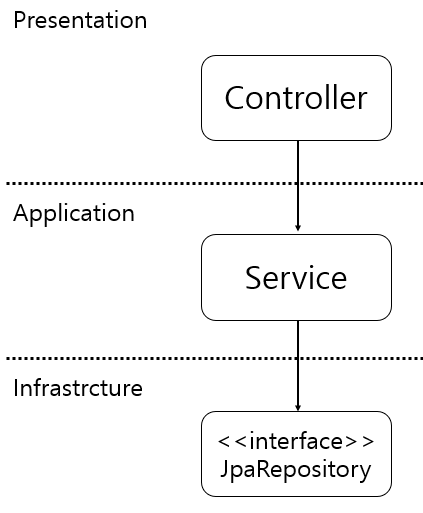
- Presentation - Application - Domain - Infrastructure (레이어드)
- 헥사고날 아키텍처
아키텍처에 대한 정확한 정의를 찾기 어려웠지만, 공통적으로 언급되는 핵심이 있었습니다:
“아키텍처는 제약 조건을 통해 목적을 달성한다.”
내가 내린 정의:
- 아키텍처는 “해도 되는 것”과 “하지 말아야 하는 것”을 결정
- 해서는 안 되는 일이 개발 단계에서 일어나지 않도록 원천 차단
- 궁극적 목적: 결합도를 낮추고 응집도를 높이는 것
2. 왜 레이어드 아키텍처를 선택했나?
아키텍처 비교: 레이어드 vs 클린 vs 헥사고날
| 항목 | 레이어드 | 클린 아키텍처 | 헥사고날 |
|---|---|---|---|
| 핵심 개념 | 계층 분리 | 의존성 규칙 (안쪽으로만) | 포트-어댑터 |
| 의존 방향 | 위 → 아래 | 바깥 → 안쪽 (동심원) | 외부 → 내부 |
| 도메인 위치 | 중간 레이어 | 최중심 | 최중심 |
| 복잡도 | 낮음 | 중간~높음 | 높음 |
| 학습 비용 | 낮음 | 중간 | 높음 |
| 유연성 | 중간 | 높음 | 매우 높음 |
클린 아키텍처란?
로버트 C. 마틴(엉클 밥)이 제안한 아키텍처로, 핵심 원칙은 “의존성은 안쪽으로만 향한다”입니다:
[Frameworks & Drivers] → [Interface Adapters] → [Use Cases] → [Entities] (외부) (중심)- Entities: 핵심 비즈니스 규칙 (도메인)
- Use Cases: 애플리케이션 비즈니스 규칙
- Interface Adapters: Controller, Presenter, Gateway
- Frameworks & Drivers: DB, Web, UI 등 외부 세부사항
왜 클린/헥사고날 대신 레이어드를 선택했나?
| 고려 사항 | 판단 | 이유 |
|---|---|---|
| MSA 구조인가? | 아니다 | 모놀리식에서 헥사고날은 오버헤드 |
| 도메인 복잡도 | 높지 않다 | 클린 아키텍처의 계층 분리가 과함 |
| 개발 기간 | 6주 (촉박) | 학습 + 구현 시간 부족 |
| 팀 역량 | 레이어드 익숙 | 새 아키텍처 학습 비용 |
| 외부 시스템 연동 | 적음 | 포트-어댑터 패턴 필요성 낮음 |
정리하면 클린과 헥사고날은 도메인 복잡도가 높거나, 외부 시스템 연동이 많거나, 장기 유지보수가 필요할 때 빛을 발합니다.
6주 프로젝트에서는 레이어드로 충분하고, 필요할 때 의존성 역전을 부분 적용하는 전략을 선택했습니다.
전통적 MVC vs 레이어드
Presentation - Application - Domain - Infrastructure 구조를 선택한 이유:
| 장점 | 설명 |
|---|---|
| 역할/책임 명확 | 각 레이어가 단일 책임을 가짐 |
| 관심사 분리 | UI, 비즈니스 로직, 도메인, 인프라 분리 |
| 테스트 용이 | 레이어별 단위 테스트 작성 가능 |
| 변경/확장 용이 | 한 레이어 변경이 다른 레이어에 영향 최소화 |
레이어드 아키텍처의 핵심 규칙:
- 레이어 구조 사용
- 레이어 간 의존 방향은 단방향 (양방향이면 레이어의 의미 상실)
3. 개발 접근법: 무엇부터 만들까?
레이어드 아키텍처에서 개발 순서는 크게 두 가지로 나뉩니다.
- 하향식(Top-Down): Presentation → Application → Domain → Infrastructure
- 상향식(Bottom-Up): Infrastructure → Domain → Application → Presentation
접근법 1: JPA 엔티티부터 (상향식, DB 중심)
Infrastructure(DB)부터 시작하는 상향식 접근입니다.
JPA 엔티티부터 만든다는 건 DDL(테이블)을 먼저 설계하겠다는 것과 같습니다.
문제점:
- DDL이 만들어지기 전까지 다른 개발자가 대기해야 함
- 업무 병렬 처리 불가
- DB에 종속된 개발 → 요구사항에 맞는 DB 선정이 아닌, DB에 맞는 기능 개발
접근법 2: API 엔드포인트부터 (하향식, 프레임워크 중심)
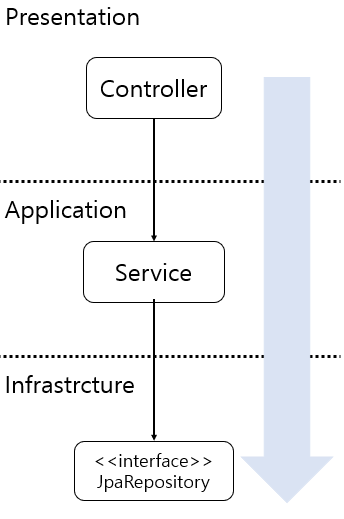
Presentation(Controller)부터 시작하는 하향식 접근입니다.
RequestBody/ResponseEntity를 먼저 고민하는 방식입니다.
문제점:
- 도메인 분석 전에 기술 스펙(Spring Web, JPA, JWT 등)을 먼저 결정
- 프레임워크에 종속된 개발
- 웹소켓, gRPC, 메시지 큐 등 다른 선택지를 배제
“스프링 API 서버 개발자가 아니라 백엔드 개발자다”
올바른 접근: 도메인부터 (도메인 중심)
1. 도메인 개발2. 애플리케이션 서비스 개발3. 서비스가 사용할 인터페이스 구성4. 컨트롤러, JPA 등 구현체 작성핵심:
- “이 프로젝트는 스프링과 JPA를 사용하네” (X)
- “이 프로젝트는 이런 도메인을 다루고 있네” (O)
4. 의존성 역전으로 레이어드 진화시키기
기존 구조의 문제
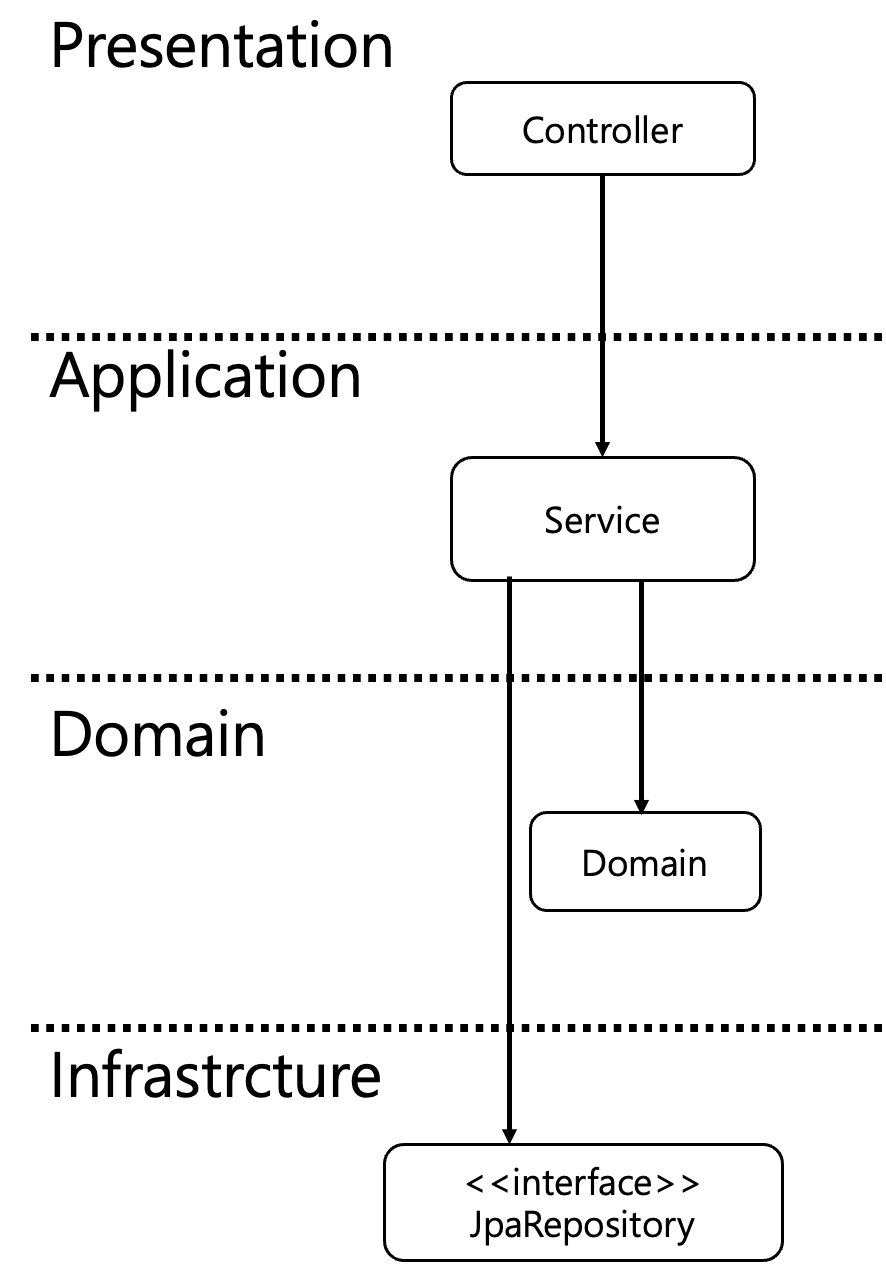
Service가 JpaRepository에 직접 의존하면:
- 10년 뒤 JPA를 대체하는 기술이 나와도 교체 불가
- “JPA 버전 X.X.X에 강결합되어 변경 불가능”
해결: 의존성 역전 적용
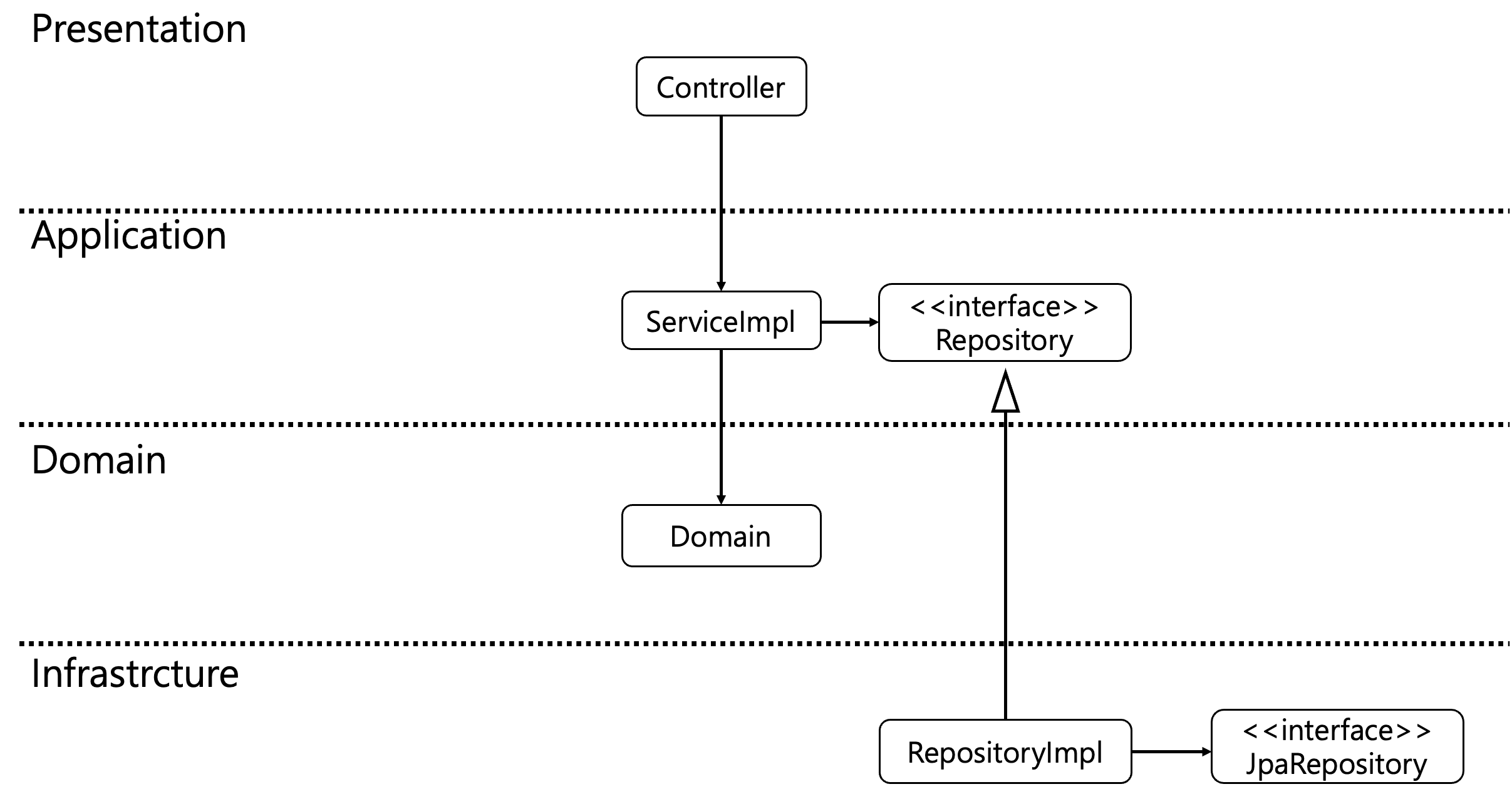
Application과 Infrastructure 사이에 인터페이스 도입:
Before: Service → JpaRepository (직접 의존)After: Service → Repository (인터페이스) ← JpaRepositoryImpl효과:
- Service가 JPA에 의존하지 않음
- Repository 구현체를 자유롭게 교체 가능 (JPA → MyBatis, MongoDB 등)
- RDB가 아닌 NoSQL도 선택 가능
Presentation에도 의존성 역전 적용
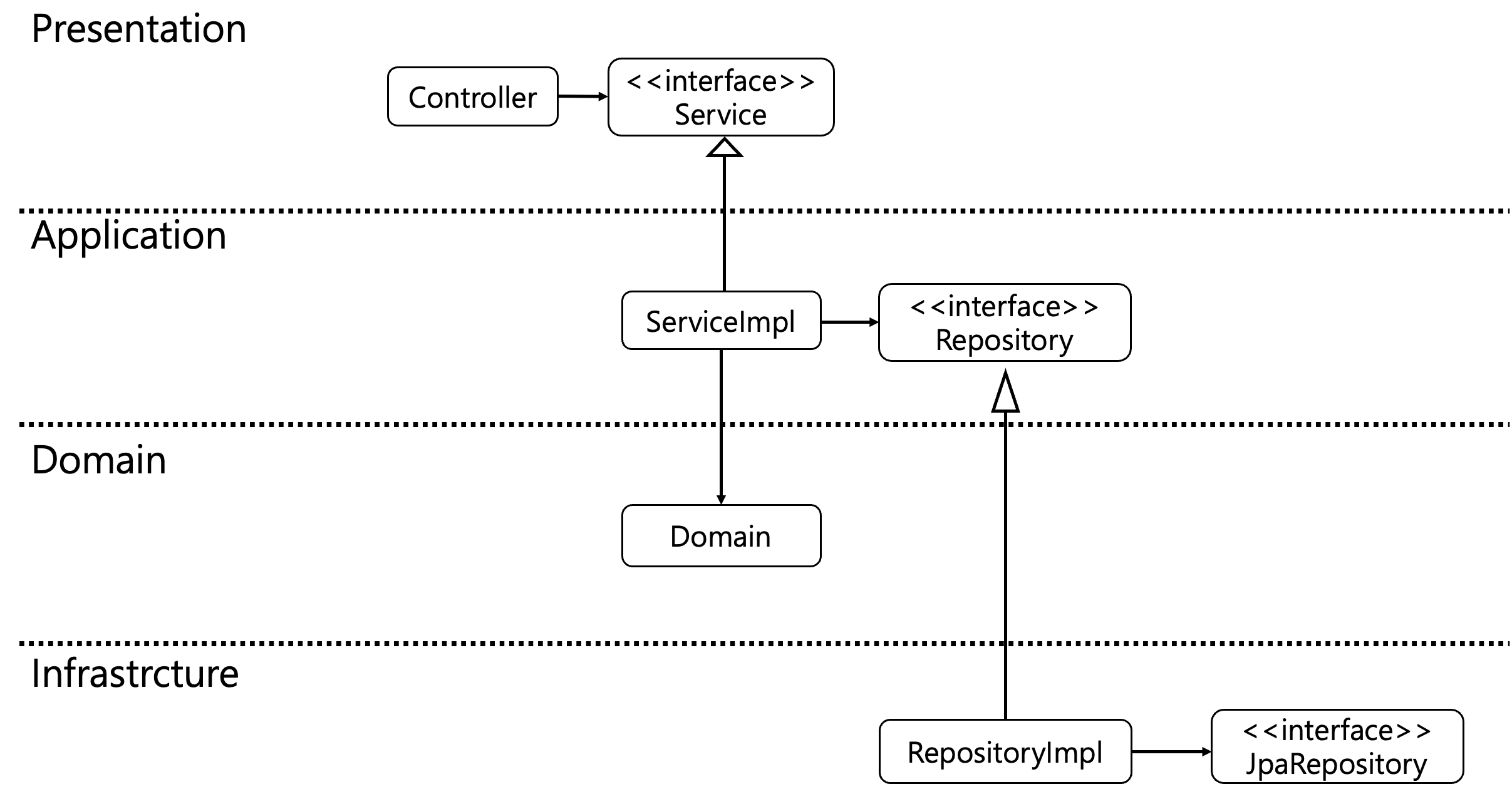
긍정적 측면:
- Presentation 컴포넌트 테스트 용이
- 외부/내부 모든 경계에 일관된 패턴 적용
- 경계 강제 가능
부정적 측면:
- 실효성이 모호할 수 있음
- Application → Presentation 의존이 부자연스럽다는 의견
- 의존성 역전 없이도 도메인은 이미 독립적이라는 반론
5. 레이어드 → 헥사고날: 본질은 같다
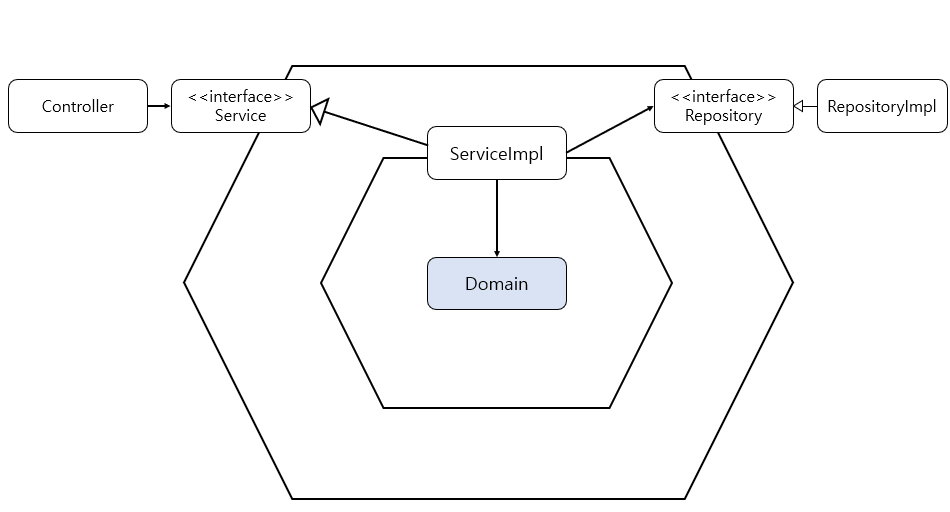
의존성 역전을 적용한 레이어드 아키텍처는 헥사고날 아키텍처와 본질적으로 동일합니다.
깨달은 점:
- 헥사고날의 “포트-어댑터 패턴” = 의존성 역전의 다른 이름
- 아키텍처는 암기가 아니라 원리의 이해
- 레이어드를 진화시키면 자연스럽게 헥사고날이 됨
“spring-web과의 결합이 끊어진 것이지, Spring Framework와 결합이 끊어진 건 아니다. @Service, @Repository 같은 애너테이션은 여전히 사용한다. Spring의 핵심 가치는 IoC 컨테이너와 DI 지원이기 때문이다.”
6. 도메인 모델과 영속성 객체: 분리할까?
분리하지 않는다
| 장점 | 단점 |
|---|---|
| from(), toModel() 같은 변환 메서드 불필요 | 클래스 책임이 불명확 |
| 개발 속도 빠름 | DB 위주 사고 유발 |
| ORM의 본래 목적에 충실 | 도메인 커질수록 관리 어려움 |
분리한다
| 장점 | 단점 |
|---|---|
| 도메인과 영속성 라이브러리 분리 | 작성 코드량 증가 |
| SRP(단일 책임 원칙) 준수 | ORM 혜택 활용 어려움 |
| DB 라이브러리 교체 용이 | 변환 로직 필요 |
핵심 원칙:
- 도메인 로직(change, validate 등)은 Domain 클래스에
- 영속성 객체(JpaEntity)에는 데이터 영속화 관련 코드만
- 도메인 레이어는 순수 자바 코드로 작성 (@Entity, @Service 등 외부 의존 X)
7. 실제 프로젝트에서의 적용 결과
이론으로 정리한 내용을 EduMeet 프로젝트에 적용한 구체적인 결과:
의존성 역전이 실제로 도움이 된 사례
-
QueryDSL Repository 분리:
BoardJpaRepository(JPA 기본 CRUD)와BoardSearchRepository(QueryDSL 검색)를 분리했습니다. 인터페이스를 Application 레이어에, 구현체를 Infrastructure 레이어에 배치하여 Service가 QueryDSL에 직접 의존하지 않는 구조를 만들었습니다. 이 과정에서 Spring Data JPA의 네이밍 규칙 충돌 문제를 경험하고 해결했습니다. → 파일 이동 오류 -
테스트 DB 교체: Service가 Repository 인터페이스에 의존하고, 인터페이스 뒤의 구현체가 JPA/H2/MySQL을 결정하는 구조였기에, 테스트 환경에서 MySQL → H2 전환이
application-test.properties변경만으로 가능했습니다. → 단위테스트 DB 마이그레이션
도메인 중심 개발이 안 된 부분 (반성)
솔직히 완벽하게 적용하지는 못했습니다. JPA 엔티티(@Entity)가 도메인 객체를 겸하고 있습니다. 6주 일정에서 도메인 모델과 영속성 객체를 분리하면 from()/toModel() 변환 코드가 늘어나서 개발 속도가 떨어진다고 판단했습니다. 트레이드오프의 결과인데, 도메인이 더 복잡했다면 분리가 필수였을 것입니다.
8. 결론
핵심 정리
-
아키텍처의 본질
- 제약 조건으로 결합도를 낮추고 응집도를 높임
- 정답 없음, 트레이드오프의 영역
-
개발 순서
도메인 → 애플리케이션 서비스 → 인터페이스 → 구현체- JPA나 API 엔드포인트부터 시작하면 특정 기술에 종속
-
의존성 역전
- 도메인 중심 레이어드 아키텍처 구성
- 기술 스택 변경에 유연하게 대응
- 결과적으로 헥사고날 아키텍처와 동일한 구조
의사결정 프로세스
1. 문제 발생2. 선택 가능한 방법 나열3. 각각 장단점 비교 (트레이드오프 분석)4. 상황에 맞는 선택“소프트웨어 개발의 모든 의사결정은 트레이드오프 싸움이다.”
Reference
- 자바/스프링 개발자를 위한 실용주의 프로그래밍 - 김우근 저
- 클린 아키텍처: 소프트웨어 구조와 설계의 원칙 - 로버트 C. 마틴 저
- API-First Design | Swagger - API 우선 설계 방법론
Notes from discussing architecture with the team during the project planning phase
1. What is Architecture?
While discussing architecture with the team, several options came up:
- Controller - Service - DTO - DAO (Traditional MVC)
- Presentation - Application - Domain - Infrastructure (Layered)
- Hexagonal Architecture
Although a precise definition of architecture was hard to pin down, there was a common thread:
“Architecture achieves its goals through constraints.”
My definition:
- Architecture determines what is allowed and what is not
- It prevents things that shouldn’t happen from occurring during development
- Ultimate goal: reduce coupling and increase cohesion
2. Why Layered Architecture?
Comparison: Layered vs Clean vs Hexagonal
| Aspect | Layered | Clean Architecture | Hexagonal |
|---|---|---|---|
| Core Concept | Layer separation | Dependency rule (inward only) | Port-Adapter |
| Dependency Direction | Top → Bottom | Outside → Inside (concentric) | External → Internal |
| Domain Position | Middle layer | Innermost | Innermost |
| Complexity | Low | Medium-High | High |
| Learning Cost | Low | Medium | High |
| Flexibility | Medium | High | Very High |
What is Clean Architecture?
Proposed by Robert C. Martin (Uncle Bob), the core principle is “dependencies point inward only”:
[Frameworks & Drivers] → [Interface Adapters] → [Use Cases] → [Entities] (outer) (center)- Entities: Core business rules (domain)
- Use Cases: Application business rules
- Interface Adapters: Controller, Presenter, Gateway
- Frameworks & Drivers: DB, Web, UI, and other external details
Why Layered Instead of Clean/Hexagonal?
| Consideration | Assessment | Reason |
|---|---|---|
| MSA structure? | No | Hexagonal is overhead for monolithic |
| Domain complexity | Not high | Clean Architecture’s layer separation is excessive |
| Development period | 6 weeks (tight) | Insufficient time for learning + implementation |
| Team capability | Familiar with layered | Learning cost for new architecture |
| External system integration | Minimal | Low need for port-adapter pattern |
Conclusion: Clean/Hexagonal shine when domain complexity is high, external system integration is extensive, or long-term maintenance is needed. For a 6-week project, layered is sufficient, with the strategy of partially applying dependency inversion as needed.
Traditional MVC vs Layered
Why Presentation - Application - Domain - Infrastructure:
| Advantage | Description |
|---|---|
| Clear roles/responsibilities | Each layer has single responsibility |
| Separation of concerns | UI, business logic, domain, infra separated |
| Testability | Unit tests per layer |
| Ease of change/extension | Changes in one layer minimally affect others |
Core rules of layered architecture:
- Use layer structure
- Dependency direction between layers is unidirectional (bidirectional defeats the purpose)
3. Development Approach: What to Build First?
In layered architecture, development order falls into two categories:
- Top-Down: Presentation → Application → Domain → Infrastructure
- Bottom-Up: Infrastructure → Domain → Application → Presentation
Approach 1: JPA Entities First (Bottom-Up, DB-Centric)
A bottom-up approach starting from Infrastructure (DB). Starting with JPA entities is essentially designing DDL (tables) first.
Problems:
- Other developers must wait until DDL is created
- Cannot parallelize work
- Development tied to DB → building features to fit the DB, not requirements
Approach 2: API Endpoints First (Top-Down, Framework-Centric)
A top-down approach starting from Presentation (Controller). Thinking about RequestBody/ResponseEntity first.
Problems:
- Deciding technical specs (Spring Web, JPA, JWT, etc.) before analyzing the domain
- Development tied to framework
- Excluding alternatives like WebSocket, gRPC, message queues
“You’re a backend developer, not a Spring API server developer.”
The Right Approach: Domain First (Domain-Centric)
1. Develop domain2. Develop application services3. Define interfaces for services4. Implement controllers, JPA, etc.Key insight:
- “This project uses Spring and JPA” (X)
- “This project deals with this domain” (O)
4. Evolving Layered Architecture with Dependency Inversion
Problem with the Existing Structure
When Service directly depends on JpaRepository:
- Even if a technology replacing JPA emerges in 10 years, replacement is impossible
- “Tightly coupled to JPA version X.X.X, cannot be changed”
Solution: Apply Dependency Inversion
Introduce an interface between Application and Infrastructure:
Before: Service → JpaRepository (direct dependency)After: Service → Repository (interface) ← JpaRepositoryImplBenefits:
- Service no longer depends on JPA
- Repository implementation can be freely swapped (JPA → MyBatis, MongoDB, etc.)
- NoSQL becomes an option too
Applying Dependency Inversion to Presentation
Positive aspects:
- Easier testing of Presentation components
- Consistent pattern across all boundaries
- Enforced boundaries
Negative aspects:
- Practical value may be unclear
- Application → Presentation dependency feels unnatural to some
- Argument that the domain is already independent without DIP
5. Layered → Hexagonal: Same Essence
Layered architecture with dependency inversion is essentially identical to hexagonal architecture.
Key takeaways:
- Hexagonal’s “port-adapter pattern” = another name for dependency inversion
- Architecture is about understanding principles, not memorization
- Evolving layered architecture naturally leads to hexagonal
“It’s the coupling with spring-web that’s broken, not with Spring Framework itself. Annotations like @Service and @Repository are still used. Spring’s core value is IoC container and DI support.”
6. Domain Model and Persistence Object: To Separate or Not?
Not Separating
| Pros | Cons |
|---|---|
| No need for conversion methods like from(), toModel() | Unclear class responsibilities |
| Faster development | Promotes DB-centric thinking |
| Stays true to ORM’s original purpose | Harder to manage as domain grows |
Separating
| Pros | Cons |
|---|---|
| Domain separated from persistence library | More code to write |
| SRP compliance | Harder to leverage ORM benefits |
| Easy to swap DB library | Conversion logic needed |
Core principles:
- Domain logic (change, validate, etc.) belongs in Domain classes
- Persistence objects (JpaEntity) should contain only data persistence code
- Domain layer should be pure Java code (no external dependencies like @Entity, @Service)
7. Conclusion
Key Takeaways
-
Essence of Architecture
- Reduce coupling and increase cohesion through constraints
- No single right answer — it’s all about trade-offs
-
Development Order
Domain → Application Service → Interfaces → Implementations- Starting with JPA or API endpoints leads to technology lock-in
-
Dependency Inversion
- Builds a domain-centric layered architecture
- Enables flexible response to technology stack changes
- Ultimately results in the same structure as hexagonal architecture
8. Practical Application Results
Where Dependency Inversion Actually Helped
-
QueryDSL Repository separation: Split
BoardJpaRepository(basic JPA CRUD) fromBoardSearchRepository(QueryDSL search). Interface in Application layer, implementation in Infrastructure layer, so Service doesn’t depend on QueryDSL directly. This triggered a Spring Data JPA naming convention conflict, which was resolved. → File Move Error -
Test DB swap: Since Service depends on Repository interfaces (not implementations), switching from MySQL to H2 for testing only required changing
application-test.properties. → Unit Test DB Migration
What Wasn’t Done (Honest Reflection)
JPA entities (@Entity) serve double duty as domain objects. Separating domain models from persistence objects would have added from()/toModel() conversion code, slowing development within the 6-week timeline. This was a trade-off — if the domain had been more complex, separation would have been necessary.
Decision-Making Process
1. Problem identified2. List available options3. Compare pros and cons (trade-off analysis)4. Choose based on the situation“Every decision in software development is a battle of trade-offs.”
Reference
- Pragmatic Programming for Java/Spring Developers - by Kim Woo-geun
- Clean Architecture: A Craftsman’s Guide to Software Structure and Design - by Robert C. Martin
- API-First Design | Swagger - API-first design methodology

댓글
댓글 수정/삭제는 GitHub Discussions에서 가능합니다.