메시지마다 DB 조회하던 권한 체크

목차
채팅방 목록 조회를 최적화하고 나니, 이번엔 메시지 전송이 느렸습니다.
0. 정상 상태
서버 환경: EC2 t3.medium (2 vCPU, 4GB RAM) 1대에 Spring Boot, MySQL 8.0, MongoDB 6.0, Redis 7.x를 Docker Compose로 운영. 1:1 채팅 서비스로, 채팅방 참여자는 구매자와 판매자 2명으로 고정.
데이터 규모: 사용자 100명, 채팅방 500개, 채팅방당 메시지 평균 150개.
기대치: 카카오톡 등 일반 메신저에서 메시지 전송은 사용자가 체감하기 어려운 수준(~50ms 이내)이어야 한다. 현재 단일 요청 기준 106-192ms로, 연속 전송 시 체감 지연이 발생하는 상태.
1. 문제 상황
메시지 전송 API 흐름을 분석해봤습니다.
측정 조건: EC2 t3.medium, 단일 요청 기준. MySQL/MongoDB/Redis 모두 같은 서버 (네트워크 RTT ≈ 0ms).
메시지 전송 API
- MySQL에서 채팅방 멤버십 확인 (30-50ms)
→ “이 사용자가 이 채팅방에 참여자인가?” - MongoDB에 메시지 저장 (50-100ms)
- Redis Pub/Sub으로 실시간 전달 (1ms)
- MySQL lastMessage 업데이트 (20-30ms)
총 소요: 106-192ms
메시지 10개를 연속으로 보내면 1-2초가 걸렸습니다. 특히 권한 확인(30-50ms)은 채팅방 참여자가 거의 변하지 않는 1:1 채팅에서 매 요청마다 MySQL을 조회하는 것이 비효율적이었습니다.
왜 권한 확인이 필요한가
악의적인 사용자가 다른 사람 채팅방에 메시지를 보내려고 할 수 있습니다.
공격 시나리오
- 자기가 참여하지 않은 채팅방에 메시지 전송 시도
- 이미 나간 채팅방에 메시지 전송 시도
그래서 메시지 전송할 때마다 MySQL에서 확인합니다.
문제는 메시지를 보낼 때마다 조회한다는 점입니다.
채팅방 참여자 정보는 거의 변하지 않습니다. 1:1 채팅이라 구매자와 판매자가 고정되어 있습니다. 매번 MySQL을 조회하는 건 낭비였습니다.
권한 체크 방법 검토
권한 확인을 빠르게 하기 위한 방법을 검토했습니다.
1. 매번 MySQL 조회 (현재)
항상 정확하지만, 메시지마다 30ms + DB 커넥션을 소모합니다.
2. Application 메모리 캐시

0.01ms로 빠르지만, 서버가 여러 대일 때 동기화가 안 되고 재시작 시 소실됩니다.
3. Redis 캐시 (선택)
이미 Redis Pub/Sub을 사용 중이라 추가 인프라 없이 적용 가능했습니다. 1:1 채팅이라 권한 정보가 거의 바뀌지 않아서 캐시 히트율이 높고, TTL로 자동 만료도 됩니다.
해결: Redis 권한 캐싱
Redis에 권한 정보를 캐싱했습니다.
캐시 키 설계
Redis Key: “chatroom:permission:{chatRoomId}:{memberId}”
Value: “ALLOWED”
TTL: 1시간
동작 방식
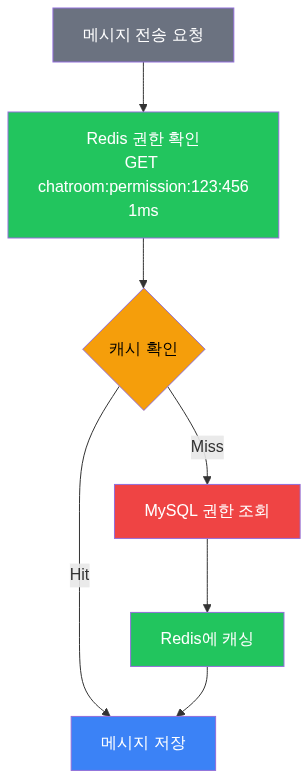
성능 비교
Before (항상 MySQL)
- 권한 확인: 30ms
- 메시지 100개 연속 전송: 30ms x 100 = 3000ms
After (Redis 캐시)
- 첫 번째 메시지: 30ms (캐시 미스)
- 이후 메시지: 1ms (캐시 히트)
실제 사용 패턴에서는 첫 메시지만 MySQL을 조회하고, 이후 TTL(1시간) 동안은 Redis에서 처리합니다. 메시지를 많이 보낼수록 차이가 벌어집니다.
캐시 무효화 전략
언제 캐시를 지우나?
-
채팅방 나가기: 권한 캐시 삭제
DEL chatroom:permission:{chatRoomId}:{memberId} -
TTL 1시간: 자동 삭제
채팅방 참여자는 거의 바뀌지 않으므로 TTL 1시간이면 충분했습니다.
Cache Warming
첫 메시지부터 빠르게 처리하기 위해 채팅방 생성 시 미리 캐싱했습니다.

lastMessage 비동기 처리
권한 캐싱 외에 lastMessage 업데이트도 병목이었습니다.
lastMessage란?채팅방 목록에 보이는 "마지막 메시지 미리보기"
[채팅방 1]판매자: 홍길동마지막 메시지: "그럼 빌릴게요" ← 이것메시지를 보낼 때마다 MySQL의 chat_room 테이블에 lastMessage를 업데이트했습니다. 문제는 이게 메시지 전송 응답에 꼭 필요하지 않다는 점입니다.
동기 vs 비동기
Before - 동기 처리
- 권한 확인 (30ms)
- MongoDB 저장 (50ms)
- lastMessage 업데이트 (20ms) ← 여기서 대기
- Redis Pub/Sub 발행 (1ms)
응답 반환 (총 101ms)
After - 비동기 처리
- 권한 확인 (1ms)
- MongoDB 저장 (50ms)
- Redis Pub/Sub 발행 (1ms)
응답 반환 (총 52ms)
[백그라운드] - lastMessage 업데이트 (20ms)
비동기로 한 이유
채팅방 목록 조회는 메시지 전송보다 덜 빈번합니다. 사람들이 계속 채팅은 하지만, 목록을 새로고침하는 건 가끔입니다.
lastMessage가 1-2초 늦게 업데이트되어도 사용자가 거의 못 느낍니다. 메시지 전송 속도가 더 중요했습니다.
실제 구현
ChatRoomPermissionCache

메시지 전송 서비스

CQRS 패턴
권한 캐싱은 CQRS(Command Query Responsibility Segregation) 패턴을 적용한 것입니다.
Command (쓰기)
- MySQL에 채팅방 생성 (Source of Truth)
- 정확성 우선
Query (읽기)
- Redis에서 권한 확인 (Cache)
- 성능 우선
- 캐시 미스 시 MySQL에서 복구
읽기와 쓰기를 분리하면 각각을 독립적으로 최적화할 수 있습니다.
결과
| 지표 | Before | After |
|---|---|---|
| 권한 확인 | 30ms | 1ms |
| lastMessage 업데이트 | 20ms (동기) | 0ms (비동기) |
| 메시지 전송 총 시간 | 101ms | 52ms |
2배 빨라졌습니다.
After optimizing the chat room list query, message sending turned out to be slow.
0. Normal State
Server environment: Single EC2 t3.medium (2 vCPU, 4GB RAM) running Spring Boot, MySQL 8.0, MongoDB 6.0, Redis 7.x via Docker Compose. 1:1 chat service — chatroom participants are fixed (buyer + seller).
Data scale: 100 users, 500 chatrooms, avg 150 messages per room.
Expectation: Message sending should feel instant to users (~50ms). Current single-request latency of 106-192ms causes noticeable delay on consecutive sends.
1. Problem
Measurement conditions: EC2 t3.medium, single request, all DBs on same server (network RTT ≈ 0ms).
I analyzed the message sending API flow.
Message Sending API:
- Check chat room membership in MySQL (30-50ms)
→ “Is this user a participant in this chat room?” - Save message to MongoDB (50-100ms)
- Real-time delivery via Redis Pub/Sub (1ms)
- Update MySQL lastMessage (20-30ms)
Total: 106-192ms
Sending 10 consecutive messages took 1-2 seconds.
Why Permission Checks Are Needed
Malicious users could attempt to send messages to other people’s chat rooms.
Attack scenarios:
- Sending messages to a chat room the user hasn’t joined
- Sending messages to a chat room the user has left
So every message send requires a MySQL check.
The problem is querying on every single message.
Chat room participant information rarely changes. In 1:1 chat, the buyer and seller are fixed. Querying MySQL every time is wasteful.
Permission Check Method Evaluation
I evaluated methods to speed up permission checks.
1. MySQL Query Every Time (Current)
Always accurate, but costs 30ms + a DB connection per message.
2. Application Memory Cache
Fast at 0.01ms, but doesn’t synchronize across multiple servers and is lost on restart.
3. Redis Cache (Selected)
Already using Redis Pub/Sub, so no additional infrastructure needed. In 1:1 chat, permission data rarely changes, ensuring high cache hit rates. TTL provides automatic expiration.
Solution: Redis Permission Caching
Permission information is cached in Redis.
Cache Key Design
Redis Key: “chatroom:permission:{chatRoomId}:{memberId}”
Value: “ALLOWED”
TTL: 1 hour
Flow
Performance Comparison
Before (always MySQL)
- Permission check: 30ms
- 100 consecutive messages: 30ms x 100 = 3000ms
After (Redis cache)
- First message: 30ms (cache miss)
- Subsequent messages: 1ms (cache hit)
In actual usage patterns, only the first message queries MySQL. For the remainder of the TTL (1 hour), Redis handles it. The more messages sent, the greater the difference.
Cache Invalidation Strategy
When to clear the cache?
-
Leaving a chat room: Delete permission cache
DEL chatroom:permission:{chatRoomId}:{memberId} -
TTL 1 hour: Automatic deletion
Since chat room participants rarely change, a 1-hour TTL is sufficient.
Cache Warming
To process the first message quickly, permissions are pre-cached when the chat room is created.
Async lastMessage Update
Beyond permission caching, the lastMessage update was also a bottleneck.
What is lastMessage?The "last message preview" shown in the chat room list
[Chat Room 1]Seller: Hong GildongLast message: "I'll rent it then" ← thisEvery message send updated lastMessage in MySQL’s chat_room table. The problem is this isn’t required for the message send response.
Sync vs Async
Before - Synchronous:
- Permission check (30ms)
- MongoDB save (50ms)
- lastMessage update (20ms) ← waiting here
- Redis Pub/Sub publish (1ms)
Response returned (total: 101ms)
After - Asynchronous:
- Permission check (1ms)
- MongoDB save (50ms)
- Redis Pub/Sub publish (1ms)
Response returned (total: 52ms)
[Background] - lastMessage update (20ms)
Why Async
Chat room list queries are less frequent than message sends. People keep chatting, but refreshing the list is occasional.
A 1-2 second delay in lastMessage updates is barely noticeable. Message send speed mattered more.
Implementation
ChatRoomPermissionCache
Message Send Service
CQRS Pattern
Permission caching applies the CQRS (Command Query Responsibility Segregation) pattern.
Command (Write)
- Create chat room in MySQL (Source of Truth)
- Accuracy first
Query (Read)
- Check permissions in Redis (Cache)
- Performance first
- Fall back to MySQL on cache miss
Separating reads and writes allows independent optimization of each.
Results
| Metric | Before | After |
|---|---|---|
| Permission check | 30ms | 1ms |
| lastMessage update | 20ms (sync) | 0ms (async) |
| Total message send time | 101ms | 52ms |
2x faster.

댓글
댓글 수정/삭제는 GitHub Discussions에서 가능합니다.