세마포어와 뮤텍스 - 동기화 메커니즘의 이해
목차
들어가며
멀티스레드 프로그래밍에서 가장 어려운 문제 중 하나는 **동기화(Synchronization)**예요. 여러 스레드가 동시에 공유 자원에 접근하면 데이터 불일치, 경쟁 상태(Race Condition), 교착 상태(Deadlock) 같은 문제가 발생해요. 이를 방지하기 위해 운영체제는 세마포어(Semaphore)와 뮤텍스(Mutex)라는 동기화 기법을 제공해요.
면접에서 “세마포어와 뮤텍스의 차이”는 단골 질문이에요. 두 개념 모두 임계영역(Critical Section)을 보호하지만, 소유권, 사용 목적, 카운팅 방식에서 근본적인 차이가 있어요.
출처: GeeksforGeeks - Mutex vs Semaphore, Baeldung - Semaphore vs. Mutex
임계영역과 동기화 문제
임계영역 (Critical Section)
임계영역은 여러 프로세스/스레드가 공유하는 자원에 접근하는 코드 영역이에요. 동시에 두 개 이상의 스레드가 임계영역에 진입하면 데이터 불일치가 발생해요.
// 은행 계좌 출금 예시 (임계영역)class BankAccount { private int balance = 1000;
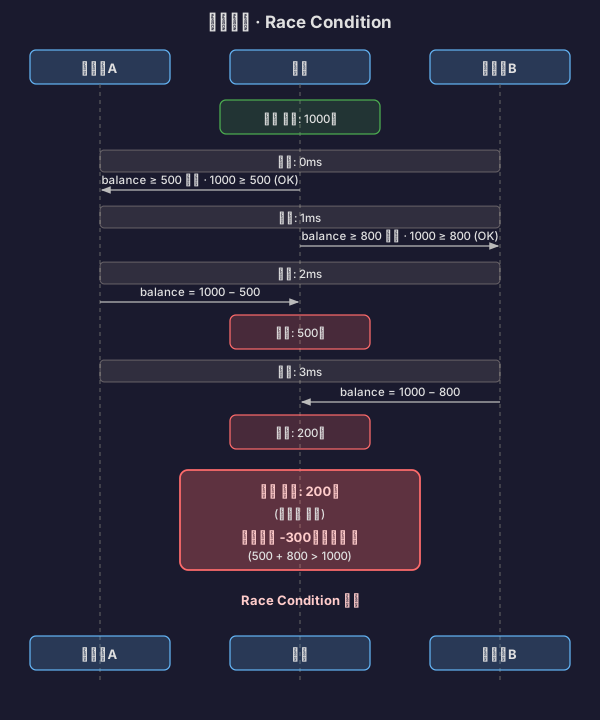
public void withdraw(int amount) { // === 임계영역 시작 === if (balance >= amount) { // 1. 잔액 확인 System.out.println("출금 시작"); balance -= amount; // 2. 잔액 감소 System.out.println("출금 완료: " + amount); } // === 임계영역 끝 === }}경쟁 상태 (Race Condition) 발생:

스레드 A와 B가 동시에 잔액을 확인했기 때문에, 둘 다 출금 가능하다고 판단했어요. 이런 문제를 방지하려면 임계영역을 보호해야 해요.
출처: Wikipedia - Race Condition, GeeksforGeeks - Race Condition
동기화의 필요성
동기화는 여러 프로세스/스레드가 공유 자원에 순차적으로 접근하도록 보장하는 메커니즘이에요.
동기화의 조건:
- 상호 배제 (Mutual Exclusion): 한 번에 하나의 프로세스만 임계영역 진입
- 진행 (Progress): 임계영역이 비어있으면 진입 대기 중인 프로세스가 진입 가능
- 한정 대기 (Bounded Waiting): 무한정 대기하지 않음 (기아 상태 방지)
출처: Wikipedia - Critical Section, GeeksforGeeks - Process Synchronization
뮤텍스 (Mutex)
뮤텍스란
뮤텍스(Mutual Exclusion)는 상호 배제를 구현하기 위한 잠금 메커니즘이에요. 공유 자원에 대한 접근을 동시에 오직 하나의 스레드만 가능하게 제한해요.
핵심 특징:
- 소유권(Ownership)이 있다: Lock을 건 스레드만 Unlock 가능
- 이진(Binary) 상태: Locked(1) 또는 Unlocked(0)
- 재진입 가능: 같은 스레드가 여러 번 Lock 가능 (ReentrantLock)
출처: Velog - [OS]뮤텍스(Mutex)와 세마포어(Semaphore), GeeksforGeeks - Mutex vs Semaphore
뮤텍스 동작 원리
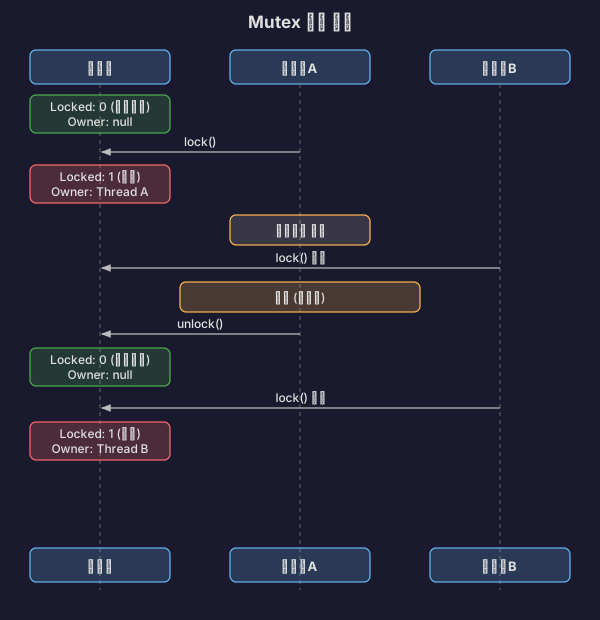
중요: 스레드 B는 스레드 A의 Lock을 해제할 수 없어요. 오직 소유자인 스레드 A만 Unlock 가능해요.
출처: Baeldung - Using a Mutex Object in Java, GeeksforGeeks - Mutual Exclusion in Synchronization
Java에서의 뮤텍스 구현
1. synchronized 키워드
class BankAccount { private int balance = 1000;
// 메서드 전체를 동기화 public synchronized void withdraw(int amount) { if (balance >= amount) { balance -= amount; System.out.println("출금 완료: " + amount); } else { System.out.println("잔액 부족"); } }}synchronized 키워드는 메서드나 블록에 대한 암묵적 뮤텍스를 제공해요. 한 스레드가 synchronized 메서드를 실행 중이면, 다른 스레드는 대기해야 해요.
출처: Java Documentation - synchronized, Baeldung - Guide to synchronized
2. ReentrantLock (명시적 뮤텍스)
import java.util.concurrent.locks.Lock;import java.util.concurrent.locks.ReentrantLock;
class BankAccount { private int balance = 1000; private Lock lock = new ReentrantLock();
public void withdraw(int amount) { lock.lock(); // 잠금 획득 try { if (balance >= amount) { balance -= amount; System.out.println("출금 완료: " + amount); } else { System.out.println("잔액 부족"); } } finally { lock.unlock(); // 반드시 잠금 해제 } }}ReentrantLock은 명시적 뮤텍스로, synchronized보다 세밀한 제어가 가능해요.
ReentrantLock의 장점:
- 공정성(Fairness) 설정 가능: 대기 시간이 긴 스레드에 우선권 부여
- 타임아웃 설정 가능:
tryLock(timeout) - 인터럽트 가능: 대기 중인 스레드를 깨울 수 있음
Lock fairLock = new ReentrantLock(true); // 공정한 락if (lock.tryLock(1, TimeUnit.SECONDS)) { // 1초 대기 try { // 임계영역 } finally { lock.unlock(); }} else { System.out.println("락 획득 실패");}출처: Baeldung - Binary Semaphore vs Reentrant Lock, Java Documentation - ReentrantLock
재진입 가능 (Reentrant)
ReentrantLock이라는 이름에서 알 수 있듯이, 같은 스레드가 이미 소유한 Lock을 다시 획득할 수 있어요.
Lock lock = new ReentrantLock();
public void outerMethod() { lock.lock(); try { System.out.println("Outer method"); innerMethod(); // 같은 스레드가 lock을 다시 요청 } finally { lock.unlock(); }}
public void innerMethod() { lock.lock(); // 재진입 성공 (카운터 증가) try { System.out.println("Inner method"); } finally { lock.unlock(); // 카운터 감소 }}동작 과정:
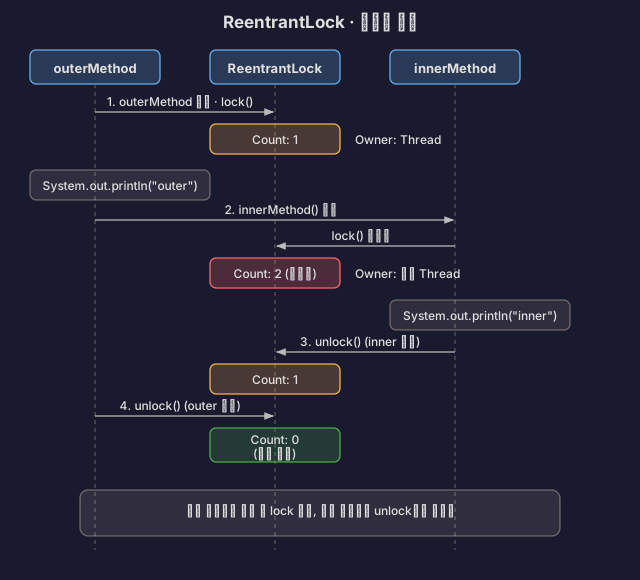
재진입이 불가능하다면, innerMethod()에서 데드락이 발생해요.
세마포어 (Semaphore)
세마포어란
세마포어는 **신호 메커니즘(Signaling Mechanism)**으로, 여러 프로세스/스레드가 제한된 개수의 자원에 접근할 수 있도록 제어해요.
핵심 특징:
- 소유권이 없다: 어떤 스레드든 signal() 호출 가능
- 카운터 기반: 사용 가능한 자원의 개수를 추적
- 두 가지 연산: wait(P 연산)와 signal(V 연산)
출처: Wikipedia - Semaphore (programming), GeeksforGeeks - Semaphores in Process Synchronization
세마포어 동작 원리
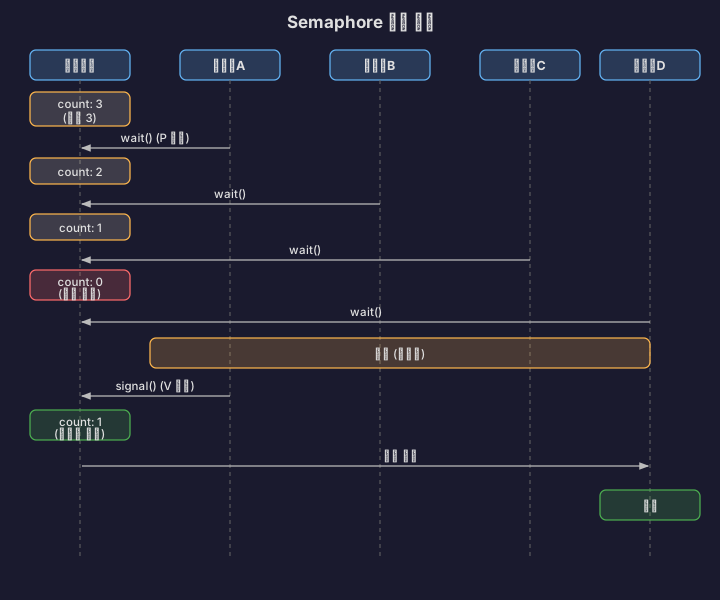
세마포어는 정수형 카운터로 구현돼요.

주요 연산:
- wait() (P 연산, acquire): 카운터 감소, 0이면 대기
- signal() (V 연산, release): 카운터 증가, 대기 중인 프로세스 깨우기
출처: GeeksforGeeks - Semaphores in Process Synchronization, Wikipedia - Semaphore
세마포어의 종류
1. 이진 세마포어 (Binary Semaphore)
카운터가 0 또는 1만 가질 수 있는 세마포어예요.
// 이진 세마포어 의사코드semaphore binary_sem = 1; // 초기값: 1
wait(binary_sem) { while (binary_sem <= 0) { // 대기 } binary_sem--; // 1 → 0}
signal(binary_sem) { binary_sem++; // 0 → 1}뮤텍스와의 차이:
- 이진 세마포어는 신호 메커니즘이에요 (소유권 없음)
- 뮤텍스는 잠금 메커니즘이에요 (소유권 있음)
// 이진 세마포어 예시Semaphore binarySem = new Semaphore(1);
// 스레드 AbinarySem.acquire(); // 카운터: 0// 임계영역
// 스레드 B (다른 스레드)binarySem.release(); // 카운터: 1 (가능!)// 스레드 A가 acquire했지만, 스레드 B가 release 가능반면 뮤텍스는 Lock을 건 스레드만 Unlock할 수 있어요.
출처: Velog - [OS] 세마포어와 뮤텍스, Baeldung - Binary Semaphore vs Reentrant Lock
2. 카운팅 세마포어 (Counting Semaphore)
카운터가 0 이상의 임의의 정수 값을 가질 수 있어요.
// 카운팅 세마포어 예시: 주차장 (5개의 주차 공간)Semaphore parkingLot = new Semaphore(5);
class Car extends Thread { private String name;
public void run() { try { System.out.println(name + " 주차 대기"); parkingLot.acquire(); // 주차 공간 확보 System.out.println(name + " 주차 완료"); Thread.sleep(2000); // 주차 중 } catch (InterruptedException e) { e.printStackTrace(); } finally { System.out.println(name + " 출차"); parkingLot.release(); // 주차 공간 반환 } }}실행 결과:
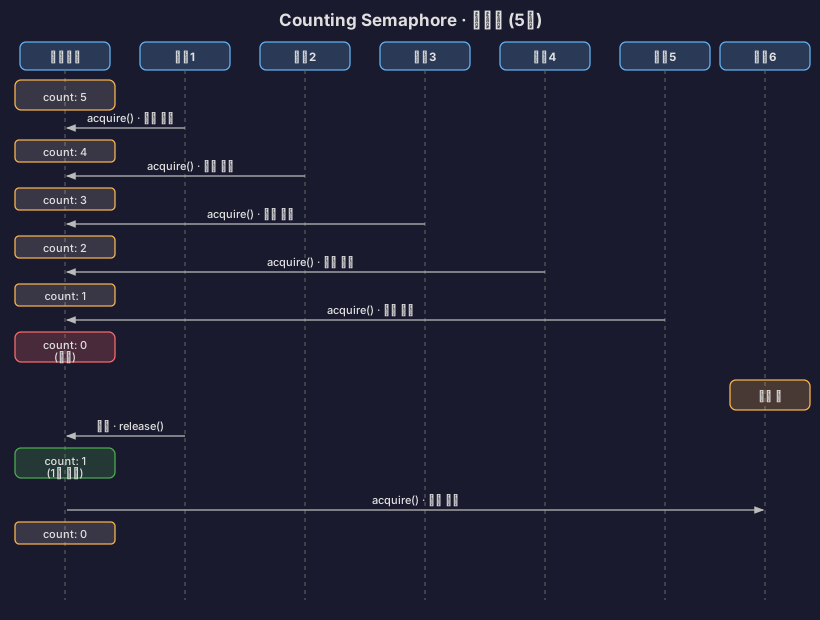
Java에서의 세마포어 구현
import java.util.concurrent.Semaphore;
class DatabaseConnectionPool { private Semaphore semaphore; private static final int MAX_CONNECTIONS = 10;
public DatabaseConnectionPool() { semaphore = new Semaphore(MAX_CONNECTIONS); }
public Connection getConnection() throws InterruptedException { semaphore.acquire(); // 연결 획득 (카운터 감소) return createConnection(); }
public void releaseConnection(Connection conn) { closeConnection(conn); semaphore.release(); // 연결 반환 (카운터 증가) }}
// 사용 예시DatabaseConnectionPool pool = new DatabaseConnectionPool();
// 스레드 AConnection conn = pool.getConnection(); // 카운터: 9// SQL 쿼리 실행pool.releaseConnection(conn); // 카운터: 10
// 11번째 요청이 오면 대기세마포어는 **제한된 자원의 풀(Pool)**을 관리할 때 유용해요.
출처: Baeldung - Java Concurrency – Semaphore, Oracle - Semaphore
뮤텍스 vs 세마포어: 핵심 차이
| 비교 항목 | 뮤텍스 (Mutex) | 세마포어 (Semaphore) |
|---|---|---|
| 메커니즘 | 잠금 메커니즘 (Locking) | 신호 메커니즘 (Signaling) |
| 소유권 | 있음 (Lock을 건 스레드만 Unlock) | 없음 (어떤 스레드든 signal 가능) |
| 카운터 | 이진 (0 또는 1) | 정수 (0 이상) |
| 목적 | 상호 배제 (Mutual Exclusion) | 자원 개수 제한 |
| 사용 시나리오 | 임계영역 보호 | 자원 풀 관리 |
| 재진입 | 가능 (ReentrantLock) | 불가능 (카운터만 증감) |
| 범위 | 프로세스 범위 | 시스템 범위 (프로세스 간 공유 가능) |
| 예시 | synchronized, ReentrantLock | Semaphore(n) |
출처: GeeksforGeeks - Mutex vs Semaphore, Stack Overflow - What is the difference between lock, mutex and semaphore?
소유권의 중요성
뮤텍스 (소유권 O):
Lock lock = new ReentrantLock();
// 스레드 Alock.lock(); // 스레드 A가 소유// 임계영역lock.unlock(); // 스레드 A만 해제 가능
// 스레드 Block.unlock(); // 에러! 스레드 B는 소유자가 아님세마포어 (소유권 X):
Semaphore sem = new Semaphore(1);
// 스레드 Asem.acquire(); // 카운터: 0
// 스레드 B (다른 스레드)sem.release(); // 카운터: 1 (가능!)이 차이는 프로세스 간 동기화에서 중요해요. 세마포어는 프로세스 A가 wait()하고 프로세스 B가 signal()할 수 있지만, 뮤텍스는 같은 프로세스/스레드가 Lock과 Unlock을 담당해야 해요.
출처: Velog - 뮤텍스(Mutex)와 세마포어(Semaphore)의 차이, Baeldung - Semaphore vs. Mutex
실전 예제: 식사하는 철학자 문제
문제 설명
1965년 다익스트라가 제안한 **식사하는 철학자 문제(Dining Philosophers Problem)**는 교착 상태를 설명하기 위한 고전적 문제예요.
상황:
- 5명의 철학자가 원탁에 앉아있어요
- 각 철학자 사이에 포크가 1개씩 (총 5개)
- 스파게티를 먹으려면 양손에 포크를 하나씩 들어야 해요
- 철학자는 생각하거나 먹어요
포크0 철학자0 철학자1포크4 포크1 철학자4 철학자2 철학자3 포크3 포크2출처: Wikipedia - Dining Philosophers Problem, GeeksforGeeks - Dining Philosopher Problem Using Semaphores
잘못된 구현 (데드락 발생)
class Philosopher extends Thread { private int id; private Semaphore leftFork; private Semaphore rightFork;
public void run() { try { while (true) { think();
// 왼쪽 포크 집기 leftFork.acquire(); System.out.println("철학자 " + id + " 왼쪽 포크 획득");
// 오른쪽 포크 집기 rightFork.acquire(); System.out.println("철학자 " + id + " 오른쪽 포크 획득");
eat();
// 포크 내려놓기 leftFork.release(); rightFork.release(); } } catch (InterruptedException e) { e.printStackTrace(); } }}데드락 발생 시나리오:
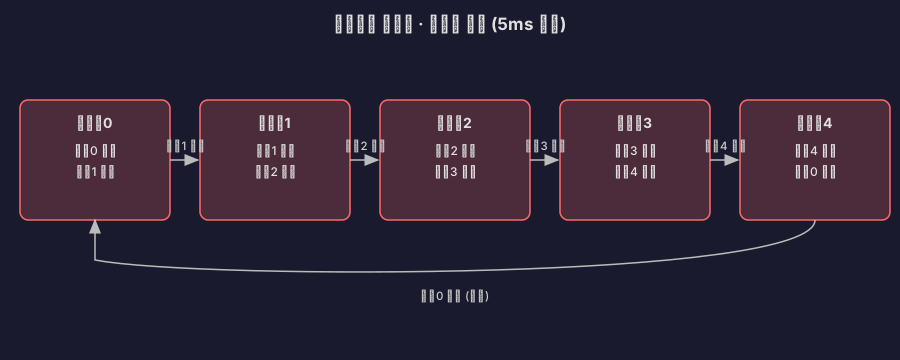
모든 철학자가 왼쪽 포크를 들고 오른쪽 포크를 기다리므로, 아무도 식사할 수 없게 돼요.
출처: Wikipedia - Dining Philosophers Problem, GeeksforGeeks - Deadlock in Operating System
해결 방법 1: 홀수/짝수 철학자 분리
class Philosopher extends Thread { private int id; private Semaphore leftFork; private Semaphore rightFork;
public void run() { try { while (true) { think();
if (id % 2 == 0) { // 짝수: 왼쪽 → 오른쪽 leftFork.acquire(); rightFork.acquire(); } else { // 홀수: 오른쪽 → 왼쪽 rightFork.acquire(); leftFork.acquire(); }
eat();
leftFork.release(); rightFork.release(); } } catch (InterruptedException e) { e.printStackTrace(); } }}대칭성을 깨뜨려서 데드락을 방지하는 방식이에요.
출처: Velog - [Philosophers] 예시/예제로 보는 뮤텍스와 세마포어의 차이, GeeksforGeeks - Dining Philosopher Problem Using Semaphores
해결 방법 2: 세마포어로 동시 식사 인원 제한
class DiningPhilosophers { private Semaphore[] forks = new Semaphore[5]; private Semaphore maxDiners = new Semaphore(4); // 최대 4명만 동시 식사
public DiningPhilosophers() { for (int i = 0; i < 5; i++) { forks[i] = new Semaphore(1); } }
public void dine(int id) throws InterruptedException { maxDiners.acquire(); // 식탁에 앉기
forks[id].acquire(); // 왼쪽 포크 forks[(id + 1) % 5].acquire(); // 오른쪽 포크
System.out.println("철학자 " + id + " 식사 중");
forks[id].release(); forks[(id + 1) % 5].release();
maxDiners.release(); // 식탁에서 일어나기 }}최대 4명만 동시에 앉을 수 있으므로, 적어도 1명은 포크 2개를 집을 수 있어요.
출처: GeeksforGeeks - Dining Philosopher Problem Using Semaphores, Wikipedia - Dining Philosophers Problem
실무 문제: 우선순위 역전 (Priority Inversion)
문제 설명
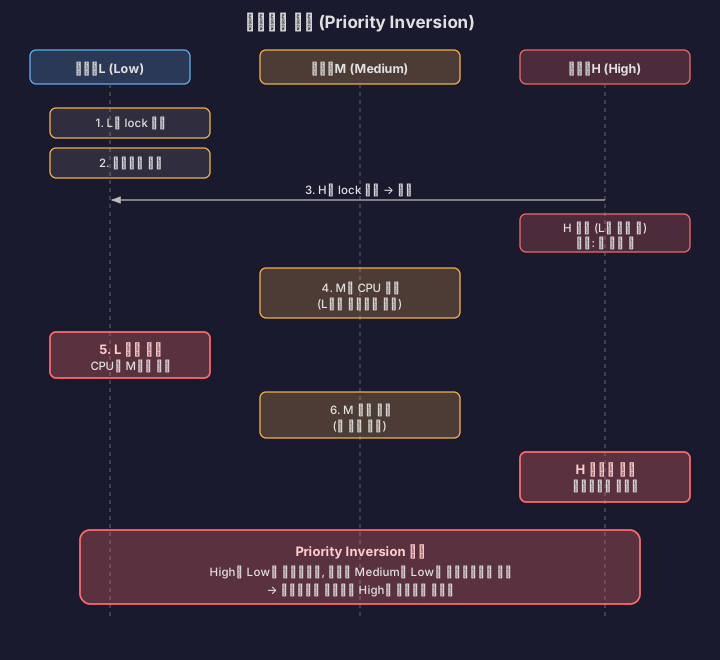
우선순위 역전은 낮은 우선순위의 스레드가 높은 우선순위 스레드보다 먼저 실행되는 현상이에요.
시나리오:

출처: Wikipedia - Priority Inversion, GeeksforGeeks - Priority Inversion in Operating Systems
화성 탐사선 사례 (Mars Pathfinder)
1997년 NASA의 Mars Pathfinder 탐사선에서 실제로 발생한 사건이에요.
문제 상황:
- 정보 수집 스레드(낮은 우선순위): 버스 관리 뮤텍스 Lock
- 통신 스레드(높은 우선순위): 버스 관리 뮤텍스 대기
- 기상 관측 스레드(중간 우선순위): 긴 작업 실행
- 결과: 통신 스레드가 타임아웃으로 시스템 리셋
해결 방법: NASA는 VxWorks 운영체제의 우선순위 상속(Priority Inheritance) 기능을 활성화했어요.
출처: Rapita Systems - What Really Happened on Mars Pathfinder?, Embedded.com - Maximizing visibility through logging
우선순위 상속 (Priority Inheritance)
낮은 우선순위 스레드가 뮤텍스를 소유하고 있을 때, 높은 우선순위 스레드가 대기하면 소유자의 우선순위를 일시적으로 높여줍니다.
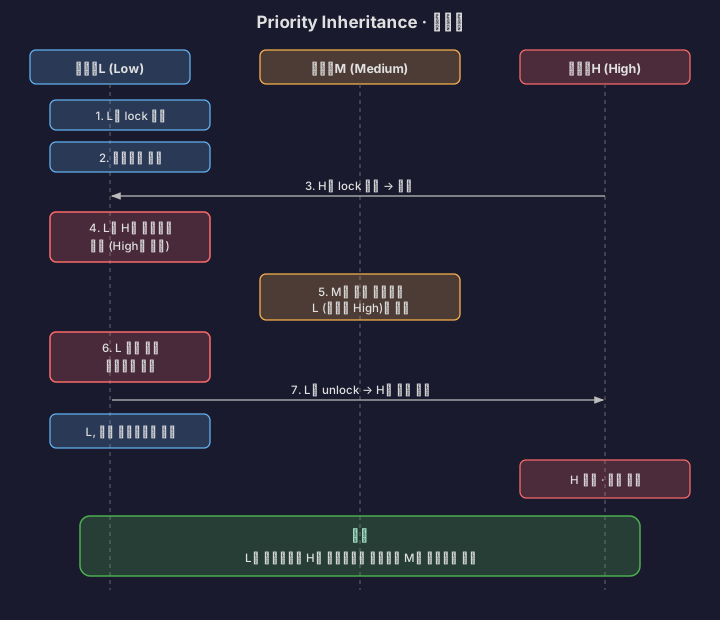
Java에서는 직접 구현해야 하지만, RTOS(Real-Time OS)에서는 기본 제공해요.
출처: FreeRTOS Documentation - Priority Inheritance, Wikipedia - Priority Inheritance
실무 사례: 한국 IT 기업의 동시성 제어
우아한형제들: MySQL을 이용한 분산 락
우아한형제들은 광고 시스템에서 여러 서버에 걸친 동시성 문제를 해결하기 위해 MySQL의 User-Level Lock을 활용했어요.
문제 상황
여러 서버가 동일한 자원에 접근할 때, 단일 서버의 뮤텍스나 세마포어로는 해결할 수 없는 분산 환경의 동시성 문제가 발생했어요.
해결 방법: MySQL GET_LOCK
선택 이유:
- 이미 사용 중인 MySQL 인프라를 활용하여 추가 비용 없음
- ZooKeeper, Redis 같은 별도 시스템 도입의 인프라 구축/유지보수 비용 절감
- 잠금에 이름을 지정하여 애플리케이션 단에서 세밀한 제어 가능
구현 코드:
public class MySQLDistributedLock { private DataSource dataSource;
public void executeWithLock(String lockName, Runnable task) { // Connection을 직접 관리하여 동일 연결에서 lock/unlock try (Connection conn = dataSource.getConnection()) { // 락 획득 String getLockQuery = "SELECT GET_LOCK(?, 10)"; // 10초 대기 try (PreparedStatement ps = conn.prepareStatement(getLockQuery)) { ps.setString(1, lockName); ResultSet rs = ps.executeQuery();
if (rs.next() && rs.getInt(1) == 1) { try { // 비즈니스 로직 실행 task.run(); } finally { // 락 해제 String releaseLockQuery = "SELECT RELEASE_LOCK(?)"; try (PreparedStatement ps2 = conn.prepareStatement(releaseLockQuery)) { ps2.setString(1, lockName); ps2.executeQuery(); } } } } } catch (SQLException e) { throw new RuntimeException("Failed to acquire lock", e); } }}주의사항:
- JdbcTemplate을 사용하면 연결 풀 재사용으로 인해
GET_LOCK과RELEASE_LOCK이 다른 연결을 사용할 수 있음 - 반드시 DataSource에서 직접 Connection을 관리하여 동일 연결 보장
- try-with-resources로 Connection 생명주기 관리
장단점:
| 장점 | 단점 |
|---|---|
| 기존 인프라 활용으로 추가 비용 없음 | 대기 순서 보장 불가 |
| 명명된 잠금으로 세밀한 제어 가능 | MySQL 버전에 따른 제약 (5.7 이전: 동시 1개만) |
| 구현이 간단함 | 별도 연결 관리의 복잡성 |
카카오페이: Redis 분산 락으로 따닥 이슈 해결
카카오페이에서는 사용자 혜택 서비스를 개발하면서 발생한 “따닥 이슈”를 Redis 분산 락으로 해결했어요.
문제 상황: 따닥 이슈
사용자가 버튼을 한 순간에 여러 번 클릭하여 API 호출이 중복으로 일어나는 문제가 발생했어요. 혜택 서비스에서 페이포인트를 지급하는데, 동시 요청이 비즈니스 로직을 모두 통과하면서 포인트가 중복 지급될 위험이 있었어요.
해결 방법: Redis SETNX를 이용한 분산 락
선택 이유:
- 애플리케이션 단에서 처리하여 유지보수 용이
- Controller 단에서 예외를 즉시 던져 빠른 실패(Fail-Fast) 가능
- DB 락보다 가볍고 빠름
구현 코드:
// 1. LockManager: Redis 락 관리@Componentpublic class LockManager { private final StringRedisTemplate redisTemplate; private static final int LOCK_TTL_SECONDS = 3;
public boolean acquireLock(String key) { String lockKey = key + ":lock"; Boolean success = redisTemplate.opsForValue() .setIfAbsent(lockKey, "locked", Duration.ofSeconds(LOCK_TTL_SECONDS)); return Boolean.TRUE.equals(success); }
public void releaseLock(String key) { String lockKey = key + ":lock"; redisTemplate.delete(lockKey); }}
// 2. RedisLockUtil: 락 획득 및 실행public class RedisLockUtil { public static <T> T acquireAndRunLock( String lockKey, Supplier<T> supplier, LockManager lockManager) {
// 락 획득 시도 if (!lockManager.acquireLock(lockKey)) { throw new BusinessException("동시 요청이 발생했습니다"); }
try { // 비즈니스 로직 실행 return supplier.get(); } finally { // 락 해제 lockManager.releaseLock(lockKey); } }}
// 3. Controller에서 사용@PostMapping("/benefit/reward")public ResponseEntity<?> claimReward(@RequestBody RewardRequest request) { String lockKey = "benefit:reward:" + request.getUserId();
RewardResponse response = RedisLockUtil.acquireAndRunLock( lockKey, () -> benefitService.claimReward(request), lockManager );
return ResponseEntity.ok(response);}동작 과정:
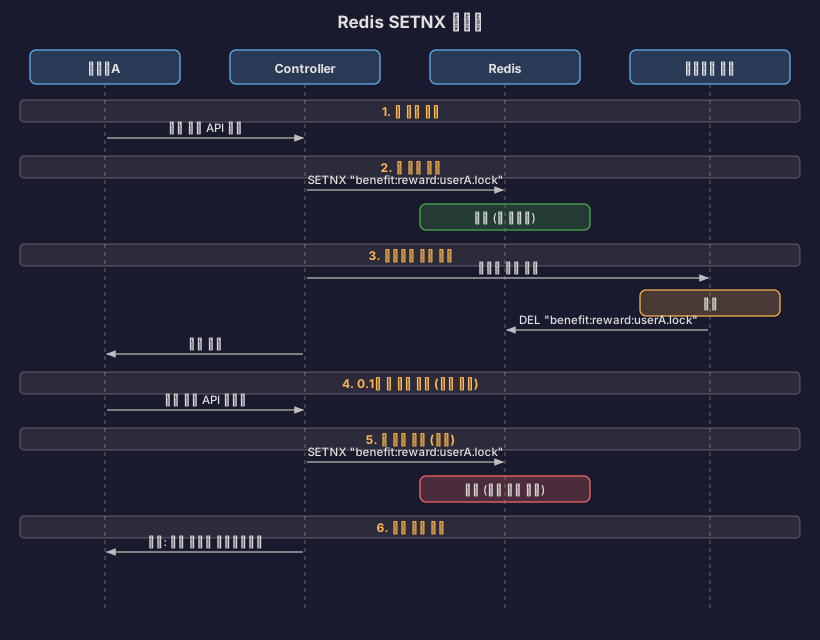
핵심 포인트:
SETNX(SET if Not eXists): 키가 없을 때만 설정 성공- TTL 3초 설정으로 락이 영구히 남는 것 방지 (장애 대응)
finally블록에서 반드시 락 해제
LINE: 비동기 서버와 이벤트 루프 기반 동시성
LINE Engineering에서는 비동기 서버에서 이벤트 루프를 활용한 동시성 처리를 상세히 설명했어요.
멀티플렉싱 기반 동시성
전통적인 멀티스레드 방식과 달리, 이벤트 루프는 단일 스레드로 수만 개의 연결을 동시에 처리할 수 있어요.
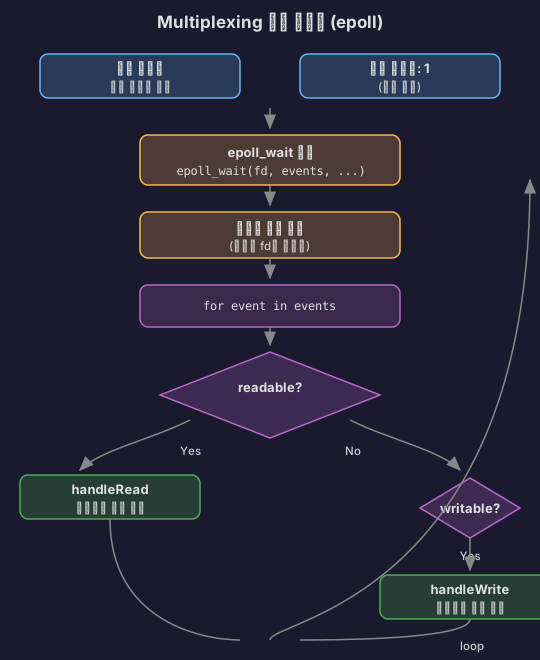
멀티플렉싱이란? 하나의 프로세스/스레드에서 입력과 출력을 모두 다룰 수 있는 기술이에요. 각 요청마다 별도 스레드를 할당하지 않고, 준비된 I/O만 처리해요.
이벤트 루프 동작 원리:

while (true) { events = epoll_wait() // <- I/O 준비 대기
for(event in events){ if(readable){ handleRead(event) // <- 논블로킹 처리 } if(writable){ handWrite(event) } } }전통적 멀티스레드 vs 이벤트 루프:
| 멀티스레드 방식 | 이벤트 루프 방식 |
|---|---|
| 요청당 1개 스레드 | 단일 스레드 |
| 컨텍스트 스위칭 비용 높음 | 컨텍스트 스위칭 없음 |
| 메모리 사용량 많음 (스레드 스택) | 메모리 효율적 |
| 동기 I/O (블로킹) | 비동기 I/O (논블로킹) |
| 동시 연결 수: 수백~수천 | 동시 연결 수: 수만~수십만 |
블로킹의 위험성
이벤트 루프 스레드에서 블로킹 작업을 수행하면 전체 서버가 멈춰요.
잘못된 예시:
// Armeria 이벤트 루프 스레드에서 실행public CompletableFuture<HttpResponse> serve(ServiceRequestContext ctx, HttpRequest req) { // 블로킹 I/O - 이벤트 루프가 멈춤! String data = blockingHttpClient.get("https://api.example.com");
return HttpResponse.of(data);}올바른 예시:
// 블로킹 작업은 별도 스레드 풀에서 실행public CompletableFuture<HttpResponse> serve(ServiceRequestContext ctx, HttpRequest req) { // 비동기 처리 return CompletableFuture.supplyAsync(() -> { // 블로킹 작업은 별도 스레드에서 return blockingHttpClient.get("https://api.example.com"); }, blockingExecutor) .thenApply(data -> HttpResponse.of(data));}블로킹 시 문제:
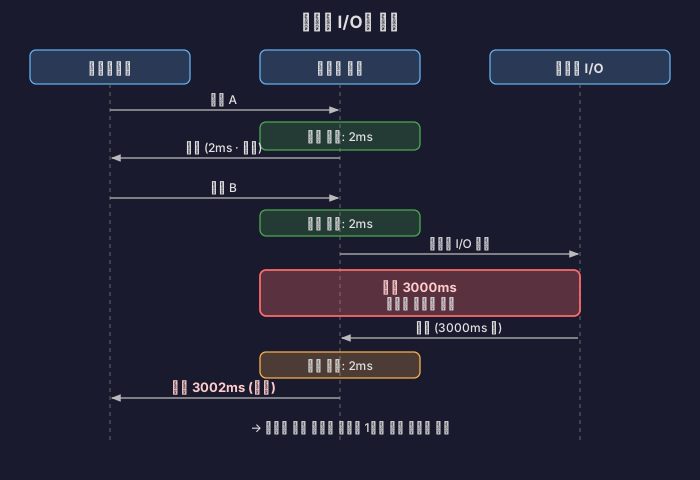
핵심 원칙:
- 이벤트 루프 스레드에서는 절대 블로킹하지 말 것
- DB 쿼리, HTTP 호출, 파일 I/O는 모두 비동기로 처리
- 불가피한 블로킹 작업은 별도 스레드 풀 사용
뮤텍스와 세마포어 선택 기준
뮤텍스를 사용해야 하는 경우
-
단일 공유 자원 보호
// 파일 쓰기는 한 번에 하나만Lock fileLock = new ReentrantLock();fileLock.lock();try {writeToFile(data);} finally {fileLock.unlock();} -
소유권이 중요한 경우
// Lock을 건 스레드만 UnlockLock lock = new ReentrantLock();lock.lock();try {criticalSection();} finally {lock.unlock(); // 반드시 같은 스레드가 해제} -
재진입이 필요한 경우
Lock lock = new ReentrantLock();public void outer() {lock.lock();try {inner(); // 재진입} finally {lock.unlock();}}
출처: Stack Overflow - When to use mutex vs semaphore, Baeldung - Semaphore vs. Mutex
세마포어를 사용해야 하는 경우
-
여러 개의 자원 관리
// 데이터베이스 연결 풀 (10개)Semaphore dbPool = new Semaphore(10);dbPool.acquire();try {executeQuery();} finally {dbPool.release();} -
프로세스 간 동기화
// 프로세스 Asem_wait(&shared_sem);// 공유 메모리 접근// 프로세스 Bsem_post(&shared_sem); // 다른 프로세스가 signal -
신호 메커니즘
// 생산자-소비자Semaphore items = new Semaphore(0); // 초기 아이템 0개// 생산자produceItem();items.release(); // 신호: 아이템 생산됨// 소비자items.acquire(); // 대기: 아이템이 있을 때까지consumeItem();
출처: GeeksforGeeks - Mutex vs Semaphore, Baeldung - Java Concurrency – Semaphore
정리
뮤텍스와 세마포어는 모두 동기화를 위한 도구지만, 목적과 특성이 달라요.
뮤텍스 (Mutex):
- 잠금 메커니즘 (Locking Mechanism)
- 소유권이 있음 (Lock을 건 스레드만 Unlock)
- 이진 상태 (Locked/Unlocked)
- 단일 자원 보호
- 재진입 가능 (ReentrantLock)
- 예시:
synchronized,ReentrantLock
세마포어 (Semaphore):
- 신호 메커니즘 (Signaling Mechanism)
- 소유권이 없음 (어떤 스레드든 signal 가능)
- 카운터 기반 (0 이상의 정수)
- 여러 자원 관리
- 프로세스 간 동기화
- 예시:
Semaphore(n)
선택 기준:
- 임계영역 보호: 뮤텍스
- 자원 풀 관리: 세마포어
- 소유권 필요: 뮤텍스
- 프로세스 간 신호: 세마포어
주의사항:
- 데드락 방지 (순환 대기 제거)
- 우선순위 역전 (Priority Inheritance로 해결)
- 항상 Lock 해제 (finally 블록 사용)
참고 자료
공식 문서
- Java Documentation - synchronized - Java 동기화
- Java Documentation - ReentrantLock - 재진입 가능 Lock
- Java Documentation - Semaphore - Java Semaphore
- Oracle - Lock Interface - Lock 인터페이스
- FreeRTOS Documentation - Priority Inheritance - RTOS 우선순위 상속
이론 및 개념
- Wikipedia - Critical Section - 임계영역 개념
- Wikipedia - Mutual Exclusion - 상호 배제
- Wikipedia - Semaphore (programming) - 세마포어 이론
- Wikipedia - Race Condition - 경쟁 상태
- Wikipedia - Priority Inversion - 우선순위 역전
- Wikipedia - Priority Inheritance - 우선순위 상속
기술 자료
- GeeksforGeeks - Mutex vs Semaphore - 뮤텍스 vs 세마포어
- GeeksforGeeks - Process Synchronization - 프로세스 동기화
- GeeksforGeeks - Semaphores in Process Synchronization - 세마포어 활용
- GeeksforGeeks - Race Condition - 경쟁 상태
- GeeksforGeeks - Priority Inversion in Operating Systems - 우선순위 역전 문제
- Baeldung - Semaphore vs. Mutex - 차이점 비교
- Baeldung - Guide to synchronized - synchronized 가이드
- Baeldung - Binary Semaphore vs Reentrant Lock - 이진 세마포어 vs Lock
- Baeldung - Java Concurrency – Semaphore - Java 세마포어
- Medium - Mutex and Semaphore - 동기화 메커니즘
실무 사례
- Rapita Systems - What Really Happened on Mars Pathfinder? - Mars Pathfinder 우선순위 역전
- UNC - What Really Happened on Mars? - 화성 탐사선 사례
고전 문제
- Wikipedia - Dining Philosophers Problem - 식사하는 철학자 문제
- GeeksforGeeks - Dining Philosopher Problem Using Semaphores - 철학자 문제 해결
- GeeksforGeeks - Deadlock in Operating System - 데드락
한글 자료
- Velog - [OS]뮤텍스(Mutex)와 세마포어(Semaphore) - 뮤텍스와 세마포어
- Velog - 뮤텍스(Mutex)와 세마포어(Semaphore)의 차이 - 차이점 설명
- Velog - [기술 면접] 세마포어와 뮤텍스 차이 - 이진 세마포어와 뮤텍스 차이
- Velog - [Philosophers] 예시/예제로 보는 뮤텍스와 세마포어의 차이 - 철학자 문제
한국 IT 기업 기술 블로그
- 우아한형제들 - WMS 재고 이관을 위한 분산 락 사용기 - Redis 기반 분산 락을 통한 동시성 제어
- 우아한형제들 - MySQL을 이용한 분산락으로 여러 서버에 걸친 동시성 관리 - MySQL GET_LOCK을 활용한 분산 락 구현
- 카카오페이 - 주니어 서버 개발자가 유저향 서비스를 개발하며 마주쳤던 이슈와 해결 방안 - 동시성 이슈와 Redis 분산 락 해결 방법
- LINE Engineering - 비동기 서버에서 이벤트 루프를 블록하면 안 되는 이유 1부 - 멀티플렉싱 기반의 다중 접속 서버와 동시성
- LINE Engineering - 비동기 서버에서 이벤트 루프를 블록하면 안 되는 이유 2부 - Java NIO와 멀티플렉싱
- LINE Engineering - 비동기 서버에서 이벤트 루프를 블록하면 안 되는 이유 3부 - Reactor 패턴과 이벤트 루프
- LINE Engineering - Don’t block the event loop! - JavaScript 비동기 처리와 동시성 제어
커뮤니티
- Stack Overflow - What is the difference between lock, mutex and semaphore? - Lock, Mutex, Semaphore 차이
- Stack Overflow - When to use mutex vs semaphore - 선택 기준

Introduction
One of the most challenging problems in multithreaded programming is synchronization. When multiple threads access shared resources simultaneously, issues such as data inconsistency, race conditions, and deadlocks arise. To prevent these, operating systems provide synchronization techniques called semaphores and mutexes.
“What is the difference between a semaphore and a mutex?” is a classic interview question. Both concepts protect the critical section, but they differ fundamentally in ownership, purpose, and counting mechanism.
Sources: GeeksforGeeks - Mutex vs Semaphore, Baeldung - Semaphore vs. Mutex
Critical Section and Synchronization Problems
Critical Section
A critical section is a code region that accesses resources shared by multiple processes/threads. If two or more threads enter the critical section simultaneously, data inconsistency occurs.
// Bank account withdrawal example (critical section)class BankAccount { private int balance = 1000;
public void withdraw(int amount) { // === Critical section start === if (balance >= amount) { // 1. Check balance System.out.println("출금 시작"); balance -= amount; // 2. Decrease balance System.out.println("출금 완료: " + amount); } // === Critical section end === }}Race Condition:

Since threads A and B checked the balance simultaneously, both determined that withdrawal was possible. To prevent this kind of problem, the critical section must be protected.
Sources: Wikipedia - Race Condition, GeeksforGeeks - Race Condition
The Need for Synchronization
Synchronization is a mechanism that ensures multiple processes/threads access shared resources sequentially.
Conditions for synchronization:
- Mutual Exclusion: Only one process can enter the critical section at a time
- Progress: If the critical section is empty, a waiting process can enter
- Bounded Waiting: No indefinite waiting (starvation prevention)
Sources: Wikipedia - Critical Section, GeeksforGeeks - Process Synchronization
Mutex
What is a Mutex?
A mutex (Mutual Exclusion) is a locking mechanism for implementing mutual exclusion. It restricts access to a shared resource so that only one thread can access it at a time.
Key characteristics:
- Has ownership: Only the thread that locked can unlock
- Binary state: Locked (1) or Unlocked (0)
- Reentrant: The same thread can lock multiple times (ReentrantLock)
Sources: Velog - [OS] Mutex and Semaphore, GeeksforGeeks - Mutex vs Semaphore
How Mutex Works

Important: Thread B cannot release Thread A’s lock. Only the owner, Thread A, can unlock it.
Sources: Baeldung - Using a Mutex Object in Java, GeeksforGeeks - Mutual Exclusion in Synchronization
Mutex Implementation in Java
1. The synchronized Keyword
class BankAccount { private int balance = 1000;
// Synchronize the entire method public synchronized void withdraw(int amount) { if (balance >= amount) { balance -= amount; System.out.println("출금 완료: " + amount); } else { System.out.println("잔액 부족"); } }}The synchronized keyword provides an implicit mutex on a method or block. When one thread is executing a synchronized method, other threads must wait.
Sources: Java Documentation - synchronized, Baeldung - Guide to synchronized
2. ReentrantLock (Explicit Mutex)
import java.util.concurrent.locks.Lock;import java.util.concurrent.locks.ReentrantLock;
class BankAccount { private int balance = 1000; private Lock lock = new ReentrantLock();
public void withdraw(int amount) { lock.lock(); // Acquire lock try { if (balance >= amount) { balance -= amount; System.out.println("출금 완료: " + amount); } else { System.out.println("잔액 부족"); } } finally { lock.unlock(); // Always release the lock } }}ReentrantLock is an explicit mutex that allows finer-grained control than synchronized.
Advantages of ReentrantLock:
- Fairness setting: Grants priority to threads that have been waiting longer
- Timeout setting:
tryLock(timeout) - Interruptible: Waiting threads can be interrupted
Lock fairLock = new ReentrantLock(true); // Fair lockif (lock.tryLock(1, TimeUnit.SECONDS)) { // Wait 1 second try { // Critical section } finally { lock.unlock(); }} else { System.out.println("락 획득 실패");}Sources: Baeldung - Binary Semaphore vs Reentrant Lock, Java Documentation - ReentrantLock
Reentrancy
As the name ReentrantLock suggests, the same thread can re-acquire a lock it already owns.
Lock lock = new ReentrantLock();
public void outerMethod() { lock.lock(); try { System.out.println("Outer method"); innerMethod(); // Same thread requests the lock again } finally { lock.unlock(); }}
public void innerMethod() { lock.lock(); // Reentrant success (counter incremented) try { System.out.println("Inner method"); } finally { lock.unlock(); // Counter decremented }}How it works:

If reentrancy were not possible, a deadlock would occur in innerMethod().
Sources: Medium - Mutex and Semaphore, Oracle - Lock Interface
Semaphore
What is a Semaphore?
A semaphore is a signaling mechanism that controls access by multiple processes/threads to a limited number of resources.
Key characteristics:
- No ownership: Any thread can call signal()
- Counter-based: Tracks the number of available resources
- Two operations: wait (P operation) and signal (V operation)
Sources: Wikipedia - Semaphore (programming), GeeksforGeeks - Semaphores in Process Synchronization
How Semaphore Works
A semaphore is implemented as an integer counter.

Key operations:
- wait() (P operation, acquire): Decrements the counter; blocks if 0
- signal() (V operation, release): Increments the counter; wakes a waiting process
Sources: GeeksforGeeks - Semaphores in Process Synchronization, Wikipedia - Semaphore
Types of Semaphores
1. Binary Semaphore
A semaphore whose counter can only be 0 or 1.
// Binary semaphore pseudocodesemaphore binary_sem = 1; // Initial value: 1
wait(binary_sem) { while (binary_sem <= 0) { // Wait } binary_sem--; // 1 → 0}
signal(binary_sem) { binary_sem++; // 0 → 1}Difference from Mutex:
- A binary semaphore is a signaling mechanism (no ownership)
- A mutex is a locking mechanism (has ownership)
// Binary semaphore exampleSemaphore binarySem = new Semaphore(1);
// Thread AbinarySem.acquire(); // Counter: 0// Critical section
// Thread B (different thread)binarySem.release(); // Counter: 1 (possible!)// Thread A acquired, but Thread B can releaseIn contrast, with a mutex, only the thread that locked it can unlock it.
Sources: Velog - [OS] Semaphore and Mutex, Baeldung - Binary Semaphore vs Reentrant Lock
2. Counting Semaphore
A semaphore whose counter can take any non-negative integer value.
// Counting semaphore example: Parking lot (5 spaces)Semaphore parkingLot = new Semaphore(5);
class Car extends Thread { private String name;
public void run() { try { System.out.println(name + " 주차 대기"); parkingLot.acquire(); // Reserve a parking space System.out.println(name + " 주차 완료"); Thread.sleep(2000); // Parked } catch (InterruptedException e) { e.printStackTrace(); } finally { System.out.println(name + " 출차"); parkingLot.release(); // Release parking space } }}Execution result:

Source: Java Documentation - Semaphore
Semaphore Implementation in Java
import java.util.concurrent.Semaphore;
class DatabaseConnectionPool { private Semaphore semaphore; private static final int MAX_CONNECTIONS = 10;
public DatabaseConnectionPool() { semaphore = new Semaphore(MAX_CONNECTIONS); }
public Connection getConnection() throws InterruptedException { semaphore.acquire(); // Acquire connection (decrement counter) return createConnection(); }
public void releaseConnection(Connection conn) { closeConnection(conn); semaphore.release(); // Release connection (increment counter) }}
// Usage exampleDatabaseConnectionPool pool = new DatabaseConnectionPool();
// Thread AConnection conn = pool.getConnection(); // Counter: 9// Execute SQL querypool.releaseConnection(conn); // Counter: 10
// The 11th request will block and waitSemaphores are useful for managing limited resource pools.
Sources: Baeldung - Java Concurrency - Semaphore, Oracle - Semaphore
Mutex vs Semaphore: Key Differences
| Comparison | Mutex | Semaphore |
|---|---|---|
| Mechanism | Locking mechanism | Signaling mechanism |
| Ownership | Yes (only the locking thread can unlock) | No (any thread can signal) |
| Counter | Binary (0 or 1) | Integer (0 or more) |
| Purpose | Mutual exclusion | Limiting resource count |
| Use case | Protecting critical sections | Resource pool management |
| Reentrancy | Possible (ReentrantLock) | Not possible (only counter increment/decrement) |
| Scope | Process scope | System scope (can be shared between processes) |
| Examples | synchronized, ReentrantLock | Semaphore(n) |
Sources: GeeksforGeeks - Mutex vs Semaphore, Stack Overflow - What is the difference between lock, mutex and semaphore?
The Importance of Ownership
Mutex (has ownership):
Lock lock = new ReentrantLock();
// Thread Alock.lock(); // Thread A owns the lock// Critical sectionlock.unlock(); // Only Thread A can release
// Thread Block.unlock(); // Error! Thread B is not the ownerSemaphore (no ownership):
Semaphore sem = new Semaphore(1);
// Thread Asem.acquire(); // Counter: 0
// Thread B (different thread)sem.release(); // Counter: 1 (possible!)This difference is important in inter-process synchronization. A semaphore allows process A to wait() and process B to signal(), but a mutex requires the same process/thread to handle both lock and unlock.
Sources: Velog - Difference between Mutex and Semaphore, Baeldung - Semaphore vs. Mutex
Practical Example: The Dining Philosophers Problem
Problem Description
The Dining Philosophers Problem, proposed by Dijkstra in 1965, is a classic problem used to illustrate deadlock.
Scenario:
- 5 philosophers are seated at a round table
- There is 1 fork between each pair of philosophers (5 total)
- To eat spaghetti, a philosopher needs one fork in each hand
- A philosopher either thinks or eats
Fork0 Phil0 Phil1Fork4 Fork1 Phil4 Phil2 Phil3 Fork3 Fork2Sources: Wikipedia - Dining Philosophers Problem, GeeksforGeeks - Dining Philosopher Problem Using Semaphores
Incorrect Implementation (Deadlock)
class Philosopher extends Thread { private int id; private Semaphore leftFork; private Semaphore rightFork;
public void run() { try { while (true) { think();
// Pick up left fork leftFork.acquire(); System.out.println("철학자 " + id + " 왼쪽 포크 획득");
// Pick up right fork rightFork.acquire(); System.out.println("철학자 " + id + " 오른쪽 포크 획득");
eat();
// Put down forks leftFork.release(); rightFork.release(); } } catch (InterruptedException e) { e.printStackTrace(); } }}Deadlock scenario:

All philosophers pick up their left fork and wait for the right fork, so nobody can eat.
Sources: Wikipedia - Dining Philosophers Problem, GeeksforGeeks - Deadlock in Operating System
Solution 1: Separate Odd/Even Philosophers
class Philosopher extends Thread { private int id; private Semaphore leftFork; private Semaphore rightFork;
public void run() { try { while (true) { think();
if (id % 2 == 0) { // Even: left → right leftFork.acquire(); rightFork.acquire(); } else { // Odd: right → left rightFork.acquire(); leftFork.acquire(); }
eat();
leftFork.release(); rightFork.release(); } } catch (InterruptedException e) { e.printStackTrace(); } }}Breaking the symmetry prevents deadlock.
Sources: Velog - [Philosophers] Mutex and Semaphore Differences with Examples, GeeksforGeeks - Dining Philosopher Problem Using Semaphores
Solution 2: Limit Concurrent Diners with a Semaphore
class DiningPhilosophers { private Semaphore[] forks = new Semaphore[5]; private Semaphore maxDiners = new Semaphore(4); // Max 4 can dine simultaneously
public DiningPhilosophers() { for (int i = 0; i < 5; i++) { forks[i] = new Semaphore(1); } }
public void dine(int id) throws InterruptedException { maxDiners.acquire(); // Sit at the table
forks[id].acquire(); // Left fork forks[(id + 1) % 5].acquire(); // Right fork
System.out.println("철학자 " + id + " 식사 중");
forks[id].release(); forks[(id + 1) % 5].release();
maxDiners.release(); // Leave the table }}Since at most 4 can sit simultaneously, at least one philosopher can always pick up both forks.
Sources: GeeksforGeeks - Dining Philosopher Problem Using Semaphores, Wikipedia - Dining Philosophers Problem
Real-World Issue: Priority Inversion
Problem Description
Priority inversion is a phenomenon where a lower-priority thread executes before a higher-priority thread.
Scenario:

Sources: Wikipedia - Priority Inversion, GeeksforGeeks - Priority Inversion in Operating Systems
The Mars Pathfinder Case
This actually happened on NASA’s Mars Pathfinder spacecraft in 1997.
The problem:
- Data collection thread (low priority): Holds bus management mutex lock
- Communication thread (high priority): Waiting for bus management mutex
- Weather monitoring thread (medium priority): Running a long task
- Result: Communication thread times out, causing a system reset
Solution: NASA enabled the Priority Inheritance feature of the VxWorks operating system.
Sources: Rapita Systems - What Really Happened on Mars Pathfinder?, Embedded.com - Maximizing visibility through logging
Priority Inheritance
When a low-priority thread holds a mutex and a high-priority thread is waiting for it, the owner’s priority is temporarily elevated.

In Java, this must be implemented manually, but RTOS (Real-Time OS) provides it natively.
Sources: FreeRTOS Documentation - Priority Inheritance, Wikipedia - Priority Inheritance
Real-World Cases: Concurrency Control in Korean IT Companies
Woowa Brothers (Baemin): Distributed Lock Using MySQL
Woowa Brothers used MySQL’s User-Level Lock to solve concurrency problems across multiple servers in their advertising system.
The Problem
When multiple servers access the same resource, distributed concurrency problems arise that cannot be solved with a single server’s mutex or semaphore.
Solution: MySQL GET_LOCK
Why this was chosen:
- No additional cost by leveraging existing MySQL infrastructure
- Saved infrastructure build/maintenance costs of separate systems like ZooKeeper or Redis
- Named locks allow fine-grained control at the application level
Implementation code:
public class MySQLDistributedLock { private DataSource dataSource;
public void executeWithLock(String lockName, Runnable task) { // Manage Connection directly to ensure lock/unlock on same connection try (Connection conn = dataSource.getConnection()) { // Acquire lock String getLockQuery = "SELECT GET_LOCK(?, 10)"; // Wait 10 seconds try (PreparedStatement ps = conn.prepareStatement(getLockQuery)) { ps.setString(1, lockName); ResultSet rs = ps.executeQuery();
if (rs.next() && rs.getInt(1) == 1) { try { // Execute business logic task.run(); } finally { // Release lock String releaseLockQuery = "SELECT RELEASE_LOCK(?)"; try (PreparedStatement ps2 = conn.prepareStatement(releaseLockQuery)) { ps2.setString(1, lockName); ps2.executeQuery(); } } } } } catch (SQLException e) { throw new RuntimeException("Failed to acquire lock", e); } }}Caveats:
- Using JdbcTemplate may cause
GET_LOCKandRELEASE_LOCKto use different connections due to connection pool reuse - Always manage the Connection directly from the DataSource to ensure the same connection is used
- Use try-with-resources to manage the Connection lifecycle
Pros and cons:
| Pros | Cons |
|---|---|
| No additional cost by leveraging existing infrastructure | No guarantee of waiting order |
| Fine-grained control with named locks | MySQL version constraints (pre-5.7: only 1 at a time) |
| Simple implementation | Complexity of separate connection management |
Source: Woowa Brothers - Distributed Lock Using MySQL for Cross-Server Concurrency Management
Kakao Pay: Solving Double-Click Issues with Redis Distributed Lock
Kakao Pay solved a “double-click issue” that occurred while developing their user benefits service using Redis distributed locks.
The Problem: Double-Click Issue
Users clicking a button multiple times in rapid succession caused duplicate API calls. In the benefits service that grants Pay Points, concurrent requests passing through all business logic posed a risk of duplicate point issuance.
Solution: Distributed Lock Using Redis SETNX
Why this was chosen:
- Easy to maintain by handling at the application level
- Fast failure (Fail-Fast) possible by throwing exceptions at the Controller level
- Lighter and faster than DB locks
Implementation code:
// 1. LockManager: Redis lock management@Componentpublic class LockManager { private final StringRedisTemplate redisTemplate; private static final int LOCK_TTL_SECONDS = 3;
public boolean acquireLock(String key) { String lockKey = key + ":lock"; Boolean success = redisTemplate.opsForValue() .setIfAbsent(lockKey, "locked", Duration.ofSeconds(LOCK_TTL_SECONDS)); return Boolean.TRUE.equals(success); }
public void releaseLock(String key) { String lockKey = key + ":lock"; redisTemplate.delete(lockKey); }}
// 2. RedisLockUtil: Lock acquisition and executionpublic class RedisLockUtil { public static <T> T acquireAndRunLock( String lockKey, Supplier<T> supplier, LockManager lockManager) {
// Attempt to acquire lock if (!lockManager.acquireLock(lockKey)) { throw new BusinessException("동시 요청이 발생했습니다"); }
try { // Execute business logic return supplier.get(); } finally { // Release lock lockManager.releaseLock(lockKey); } }}
// 3. Usage in Controller@PostMapping("/benefit/reward")public ResponseEntity<?> claimReward(@RequestBody RewardRequest request) { String lockKey = "benefit:reward:" + request.getUserId();
RewardResponse response = RedisLockUtil.acquireAndRunLock( lockKey, () -> benefitService.claimReward(request), lockManager );
return ResponseEntity.ok(response);}How it works:

Key points:
SETNX(SET if Not eXists): Only succeeds when the key does not exist- TTL of 3 seconds prevents the lock from persisting indefinitely (failure handling)
- The lock is always released in the
finallyblock
LINE: Asynchronous Servers and Event Loop-Based Concurrency
LINE Engineering provided a detailed explanation of concurrency handling using event loops in asynchronous servers.
Multiplexing-Based Concurrency
Unlike the traditional multithreaded approach, an event loop can handle tens of thousands of connections simultaneously on a single thread.
What is multiplexing? A technique that allows a single process/thread to handle both input and output. Instead of assigning a separate thread per request, only ready I/O is processed.
How the event loop works:

while (true) { events = epoll_wait() // <- Wait for I/O readiness
for(event in events){ if(readable){ handleRead(event) // <- Non-blocking processing } if(writable){ handWrite(event) } } }Traditional multithreading vs event loop:
| Multithreaded approach | Event loop approach |
|---|---|
| 1 thread per request | Single thread |
| High context switching cost | No context switching |
| High memory usage (thread stacks) | Memory efficient |
| Synchronous I/O (blocking) | Asynchronous I/O (non-blocking) |
| Concurrent connections: hundreds to thousands | Concurrent connections: tens to hundreds of thousands |
The Danger of Blocking
Performing a blocking operation on the event loop thread freezes the entire server.
Incorrect example:
// Executing on Armeria event loop threadpublic CompletableFuture<HttpResponse> serve(ServiceRequestContext ctx, HttpRequest req) { // Blocking I/O - event loop freezes! String data = blockingHttpClient.get("https://api.example.com");
return HttpResponse.of(data);}Correct example:
// Run blocking work on a separate thread poolpublic CompletableFuture<HttpResponse> serve(ServiceRequestContext ctx, HttpRequest req) { // Asynchronous processing return CompletableFuture.supplyAsync(() -> { // Blocking work on a separate thread return blockingHttpClient.get("https://api.example.com"); }, blockingExecutor) .thenApply(data -> HttpResponse.of(data));}Problem when blocking:

Key principles:
- Never block on the event loop thread
- DB queries, HTTP calls, and file I/O should all be handled asynchronously
- Use a separate thread pool for unavoidable blocking operations
Source: LINE Engineering - Why You Should Not Block the Event Loop in Asynchronous Servers, Part 1
Choosing Between Mutex and Semaphore
When to Use a Mutex
-
Protecting a single shared resource
// Only one file write at a timeLock fileLock = new ReentrantLock();fileLock.lock();try {writeToFile(data);} finally {fileLock.unlock();} -
When ownership matters
// Only the locking thread can unlockLock lock = new ReentrantLock();lock.lock();try {criticalSection();} finally {lock.unlock(); // Must be released by the same thread} -
When reentrancy is needed
Lock lock = new ReentrantLock();public void outer() {lock.lock();try {inner(); // Reentrant call} finally {lock.unlock();}}
Sources: Stack Overflow - When to use mutex vs semaphore, Baeldung - Semaphore vs. Mutex
When to Use a Semaphore
-
Managing multiple resources
// Database connection pool (10 connections)Semaphore dbPool = new Semaphore(10);dbPool.acquire();try {executeQuery();} finally {dbPool.release();} -
Inter-process synchronization
// Process Asem_wait(&shared_sem);// Access shared memory// Process Bsem_post(&shared_sem); // Different process signals -
Signaling mechanism
// Producer-ConsumerSemaphore items = new Semaphore(0); // Initially 0 items// ProducerproduceItem();items.release(); // Signal: item produced// Consumeritems.acquire(); // Wait: until an item is availableconsumeItem();
Sources: GeeksforGeeks - Mutex vs Semaphore, Baeldung - Java Concurrency - Semaphore
Summary
Both mutex and semaphore are tools for synchronization, but they differ in purpose and characteristics.
Mutex:
- Locking mechanism
- Has ownership (only the locking thread can unlock)
- Binary state (Locked/Unlocked)
- Protects a single resource
- Reentrant (ReentrantLock)
- Examples:
synchronized,ReentrantLock
Semaphore:
- Signaling mechanism
- No ownership (any thread can signal)
- Counter-based (non-negative integer)
- Manages multiple resources
- Inter-process synchronization
- Examples:
Semaphore(n)
Selection criteria:
- Protecting critical sections: Mutex
- Resource pool management: Semaphore
- Ownership needed: Mutex
- Inter-process signaling: Semaphore
Caveats:
- Prevent deadlock (eliminate circular wait)
- Priority inversion (solve with Priority Inheritance)
- Always release locks (use finally blocks)
References
Official Documentation
- Java Documentation - synchronized - Java synchronization
- Java Documentation - ReentrantLock - Reentrant Lock
- Java Documentation - Semaphore - Java Semaphore
- Oracle - Lock Interface - Lock interface
- FreeRTOS Documentation - Priority Inheritance - RTOS priority inheritance
Theory and Concepts
- Wikipedia - Critical Section - Critical section concept
- Wikipedia - Mutual Exclusion - Mutual exclusion
- Wikipedia - Semaphore (programming) - Semaphore theory
- Wikipedia - Race Condition - Race condition
- Wikipedia - Priority Inversion - Priority inversion
- Wikipedia - Priority Inheritance - Priority inheritance
Technical Resources
- GeeksforGeeks - Mutex vs Semaphore - Mutex vs Semaphore
- GeeksforGeeks - Process Synchronization - Process synchronization
- GeeksforGeeks - Semaphores in Process Synchronization - Semaphore usage
- GeeksforGeeks - Race Condition - Race condition
- GeeksforGeeks - Priority Inversion in Operating Systems - Priority inversion problem
- Baeldung - Semaphore vs. Mutex - Comparison
- Baeldung - Guide to synchronized - synchronized guide
- Baeldung - Binary Semaphore vs Reentrant Lock - Binary Semaphore vs Lock
- Baeldung - Java Concurrency - Semaphore - Java Semaphore
- Medium - Mutex and Semaphore - Synchronization mechanisms
Real-World Cases
- Rapita Systems - What Really Happened on Mars Pathfinder? - Mars Pathfinder priority inversion
- UNC - What Really Happened on Mars? - Mars rover case
Classic Problems
- Wikipedia - Dining Philosophers Problem - Dining philosophers problem
- GeeksforGeeks - Dining Philosopher Problem Using Semaphores - Solving the philosopher problem
- GeeksforGeeks - Deadlock in Operating System - Deadlock
Korean IT Company Tech Blogs
- Woowa Brothers - Distributed Lock Using MySQL for Cross-Server Concurrency Management - Distributed lock implementation with MySQL GET_LOCK
- Kakao Pay - Issues and Solutions Encountered by a Junior Server Developer While Developing a User-Facing Service - Concurrency issues and Redis distributed lock solution
- LINE Engineering - Why You Should Not Block the Event Loop in Asynchronous Servers, Part 1 - Multiplexing-based concurrent server
Community
- Stack Overflow - What is the difference between lock, mutex and semaphore? - Lock, Mutex, Semaphore differences
- Stack Overflow - When to use mutex vs semaphore - Selection criteria