JPA 영속성 컨텍스트와 트랜잭션 이해하기
목차
사이드 프로젝트를 진행하면서 Spring 트랜잭션에 대해 배운 것들을 정리했어요. 배우면서 햇갈렸던 것들을 다시 재정립 해서 내 지식으로 만들고 싶었거든요.
@Transactional 기초
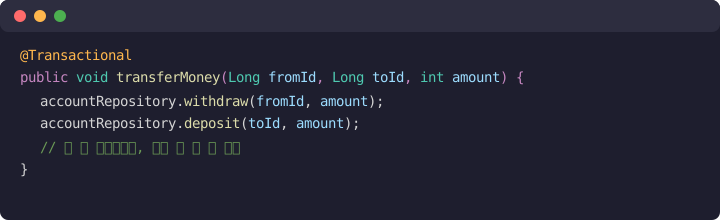
계좌 이체처럼 여러 DB 작업이 하나의 단위로 묶여야 할 때 트랜잭션을 써요. 출금은 됐는데 입금이 안 되면 큰일나니까요.

꼭 써야 하는 경우:
- 여러 DB 작업이 하나의 단위로 실행되어야 할 때
- 데이터 일관성이 중요한 비즈니스 로직
- 롤백이 필요한 작업
안 써도 되는 경우:
- 단순 조회 (단,
readOnly = true로 쓰면 최적화 이점이 있음) - 단일 INSERT/UPDATE (자동 커밋으로 처리 가능)
@Transactional은 어떻게 동작할까?
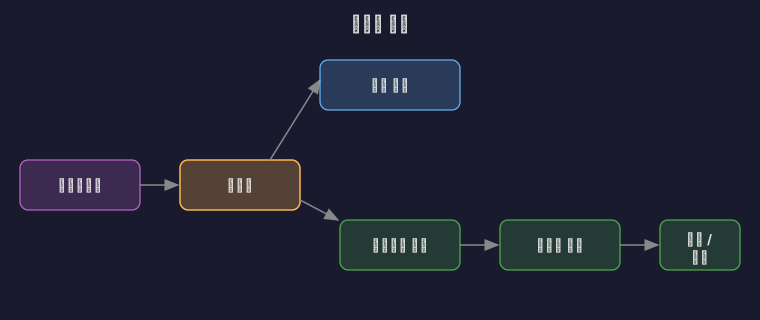
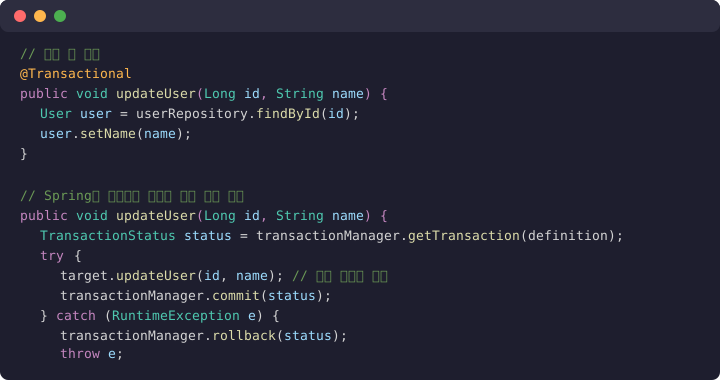
@Transactional을 붙이면 마법처럼 트랜잭션이 관리되는데, 내부적으로는 프록시 패턴을 써요.
Spring은 @Transactional이 붙은 클래스에 대해 프록시 객체를 만들고, 이 프록시가 메서드 호출을 가로채서 트랜잭션을 시작/커밋/롤백해요.

프록시 생성 방식
Spring Boot는 CGLIB를 기본으로 써요. CGLIB는 바이트코드를 조작해서 런타임에 클래스를 상속받아 프록시를 만들어요.
| 방식 | 설명 | 사용 조건 |
|---|---|---|
| JDK Dynamic Proxy | 인터페이스 기반 프록시 | 인터페이스 있을 때 |
| CGLIB Proxy | 클래스 상속 기반 프록시 | Spring Boot 기본 |
개념적으로 보면
그래서 주의할 점
CGLIB은 상속으로 프록시를 만들기 때문에:
- private 메서드: 상속 안 되니까
@Transactional적용 불가 - final 클래스/메서드: 오버라이드 안 되니까
@Transactional적용 불가
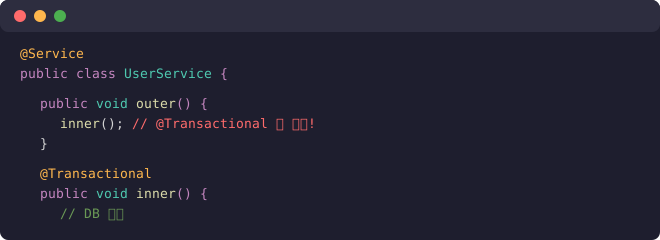
내부 호출 함정
이거 처음에 진짜 헷갈렸어요.

같은 클래스 안에서 메서드를 호출하면 프록시를 안 거치고 직접 호출돼요.
그래서 @Transactional이 동작 안 해요.
해결하려면 별도 서비스 클래스로 분리하면 돼요.
참고:
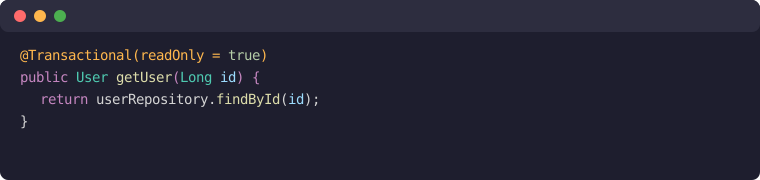
readOnly = true는 왜 쓰나?
조회 메서드에 readOnly = true를 붙이면 몇 가지 이점이 있어요.

이렇게 선언하면 Spring과 JPA는 “이 메서드에서 쓰기 연산(persist, merge, remove)이 없을 것”이라고 가정하고 최적화를 수행해요.
JPA 레벨 최적화: Dirty Checking 생략
JPA는 엔티티를 조회하면 영속성 컨텍스트에 저장하고, 이 객체가 변경되었는지 추적해요(Dirty Checking). 이때 원본 스냅샷을 만들어서 비교하고요.
1. 엔티티 조회 -> 영속성 컨텍스트에 저장 + 스냅샷 생성2. 트랜잭션 커밋 시점 -> 현재 상태 vs 스냅샷 비교3. 변경 있으면 -> UPDATE 쿼리 생성근데 readOnly = true면 이 과정 자체가 생략돼요:
- FlushMode가 MANUAL로 바뀜
- 스냅샷 안 만듦
- flush() 호출 안 함
- Dirty Checking 안 함
불필요한 객체 복사와 추적 로직이 사라지니까 메모리 사용량과 CPU 연산이 줄어들어요.
DB 레벨 최적화: READ ONLY 힌트 전달
readOnly = true는 JPA 내부에서만 끝나는 게 아니에요.
JDBC 트랜잭션을 통해 DB에도 “이 트랜잭션은 데이터를 변경하지 않는다”는 힌트를 전달해요.
connection.setReadOnly(true); // JDBC 레벨에서 설정됨PostgreSQL, Oracle, H2 등 일부 DB는 이 힌트를 통해 내부 처리를 최적화해요.
1. 락 경합(Lock Contention) 감소
일반 트랜잭션은 데이터 수정 가능성이 있으니까 쓰기 락(Write Lock)을 잡아요.
근데 read-only 트랜잭션은 변경이 없다고 명시됐으니까 락을 최소화하거나 안 걸어요.
결과적으로 동시에 여러 SELECT가 들어와도 락 충돌 없이 병렬 처리가 가능해집니다.
고부하 환경에서 특히 효과적이에요.
2. Undo/Redo 로그 감소
모든 트랜잭션은 롤백/복구를 위해 Undo/Redo 로그를 생성해요.
근데 read-only 트랜잭션은 변경할 게 없으니까 복구할 것도 없어요.
DB가 이 로그 생성을 최소화하거나 건너뛰면서 디스크 I/O와 메모리 사용량이 줄어듭니다.
DB Replication 환경에서 유용
Master-Slave 구조라면 readOnly = true 쿼리를 자동으로 Slave로 라우팅할 수 있어요. Master 부하를 줄이고 읽기 성능을 높이는 효과가 있고요.
내가 쓰는 패턴
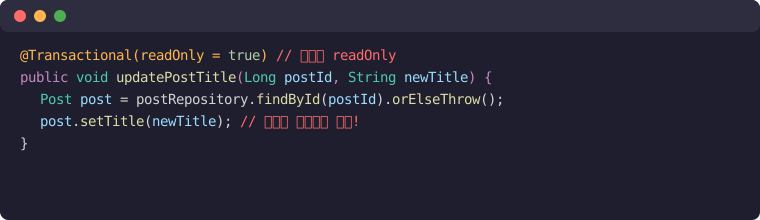
클래스에 기본으로 readOnly = true 걸어두고, 쓰기 메서드에만 @Transactional로 오버라이드해요.

주의: 낙관적 락(@Version)과의 충돌
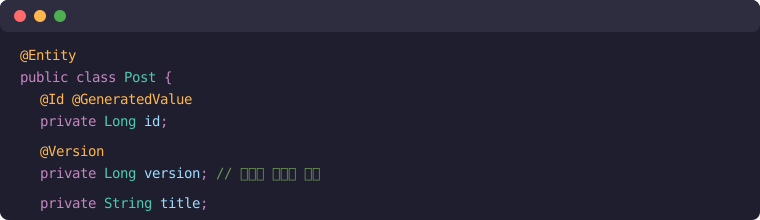
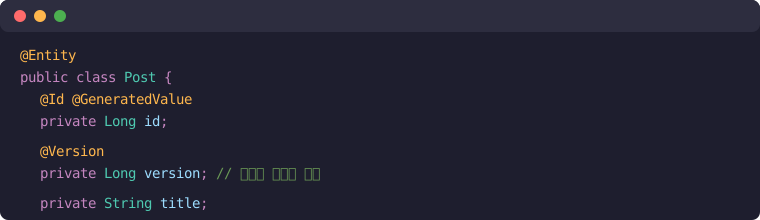
readOnly = true를 무분별하게 쓰면 안 되는 이유가 있어요. **낙관적 락(Optimistic Lock)**이 무력화될 수 있거든요.
JPA는 @Version으로 동시성을 제어해요:

수정 시점에 version을 비교해서, 다른 트랜잭션이 먼저 수정했으면 OptimisticLockException을 던져요.
근데 readOnly = true에서 엔티티를 수정하면?

- flush() 호출 안 됨
- Dirty Checking 안 됨
- @Version 비교도 안 됨
- 충돌이 발생해도 감지 못함
최악의 경우, 다른 트랜잭션의 수정 내용을 조용히 덮어써버릴 수 있어요. 그것도 아무 에러 없이요.
결론
readOnly = true는 진짜로 읽기만 할 때만 써야 해요.
| 상황 | readOnly 사용 |
|---|---|
| 순수 조회 (목록, 상세) | O |
| 조회 후 수정 가능성 있음 | X |
| @Version 있는 엔티티 수정 | X |
| 조회 결과로 비즈니스 판단만 | O |
“조회니까 무조건 readOnly” 가 아니라, 수정 가능성이 조금이라도 있으면 쓰면 안 돼요.
트랜잭션 전파 (Propagation)
트랜잭션 안에서 다른 트랜잭션 메서드를 호출하면 어떻게 될까요? 기존 트랜잭션에 참여할지, 새로 만들지를 결정하는 게 전파 속성이에요.
처음에 이 개념이 헷갈렸는데, 물리 트랜잭션과 논리 트랜잭션을 구분하면 이해가 쉬워져요.
물리 트랜잭션 vs 논리 트랜잭션
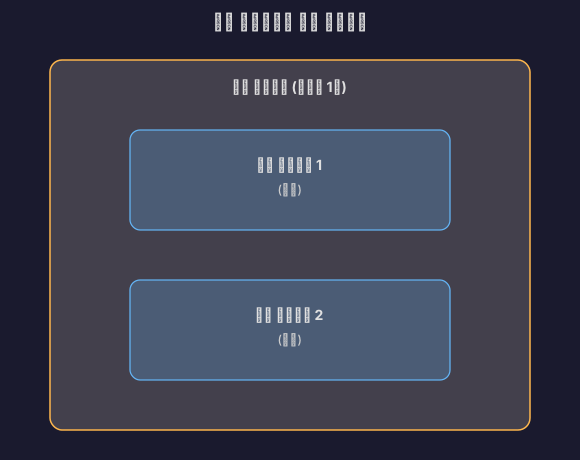
물리 트랜잭션은 실제 DB 커넥션을 통한 트랜잭션이에요. 커밋/롤백하면 진짜 DB에 반영돼요.
논리 트랜잭션은 스프링이 트랜잭션 매니저를 통해 관리하는 단위예요. 여러 논리 트랜잭션이 하나의 물리 트랜잭션을 공유할 수 있어요.

원칙은 단순해요:
- 모든 논리 트랜잭션이 커밋되어야 물리 트랜잭션이 커밋됨
- 하나라도 롤백되면 물리 트랜잭션도 롤백됨
전파 속성 종류
| 속성 | 기존 트랜잭션 없을 때 | 기존 트랜잭션 있을 때 |
|---|---|---|
| REQUIRED | 새로 생성 | 참여 |
| REQUIRES_NEW | 새로 생성 | 새로 생성 (기존건 보류) |
| SUPPORTS | 없이 진행 | 참여 |
| NOT_SUPPORTED | 없이 진행 | 보류시키고 없이 진행 |
| MANDATORY | 예외 발생 | 참여 |
| NEVER | 없이 진행 | 예외 발생 |
| NESTED | 새로 생성 | 중첩 트랜잭션 생성 |
실무에서는 REQUIRED랑 REQUIRES_NEW만 주로 써요.
REQUIRED (기본값)
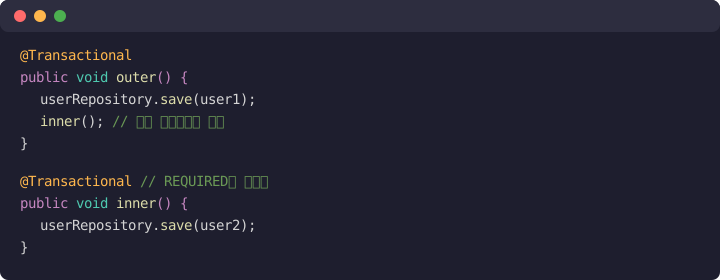
가장 많이 쓰는 기본 속성이에요. 기존 트랜잭션이 있으면 참여하고, 없으면 새로 만들어요.

둘이 같은 물리 트랜잭션을 쓰기 때문에:
- inner()에서 예외 터지면 -> outer()도 같이 롤백
- outer()에서 예외 터지면 -> inner()도 같이 롤백
inner()에서 롤백이 필요한데 outer()는 커밋하려고 하면? 스프링이 UnexpectedRollbackException을 던져서 “야 롤백해야 돼”라고 알려줘요.
REQUIRES_NEW
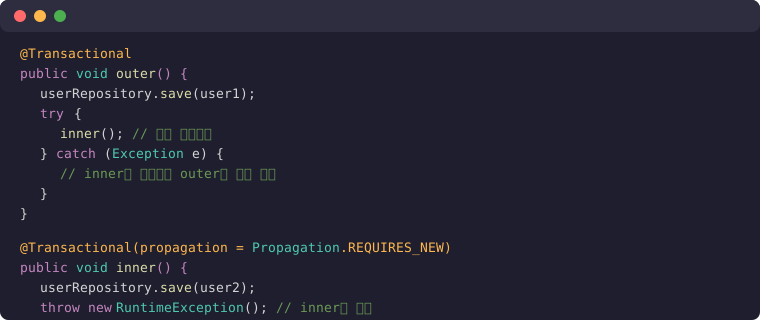
항상 새 트랜잭션을 만들어요. 기존 트랜잭션이 있어도 완전히 별개로 동작해요.


inner()가 실행되는 동안 outer()의 커넥션은 대기 상태가 돼요. 그래서 커넥션 2개를 동시에 씁니다.
주의할 점:
- 커넥션 풀 고갈 가능성이 있어서 남용하면 안됨
- 같은 클래스 안에서 호출하면 프록시를 안 거쳐서 동작 안함
언제 REQUIRES_NEW를 쓰나?
내부 트랜잭션의 성공/실패가 외부 트랜잭션에 영향을 주면 안 될 때 써요.
예를 들어 주문 처리 중 알림 발송이 실패해도 주문은 성공해야 하는 경우:
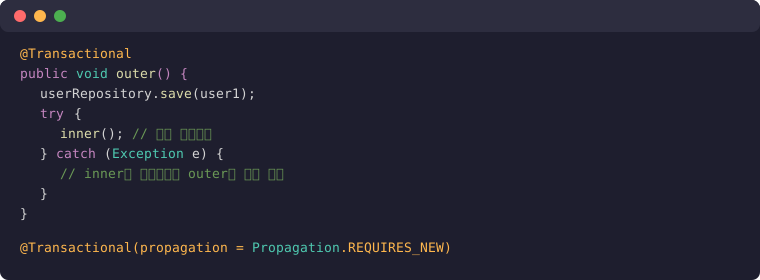
근데 REQUIRES_NEW 없이도 해결 가능하면 그게 더 나아요. 별도 서비스로 분리하거나 이벤트로 처리하는 방법도 있거든요.
실제로 내가 만드는 프로젝트에선
파일 업로드 시스템에서의 고아파일 정리 에서 활용을 했어요.
SUPPORTS
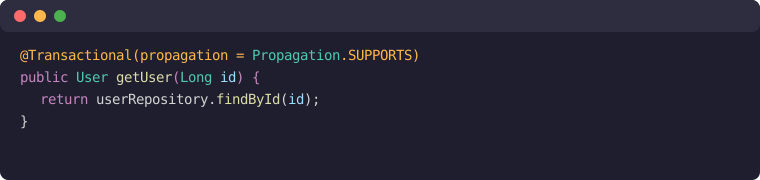
트랜잭션이 있으면 참여하고, 없으면 트랜잭션 없이 실행해요.

단순 조회인데 호출하는 쪽에 트랜잭션이 있으면 그걸 쓰고, 없으면 그냥 실행해요. 조회 메서드에서 가끔 씁니다.
NOT_SUPPORTED
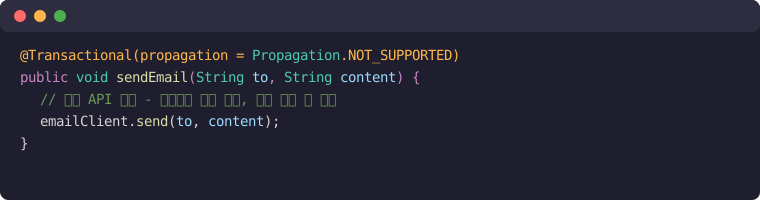
트랜잭션 없이 실행해요. 기존 트랜잭션이 있으면 보류시킵니다.

트랜잭션이 필요 없는 작업(외부 API 호출, 파일 처리 등)에서 사용해요. 트랜잭션을 보류시키면 커넥션을 잡고 있지 않아서 리소스 낭비를 줄일 수 있어요.
MANDATORY
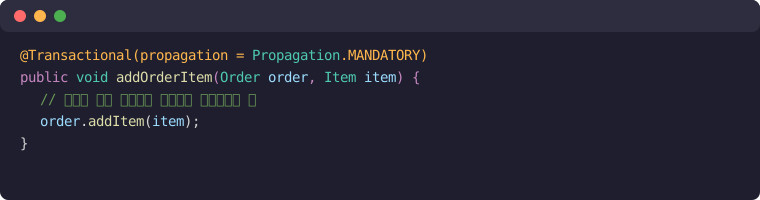
반드시 기존 트랜잭션 안에서 실행되어야 해요. 트랜잭션 없이 호출하면 예외가 발생해요.

“이 메서드는 단독으로 호출하면 안 돼”라는 제약을 걸 때 사용해요. 실수로 트랜잭션 없이 호출하면 바로 에러가 나니까 버그를 빨리 잡을 수 있어요.
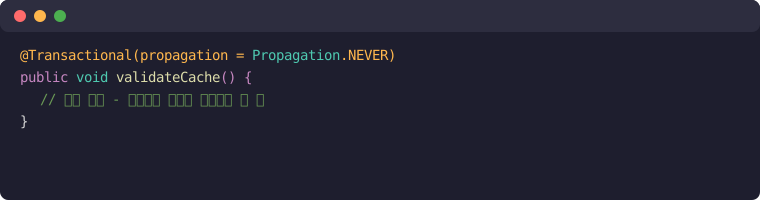
NEVER
트랜잭션 없이 실행해요. 기존 트랜잭션이 있으면 예외가 발생하고요.

MANDATORY의 반대예요. “이 메서드는 트랜잭션 안에서 호출하면 안 돼”라는 제약이에요. 거의 안 써요.
NESTED
얘는 좀 특이해요. 부모 트랜잭션 안에 자식 트랜잭션을 만드는 건데요:
- 자식이 롤백되어도 부모는 커밋 가능
- 부모가 롤백되면 자식도 같이 롤백
JDBC savepoint 기능을 쓰는 거라 JPA에서는 사용 못해요. 그래서 잘 안 써요.
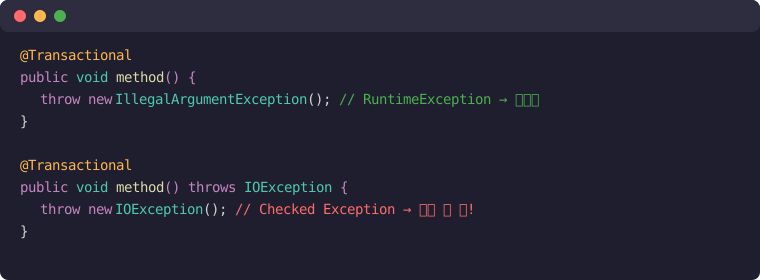
롤백 규칙
기본적으로 RuntimeException이 터지면 롤백, Checked Exception은 롤백 안 돼요.

왜 이런 규칙이냐면, EJB 시절부터 내려온 관례예요:
- RuntimeException: 시스템 오류라서 복구 불가능하니까 롤백
- Checked Exception: 비즈니스 예외로 예상된 상황이니까 커밋 후 처리
Checked Exception에서도 롤백하고 싶으면:
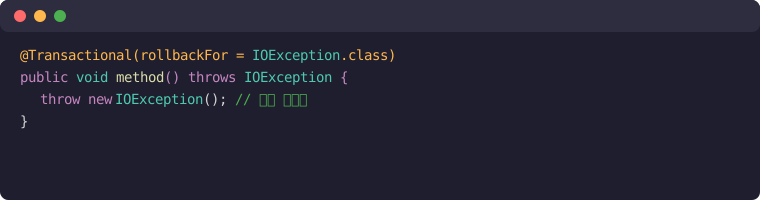
그리고 예외를 catch해서 삼키면 롤백 안 돼요. 롤백하려면 다시 던지거나 setRollbackOnly()를 호출해야 해요.
배운점
이번에 트랜잭션 관련 내용을 정리하면서 가장 크게 깨달은 건 **“트랜잭션의 경계”**에 대한 이해였어요.
외부 시스템은 트랜잭션 밖이다
R2나 S3 같은 외부 스토리지는 DB 트랜잭션 안에 포함되지 않아요. 당연한 얘기지만, 직접 부딪혀보기 전까지는 크게 신경 쓰지 않았던 부분이에요.
@Transactionalpublic void updateProfile(...) { user.updateProfileImage(newImageId); // ① DB 업데이트 r2Service.deleteFile(oldImagePath); // ② R2 삭제 (외부 시스템!) return userRepository.save(user); // ③ 커밋}만약 ①②가 성공하고 ③에서 예외가 터지면? DB는 롤백되는데 R2 파일은 이미 삭제돼요. 데이터 불일치가 발생하죠.
그래서 @TransactionalEventListener(AFTER_COMMIT)을 써서 DB 커밋이 성공한 후에만 외부 시스템 작업을 하도록 했어요.
AFTER_COMMIT의 함정
근데 여기서 또 한 가지 함정이 있었어요. AFTER_COMMIT 시점에서 @Transactional 메서드를 호출하면 당연히 새 트랜잭션이 시작될 줄 알았는데, 실제로는 DB에 반영이 안 됐거든요.
알고 보니 DB 트랜잭션은 이미 종료됐지만 스프링 트랜잭션 컨텍스트는 아직 정리 전이라서, 기본 전파 속성(REQUIRED)으로는 “이미 종료된 트랜잭션에 참여”하려고 시도하기 때문이었어요.
REQUIRES_NEW로 명시적으로 새 트랜잭션을 시작해야 한다는 걸 배웠어요.
readOnly는 양날의 검
@Transactional(readOnly = true)가 성능에 좋다고 해서 무분별하게 쓰면 안 된다는 것도 알게 됐어요.
- Dirty Checking 생략 → 성능 향상
- 근데
@Version기반 낙관적 락도 무력화됨 - 실수로 수정해도 에러 안 나고 조용히 무시됨
“조회니까 무조건 readOnly”가 아니라, 수정 가능성이 조금이라도 있으면 쓰면 안 돼요.
전파 속성은 실제로 몇 개만 쓴다
7가지 전파 속성을 다 정리했지만, 실무에서는 거의 REQUIRED랑 REQUIRES_NEW만 써요. 나머지는 특수한 상황에서나 쓰고, 대부분은 기본값으로 충분해요.
근데 REQUIRES_NEW를 쓸 때 커넥션 2개를 동시에 쓴다는 점은 알고 있어야 해요. 남용하면 커넥션 풀 고갈될 수 있거든요.
결론
결국 이번 정리를 통해 “@Transactional 하나 붙이면 끝”이 아니라, 내부 동작 원리를 알아야 제대로 쓸 수 있다는 걸 깨달았어요. 특히 프록시 동작 방식, 물리/논리 트랜잭션 구분, 외부 시스템과의 경계 등은 알고 있어야 디버깅할 때 헤매지 않거든요.
참고
- Spring Transaction Management
- 카카오페이 - JPA Transactional 잘 알고 쓰고 계신가요?
- Vlad Mihalcea - The best way to use Spring Transactional
- MangKyu - 스프링의 트랜잭션 전파 속성
I organized what I learned about Spring transactions while working on a side project. I wanted to consolidate the concepts that confused me and make them my own.
@Transactional Basics
You use transactions when multiple DB operations need to be treated as a single unit, like a bank transfer. If the withdrawal succeeds but the deposit fails, that would be a disaster.

When you must use it:
- When multiple DB operations must execute as a single unit
- Business logic where data consistency is critical
- Operations that require rollback
When you can skip it:
- Simple reads (though using
readOnly = trueprovides optimization benefits) - Single INSERT/UPDATE (can be handled by auto-commit)
How Does @Transactional Work?
When you add @Transactional, transactions are managed as if by magic, but internally it uses the proxy pattern.
Spring creates a proxy object for the class annotated with @Transactional, and this proxy intercepts method calls to begin/commit/rollback the transaction.

Proxy Generation Methods
Spring Boot uses CGLIB by default. CGLIB manipulates bytecode to create proxies by subclassing classes at runtime.
| Method | Description | Condition |
|---|---|---|
| JDK Dynamic Proxy | Interface-based proxy | When an interface exists |
| CGLIB Proxy | Class inheritance-based proxy | Spring Boot default |
Conceptual View

Things to Watch Out For
Because CGLIB creates proxies through inheritance:
- private methods: Cannot be inherited, so
@Transactionaldoes not apply - final classes/methods: Cannot be overridden, so
@Transactionaldoes not apply
The Internal Call Trap
This one really confused me at first.

When you call a method within the same class, it is invoked directly without going through the proxy.
That means @Transactional does not take effect.
The solution is to extract the method into a separate service class.
References:
Why Use readOnly = true?
Adding readOnly = true to query methods provides several benefits.

When declared this way, Spring and JPA assume that no write operations (persist, merge, remove) will occur in this method and perform optimizations.
JPA-Level Optimization: Skipping Dirty Checking
When JPA loads an entity, it stores it in the persistence context and tracks whether the object has changed (Dirty Checking). It creates a snapshot of the original for comparison.
1. Entity loaded -> Stored in persistence context + snapshot created2. At transaction commit -> Compare current state vs snapshot3. If changed -> Generate UPDATE queryWith readOnly = true, this entire process is skipped:
- FlushMode switches to MANUAL
- No snapshot is created
- flush() is not called
- Dirty Checking is not performed
By eliminating unnecessary object copying and tracking logic, memory usage and CPU computation are reduced.
DB-Level Optimization: Passing the READ ONLY Hint
readOnly = true does not stop at the JPA level.
Through JDBC transactions, a hint is also passed to the database indicating “this transaction will not modify data.”
connection.setReadOnly(true); // Set at the JDBC levelSome databases like PostgreSQL, Oracle, and H2 use this hint to optimize their internal processing.
1. Reduced Lock Contention
Normal transactions acquire write locks because data modifications are possible.
However, read-only transactions are explicitly declared as non-modifying, so locks are minimized or not acquired at all.
As a result, even when multiple SELECT queries arrive simultaneously, they can be processed in parallel without lock contention.
This is especially effective in high-traffic environments.
2. Reduced Undo/Redo Logs
Every transaction generates undo/redo logs for rollback and recovery purposes.
But read-only transactions have nothing to change, so there is nothing to recover.
The DB minimizes or skips log generation, reducing disk I/O and memory usage.
Useful in DB Replication Environments
In a Master-Slave architecture, queries marked with readOnly = true can be automatically routed to Slave replicas. This reduces Master load and improves read performance.
The Pattern I Use
I set readOnly = true at the class level by default, and override with @Transactional only for write methods.

Caution: Conflict with Optimistic Locking (@Version)
There is a reason you should not use readOnly = true recklessly. It can neutralize optimistic locking.
JPA controls concurrency with @Version:

At the time of modification, the version is compared, and if another transaction modified the data first, an OptimisticLockException is thrown.
But what happens when you modify an entity under readOnly = true?

- flush() is not called
- Dirty Checking is not performed
- @Version comparison is not performed
- Conflicts go undetected
In the worst case, another transaction’s modifications can be silently overwritten, with no error at all.
Conclusion
readOnly = true should only be used when you truly only read.
| Scenario | Use readOnly |
|---|---|
| Pure queries (list, detail) | O |
| Possible modification after query | X |
| Modifying entities with @Version | X |
| Business decisions based on query results only | O |
It is not “always use readOnly for queries” — if there is even the slightest chance of modification, do not use it.
Reference: Are You Using JPA Transactional Correctly? - Kakaopay
Transaction Propagation
What happens when a transactional method calls another transactional method? The propagation attribute determines whether to join the existing transaction or create a new one.
This concept confused me at first, but distinguishing between physical transactions and logical transactions made it much easier to understand.
Physical Transaction vs Logical Transaction
A physical transaction is the actual transaction through a DB connection. When committed or rolled back, it is truly applied to the DB.
A logical transaction is a unit managed by Spring’s transaction manager. Multiple logical transactions can share a single physical transaction.

The rules are simple:
- All logical transactions must commit for the physical transaction to commit
- If any one rolls back, the physical transaction also rolls back
Propagation Types
| Type | No existing transaction | Existing transaction present |
|---|---|---|
| REQUIRED | Create new | Join |
| REQUIRES_NEW | Create new | Create new (suspend existing) |
| SUPPORTS | Run without | Join |
| NOT_SUPPORTED | Run without | Suspend existing, run without |
| MANDATORY | Throw exception | Join |
| NEVER | Run without | Throw exception |
| NESTED | Create new | Create nested transaction |
In practice, only REQUIRED and REQUIRES_NEW are commonly used.
REQUIRED (Default)
The most commonly used default attribute. Joins an existing transaction if one exists, otherwise creates a new one.

Since both share the same physical transaction:
- If inner() throws an exception -> outer() also rolls back
- If outer() throws an exception -> inner() also rolls back
What if inner() needs to roll back but outer() tries to commit? Spring throws an UnexpectedRollbackException to signal that a rollback is required.
REQUIRES_NEW
Always creates a new transaction. Even if an existing transaction is present, it operates completely independently.


While inner() is executing, outer()‘s connection enters a waiting state. This means two connections are used simultaneously.
Things to watch out for:
- Connection pool exhaustion is possible, so avoid overuse
- Calling within the same class bypasses the proxy and does not work
When to Use REQUIRES_NEW
Use it when the success or failure of the inner transaction must not affect the outer transaction.
For example, when notification delivery fails during order processing, the order should still succeed:

However, if you can solve the problem without REQUIRES_NEW, that is preferable. You can also extract into a separate service or use event-driven approaches.
In my actual project, I used it for Orphan File Cleanup in a File Upload System.
SUPPORTS
Joins an existing transaction if one exists, otherwise runs without a transaction.

For simple queries, it uses the caller’s transaction if one exists, otherwise just runs. Occasionally used for query methods.
NOT_SUPPORTED
Runs without a transaction. Suspends the existing transaction if one is present.

Used for operations that do not need transactions (external API calls, file processing, etc.). Suspending the transaction releases the connection hold, reducing resource waste.
MANDATORY
Must run within an existing transaction. Throws an exception if called without one.

Use this to enforce the constraint: “this method must not be called standalone.” If accidentally called without a transaction, an immediate error is raised, helping you catch bugs early.
NEVER
Runs without a transaction. Throws an exception if an existing transaction is present.

The opposite of MANDATORY. Enforces: “this method must not be called inside a transaction.” Rarely used.
NESTED
This one is somewhat special. It creates a child transaction within the parent transaction:
- Even if the child rolls back, the parent can commit
- If the parent rolls back, the child also rolls back
It uses JDBC’s savepoint feature, so it cannot be used with JPA. Hence, it is rarely used.
Reference: MangKyu - Spring Transaction Propagation
Rollback Rules
By default, a RuntimeException triggers a rollback, while a Checked Exception does not.

The reason for this rule dates back to the EJB era:
- RuntimeException: System errors that are unrecoverable, so rollback
- Checked Exception: Business exceptions that are expected situations, so commit and handle
To force rollback on a Checked Exception:

Also, if you catch and swallow an exception, no rollback occurs. You must either re-throw it or call setRollbackOnly() for a rollback.
Reference: Rolling Back a Declarative Transaction - Spring Docs
Lessons Learned
The biggest takeaway from organizing this material was understanding “transaction boundaries.”
External Systems Are Outside the Transaction
External storage services like R2 or S3 are not included in DB transactions. It sounds obvious, but I did not pay much attention to it until I ran into problems firsthand.
@Transactionalpublic void updateProfile(...) { user.updateProfileImage(newImageId); // ① DB update r2Service.deleteFile(oldImagePath); // ② R2 delete (external system!) return userRepository.save(user); // ③ Commit}If steps 1 and 2 succeed but step 3 throws an exception, the DB rolls back but the R2 file is already deleted. Data inconsistency.
That is why I used @TransactionalEventListener(AFTER_COMMIT) to perform external system operations only after the DB commit succeeds.
The AFTER_COMMIT Pitfall
But there was another trap here. I assumed that calling a @Transactional method during AFTER_COMMIT would naturally start a new transaction, but the changes were not actually persisted to the DB.
It turned out that although the DB transaction was already complete, the Spring transaction context had not yet been cleaned up, so with the default propagation (REQUIRED), it tried to “join the already-finished transaction.”
I learned that you must explicitly start a new transaction with REQUIRES_NEW.
readOnly Is a Double-Edged Sword
I also learned that @Transactional(readOnly = true) should not be used indiscriminately just because it is good for performance.
- Dirty Checking is skipped -> Performance improvement
- But @Version-based optimistic locking is also neutralized
- Accidental modifications silently go unnoticed
“readOnly for all queries” is wrong — if there is even the slightest chance of modification, do not use it.
In Practice, Only a Few Propagation Types Are Used
I documented all 7 propagation types, but in practice, almost only REQUIRED and REQUIRES_NEW are used. The rest are for special situations, and the default is sufficient for most cases.
However, you should be aware that REQUIRES_NEW uses two connections simultaneously. Overuse can lead to connection pool exhaustion.
Conclusion
Ultimately, this exercise taught me that adding a single @Transactional is not enough — you need to understand the internal mechanics to use it correctly. In particular, understanding proxy behavior, the distinction between physical and logical transactions, and boundaries with external systems will save you from debugging headaches.